
“ And both are destroyed at once, and the ceremonial or doctrinal prejudice becomes only an occasion of sin, if they make us either wise in our own conceit, or violent in our methods of proselytism. Of those who will compass sea and land to make one proselyte, it is too generally true that they are themselves the children of hell, and make their proselytes twofold more so. ”
Proselyte
Definition and stakes
The term "proselyte," originating from Koine Greek, refers to someone who converts to Judaism or another religion, historically emphasizing commitment to particular doctrines. Biblical texts, such as the New Testament, mention proselytes as individuals adopting Jewish customs, though the term is never explicitly used to describe conversions to Christianity.
Authors like John Ruskin criticized the moral dangers of proselytism, while Matthew Henry observed that its targets were often vulnerable people. Albert Venn Dicey connected proselytism to internal religious strife, contrasting its perceived benefits with its real-world consequences. This theme links religious identity, transformation, and ethical discussion, illustrating changing perspectives on belief and community throughout the centuries.
Quotes about “proselyte”
Wilmer Russell Walker, Scriptural Basis of Christian Unity (1915)
“ Jesus did not rebuke Pharisees for making proselytes, but for making them "twofold more children of hell" than they were themselves. Proselyting, per se, is not only permissible, but a positive duty. It is only by making proselytes that any reform may hone to succeed. ”
Matthew Henry, Commentary on the Whole Bible… (1700s)
“ They were not forced into houses, as good Christians often were by persecution; but they of choice crept into houses, to insinuate themselves into the affections and good opinion of people, and so to draw them over to their party. And see what sort of people those were that they gained, and made proselytes of; they were such as were weak, silly women; and such as were wicked, laden with sins, and led away with divers lusts. A foolish head and a filthy heart make persons, especially women, an easy prey to seducers. ”
Theodore P. Wilson, True to his Colours
“ But ‘the wisdom of this world is foolishness with God.’ Dr Prosser’s a man of science, and you’ve heard his experience. You see he finds he can’t get on without the old-fashioned gospel. A religion without a regular creed’s no use at all. He’s found out as religion without a real human and divine Saviour’s only moonshine; nay, it’s no shine at all; it’s just darkness, and nothing else. There’s a striking verse in the prophet Jeremiah as just suits these days. It’s this, and I’m reading it out of Jane’s Bible. ”
Albert Venn Dicey, Letters to a friend on votes for women… (1909)
“ But then proselytism at home is a name for the embittering religious animosities, whilst abroad it is usually a blind running at an object without either knowing or heeding the fatal mischiefs, even as regards the propagation of religion itself, which may be produced by the means employed. ”
G. W. Foote, Flowers of Freethought (Second Series…
“ In the orthodox sense of the term, it would be difficult to look upon the writer of this book as a true Christian. Folly is made to speak throughout. She pronounces her own panegyric She represents herself as the mainspring of all the business and pleasure of this world, yes, and also of its worship and devotion. Mixed up with capital fooling, there is an abundance of wisdom, and shrewd thrusts are delivered at every species of imposture; nay, religion itself is treated with derision, under the pretence of buffoonery. ”
Proclus, The philosophical and mathematical commentaries of Proclus on the first book of Euclid's elements… (1791)
“ No longer requiring prolix dissertations, or demonstrations, for the purpose of collecting the science of these, but, with a simple vision and energy of intellect, beholding the exemplar of the divine mind, he obtained a virtue which cannot with sufficient propriety be called prudence, but is more properly denominated wisdom, or something, if possible, still more venerable and divine. ”
Proclus, The Six Books of Proclus, the Platonic Successor…
“ For each of them, says Proclus, is allotted an appropriate life and motion. For since the demiurgic sacred law distributes to every mortal nature that which is adapted to it, and co-arranges every thing with a view to the blessedness of the universe, what ought we to say concerning the governors of the world? Ought we not to assert that they have received from their father, every thing appropriate and every good; and that shining with the splendors of beauty, they not only fabricate the generation of time in conjunction with the father, but also lead and govern the whole world? ”
Proclus, The philosophical and mathematical commentaries of Proclus on the first book of Euclid's elements… (1791)
“ A genuine modern will doubtless consider the whole of Proclus’ religious conduct as ridiculously superstitious. And so, indeed, at first sight, it appears; but he who has penetrated the depths of ancient wisdom, will find in it more than meets the vulgar ear. ”
Edward Maitland, The Story of Anna Kingsford and Edward Maitland and of the new Gospel of Interpretation
“ Proclus, it must be remembered, was so eminent for his wisdom and powers as to be regarded by his contemporaries with a veneration approaching to adoration. Says Proclus, "Hermes, as the messenger of God, reveals to us His paternal Will, and—developing in us the Intuition—imparts to us knowledge. The knowledge which descends into the soul from above, excels any that can be attained by the mere exercise of the intellect. ”
Marcel Proust, an English Tribute
“ Hence Man, “how noble in reason, how infinite in faculty, in form and moving how express and admirable, in action how like an angel, in apprehension how like a god,” is doomed by the nature of his being to unsatisfied desire and restless misery, till Proust becomes, as I have called him above, the prophet of despair. ”
Archibald Porteous, Spiritual exercise of soul, and blessed departure of Dame Mary Rutherford Lady Hundaly… (1745)
“ And so she showed me a little Book, wherein the bad written a Catalogue of Mercies received, and of the particular Acts of God's Kindness to be in his Providences thro' her Life, But (said she) fee my Hypocrisy and Ingratitude: Are not very one of these Mercies, as a Ditty against me, these Mercies are as so many Judges to condemn me, who have been such a Backslider from my Lord, who has been so loving and merciful to me. ”
Guillaume Félice, History of the Protestants of France… (1853)
“ After the Revolution, the most zealous of the Protestants judged that the moment had arrived for multiplying their labours of proselytism. Considered from the point of view of liberty and the equality of creeds, this was their right; and considered from that of their personal convictions, it was their duty. When proselytism employs such means only as are peaceful and authorized by universal morality, no human power can legitimately interdict it. ”
Various, The Catholic World, Vol. 01, April to September…
“ If by proselytizing be meant the employing of unlawful and unworthy means, motives, or influences to change a person's religion, I should consider the man who used such means to commit lèse-majesté against truth, and against our Lord who is the truth. ”
Proclus, The philosophical and mathematical commentaries of Proclus on the first book of Euclid's elements… (1791)
“ For this sentiment was very familiar to this most religious man, that it was proper a philosopher should not be careful in the observance of the rites and institutions of one particular city, nor of certain nations only, but that he should be the general priest of the universe. ”
Robert F. Horton, The Expositor's Bible: The Book of Proverbs
“ There is a kind of competition between Wisdom and Folly, between Righteousness and Sin, between Virtue and Vice; and the allurements of the two are disposed in an intentional parallelism; the colouring and arrangement are of such a kind that it becomes incredible how any sensible person, or for that matter even the simple himself, could for a moment hesitate between the noble form of Wisdom and the meretricious attractions of Folly. ”
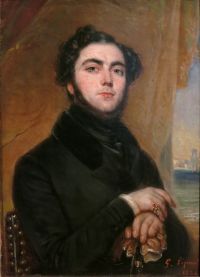 Eugène Sue,
The Silver Cross; Or, The Carpenter of Nazareth
Eugène Sue,
The Silver Cross; Or, The Carpenter of Nazareth
“ The pharisee, standing up, thus prayed to himself: "My God, I thank thee for that I am not as other men, who are thieves, unjust, adulterers, who indeed are like the publican I see there. I fast twice a week, and I give the tenth of all I possess." ”
 Desiderius Erasmus,
The Praise of Folly
(1509)
Desiderius Erasmus,
The Praise of Folly
(1509)
“ Had I a hundred tongues, as many mouths, and a voice never so strong, yet were I not able to run over the several sorts of fools or all the names of folly, so thick do they swarm everywhere. And yet your priests make no scruple to receive and cherish them as proper instruments of profit; whereas if some scurvy wise fellow should step up and speak things as they are, as, to live well is the way to die well; the best way to get quit of sin is to add to the money you give the hatred of sin, tears, watchings, prayers, fastings, and amendment of life ”
Proclus, The philosophical and mathematical commentaries of Proclus on the first book of Euclid's elements… (1791)
“ But these were happy days; this was the period destined to the reign of true philosophy, and to the advancement of the human soul to the greatest perfection its union with this terrene body can admit. For in our times, the voice of wisdom is no longer heard in the silence of sacred solitude; but folly usurping her place, has filled every quarter with the barbarous and deafning clamours of despicable sectaries; while the brutal hand of commerce has blinded the liberal eye of divine contemplation. ”
Muhammad ibn 'Abd al-Malik Ibn Tufayl, The Improvement of Human Reason
“ For Folly has over-whelmed them, and, what they have sought after, has covered their Hearts like Raft; God has sealed up their Hearts and their Ears, and their Eyes are dim, and they shall have sore Punishment. ”
A Select Collection of Old English Plays…
“ For here thou may thy fellow find, Whether thou wilt, at long or short.FOLLY. Come, look and thou darest, arise and assay.MANHOOD. Yea, sir, but yet Conscience biddeth me nay.FOLLY. No, sir, thou darest not in good fay, For truly thou failest no [w] , false heart.MANHOOD. What sayest thou? have I a false heart?FOLLY. Yea, sir, in good fay.MANHOOD. Manhood will not that I say nay. Defend thee, Folly, if that you may, For in faith I purpose to wete what thou art. How sayest thou now, Folly, hast thou not a touch? ”
 Thieleman J. van Braght,
The Bloody Theatre, or Martyrs Mirror of the Defenseless Christians
Thieleman J. van Braght,
The Bloody Theatre, or Martyrs Mirror of the Defenseless Christians
“ This the apostles also practiced in like manner, according to the doctrine of Christ. Read: “I wrote unto you in an epistle not to company with fornicators: yet not altogether with the fornicators of this world, or with the covetous, or extortioners, or with idolaters; for then must ye needs go out of the world. But now I have written unto you not to keep company, if any man that is called a brother be a fornicator, or covetous, or an idolater, or a railer, or a drunkard, or an extortioner; with such a one no not to eat.” ”
Proclus, The philosophical and mathematical commentaries of Proclus on the first book of Euclid's elements… (1791)
“ But the spheres themselves are images of the gods, called perfectors of works, copulating the principle with the end, and excelling all figures in simplicity, similitude, and perfection. But we have been thus prolix, that we might evince the power of impartibles, and of the terms which the world contains, and that so far as they bear an image of primary and most principal causes, they are allotted the most excellent order in the universe. ”
Proclus, The philosophical and mathematical commentaries of Proclus on the first book of Euclid's elements… (1791)
“ Indeed it is necessary that he who prosecutes truth, with so much earnestness and sincerity, should be extremely desirous of it from his infancy, since truth is the source of every good, both to gods and men. But that he despised corporeal pleasures, and was an eminent lover of temperance, is sufficiently evident from his great propensity to disciplines, and his desire of every kind of studies; for dispositions of this kind never suffer beastly and illiberal pleasure to dwell it the mind, but are able to excite in the soul, from her own internal operations, sincere pleasure and delight. ”
Proclus, The Six Books of Proclus, the Platonic Successor…
“ Let, however, no one think that the Gods extend such a providence about secondary things, as is either of a busy or laborious nature, or that this is the case with their exempt transcendency, which is established remote from mortal difficulty. For their blessedness is not willing to be defiled with the difficulty of administration, since even the life of good men is accompanied with facility, and is void of molestation and pain. ”
Matthew Henry, Matthew Henry's Commentary on the Whole Bible… (1700s)
“ Much speaking, an affectation of prolixity in prayer, either out of pride or superstition, or an opinion that God needs either to be informed or argued with by us, or out of mere folly and impertinence, because men love to hear themselves talk. ”

“ This intimate, spontaneous feeling, this sense of the nullity of my intellect, prevailed against all the flattering speeches that might be lavished upon me, as a wicked man, when everyone is loud in the praise of his good deeds, is gnawed by the secret remorse of conscience. ”
Proclus, The philosophical and mathematical commentaries of Proclus on the first book of Euclid's elements… (1791)
“ After having, therefore, run through the theurgic virtue of Proclus, and its energies, and the happy circumstances which befell him, respecting its operations, and having shewn, that he did not less excel in every kind of virtue, and that he was a man such as mortals have not beheld for a long period of time, it remains that we now bring our discourse concerning him to a conclusion: for we are not now at the beginning of our narration, nor does the half of the whole remain to us, according to the proverb, but the whole itself is now perfect and complete. ”
 Lysander Spooner,
The Deist's Reply to the Alleged Supernatural Evidences of Christianity
(1836)
Lysander Spooner,
The Deist's Reply to the Alleged Supernatural Evidences of Christianity
(1836)
“ Another circumstance, which most powerfully contributed to the spread of Christianity, was, that the importance, which the Christians attached to a belief in their faith, was so great as always to keep awake among them a fanatical spirit of proselytism—a circumstance, which before their time had probably never been known to exist, on an extended scale, in favor of any other system. ”
Frank Boreham, Mushrooms on the Moor
“ But there are worse things than prosiness. The mere change from the poetry of youth to the prose of middle life need not in itself alarm us. Some of the finest classics in our literature are penned in prose. But within this minor peril lies the germ of a major peril. The trouble is that prosiness may develop into pessimism. And when prosiness curdles into pessimism the case of the patient is very grave. I heard a young fellow in his teens telling a much older man of his implicit faith in the providence of God. ”
Proclus, The philosophical and mathematical commentaries of Proclus on the first book of Euclid's elements… (1791)
“ The third corporeal virtue with which he was endued was beauty, which, when compared with temperance, the authors of these appellations have very properly considered as possessing a similitude of nature. For as we consider temperance as consisting in a certain symphony and consent of the powers of the soul, so corporeal beauty is understood to consist in a certain agreement of the organical parts. ”
Proclus, The Six Books of Proclus, the Platonic Successor…
“ But to divine souls he immediately unfolds the providence of himself, and exhorts them to join with him in a providential inspection of the whole world, to fabricate, adorn and dispose in conjunction with him, mortal natures, to govern generated beings according to the measures of justice, and to lead and convolve all things, following demiurgic providence. ”
Desiderius Erasmus,
In Praise of Folly
“ To the same purpose is that other passage in the mysterious Psalmist, which I forgot to mention in its proper place, namely, Oh remember not the sins and offences of my youth! the word which we render offences, is in Latin ignorantias, ignorances. Observe, the two things he alleges in his excuse are, first, his rawness of age, to which Folly and want of experience are constant attendants: and secondly, his ignorances, expressed in the plural number for an enhancement and aggravation of his foolishness. ”
Proclus, The Six Books of Proclus, the Platonic Successor…
“ For the guards which surround him, obscurely signify his immutable order, and the undeviating defence of fabrication, through which being firmly established in himself, he pervades through all things without impediment, and being present to all his progeny, is according to supreme transcendency expanded above wholes. ”
 William Makepeace Thackeray,
The Paris Sketch Book of Mr. M. A. Titmarsh…
William Makepeace Thackeray,
The Paris Sketch Book of Mr. M. A. Titmarsh…
“ And, to our shame be it said, we Protestants have set the example of this kind of proselytism—those detestable mixtures of truth, lies, false sentiment, false reasoning, bad grammar, correct and genuine philanthropy and piety—I mean our religious tracts, which any woman or man, be he ever so silly, can take upon himself to write, and sell for a penny, as if religious instruction were the easiest thing in the world. We, I say, have set the example in this kind of composition, and all the sects of the earth will, doubtless, speedily follow it. ”
Proclus, The Six Books of Proclus, the Platonic Successor… (1816)
“ And whether it is not more holy to reverence beings the immediate progeny of the ineffable principle of all things, and which are eternally centered and rooted in him; and to believe that in reverencing these, we at the same time reverence the ineffable, because they partake of his nature, and that through these as media we become united with him, [51] than to reverence men, and the images of men, many of whom when living, were the disgrace of human nature? The Church of England as we see prefers the Pagans to the Papists ”
Proclus, The Six Books of Proclus, the Platonic Successor… (1816)
“ The characteristics of the Gods called νοητος και νοεροι intelligible and at the same time intellectual, and of the Gods that are νοεροι intellectual alone, he appears to have transferred to his middle triad which is characterized by dominion, might, and power. And he has adapted his third triad consisting of Principalities, Archangels, and Angels, to the supermundane, liberated, and mundane orders of Gods. For the supermundane Gods are called by Proclus in the sixth book of the following work αρχαι Principalities, or rulers, which is the word employed by Dionysius and Paul. ”

