 Niccolò Machiavelli,
The Prince
(1532)
Niccolò Machiavelli,
The Prince
(1532)
“ All states, all powers, that have held and hold rule over men have been and are either republics or principalities. ”
A principality is a monarchical state or feudal territory ruled by a prince, existing either as a sovereign entity or as part of a larger political system. Historically rooted in medieval Europe, it reflects localized power structures within feudal hierarchies. Authors like Machiavelli viewed principalities as central to political organization, while Zhuang Zi focused on their role in maintaining harmony within governance.
Orson Pratt associated them with divine authority, and Brough emphasized their symbolic nature. Modern sovereign principalities, such as Monaco or Andorra, continue to exist as remnants of this tradition, demonstrating the ongoing balance between historical customs and political development.
Niccolò Machiavelli,
The Prince
(1532)
“ All states, all powers, that have held and hold rule over men have been and are either republics or principalities. ”
 Orson Pratt,
The Kingdom of God, Part 1
Orson Pratt,
The Kingdom of God, Part 1
“ They hold the supreme authority and power in heaven, and in the heaven of heavens, and throughout the wide expanse of universal nature. All principalities, powers, and kingdoms, whether in heaven or on earth, must yield to be instructed and controlled by the supreme power, or they cannot stand. ”
Robert B. Brough, The Life of Sir John Falstaff
“ Just so when, by common consent, we declare that a certain branch of the community shall do nothing but govern empires, kingdoms, principalities, provinces, or departments, we are bound, at whatever cost, to provide them with a sufficiency of empires, kingdoms, principalities, &c., to govern. ”
1911 Encyclopædia Britannica, Volume 8… (1911)
“ To live is to be united with God; evil is the nonexistent, that is, severance from God. Whatever is, is part of the forth-flowing divine life which ever purifies, enlightens and perfects, and so draws all back to the Source. The transcendent Source, as well as the universal immanence, is the Triune God. Between that and men are ranged the three triads of the Celestial Hierarchy: Seraphim, Cherubim and Thrones; Dominations, Virtues, Powers; Principalities, Archangels, Angels. Collectively their general office is to raise mankind to God through purification, illumination and perfection ”
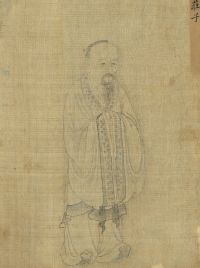 Zhuang Zi,
Chuang Tzŭ
(1889)
Zhuang Zi,
Chuang Tzŭ
(1889)
“ The Son of Heaven, the princes, the ministers, and the people,—if these four fulfil their proper functions, the result is good government. If they quit their proper places, the result is unutterable confusion. When the officials mind their duties and the people their business, neither is injured by the other. ”
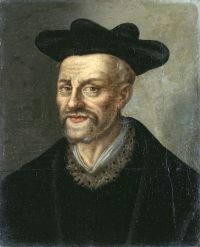 François Rabelais,
The Fourth Book
(1694<!--translation-->)
François Rabelais,
The Fourth Book
(1694<!--translation-->)
“ Would you, in time of peace, find a man capable of wisely governing the state of a commonwealth, of a kingdom, of an empire, of a monarchy; sufficient to maintain the clergy, nobility, senate, and commons in wealth, friendship, unity, obedience, virtue, and honesty? ”
Adam Ferguson, An Essay on the History of Civil Society…
“ The changes of condition, and of manners, which, in the progress of mankind, raise up to nations a leader and a prince, create, at the same time, a nobility and a variety of ranks, who have, in a subordinate degree, their claim to distinction. Superstition, too, may create an order of men, who, under the title of priesthood, engage in the pursuit of a separate interest; who, by their union and firmness as a body, and by their incessant ambition, deserve to be reckoned in the list of pretenders to power. ”
Theodore Martin, Once a Week (1860)
“ The same principle shall be maintained mutually among the subjects of the three sovereigns, who will thus be taught to recognise that the only ruler is He to whom alone belongs power, and in whom are all the treasures of love and wisdom. ”
 John Stuart Mill,
Considerations on Representative Government
(1861)
John Stuart Mill,
Considerations on Representative Government
(1861)
“ The interest of the monarch, or the interest of the aristocracy, either collective or that of its individual members, is promoted, or they themselves think that it will be promoted, by conduct opposed to that which the general interest of the community requires. ”
 Friedrich Schiller,
Aesthetical and philosophical essays
(1899)
Friedrich Schiller,
Aesthetical and philosophical essays
(1899)
“ But we should look twice before we should thus qualify a government in which the chief makes his will outweigh the wishes of the citizens, or a government in which the will of the citizens outweighs that of the chief. ”
Michael Muller, Public School Education
“ Wherefore the choice of rulers in any state or kingdom is best, when one is chosen for his merit to preside over all, and under him are other rulers chosen for their merit; and the government belongs to all, because the rulers may be chosen from any class of society ”
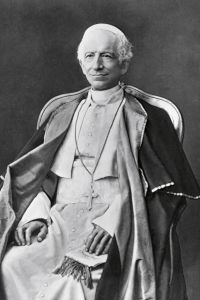 Leo XIII,
The Great Encyclical Letters of Pope Leo XIII
(1903)
Leo XIII,
The Great Encyclical Letters of Pope Leo XIII
(1903)
“ We beg of princes and rulers of States, appealing to their statesmanship and earnest solicitude for the people, to weigh Our counsels in the balance of truth and second them with their authority and favor. ”
 Francis Bacon,
Novum Organum; Or, True Suggestions for the Interpretation of Nature
Francis Bacon,
Novum Organum; Or, True Suggestions for the Interpretation of Nature
“ Let the sixteenth be that which we term the royal or political motion, by which the predominant and governing parts of any body check, subdue, reduce, and regulate the others, and force them to unite, separate, stand still, move, or assume a certain position, not from any inclination of their own, but according to a certain order, and as best suits the convenience of the governing part, so that there is a sort of dominion and civil government exercised by the ruling part over its subjects. ”
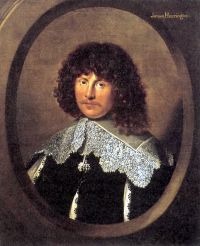 James Harrington,
The Commonwealth of Oceana
James Harrington,
The Commonwealth of Oceana
“ I come to the principles of authority, which are internal, and founded upon the goods of the mind. These the legislator that can unite in his government with those of fortune, comes nearest to the work of God, whose government consists of heaven and earth ”
 Robert Green Ingersoll,
Hell: Warm Words on the Cheerful and Comforting Doctrine of Eternal Damnation
Robert Green Ingersoll,
Hell: Warm Words on the Cheerful and Comforting Doctrine of Eternal Damnation
“ I deny that rulers are crowned by the Most High; the rulers are the people, and the presidents and others are but the servants of the people. All authority comes from the people, and not from the aristocracy of the air. ”
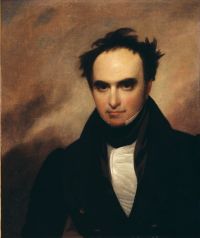 Daniel Webster,
The Great Speeches and Orations of Daniel Webster
Daniel Webster,
The Great Speeches and Orations of Daniel Webster
“ We are all agents of the same supreme power, the people. The general government and the State governments derive their authority from the same source. Neither can, in relation to the other, be called primary, though one is definite and restricted, and the other general and residuary. ”
 Johann Gottlieb Fichte,
Characteristics of the Present Age
(1806)
Johann Gottlieb Fichte,
Characteristics of the Present Age
(1806)
“ The Rulers, as well as all other Individuals, with all their individual powers, are taken into account in order to direct the powers of the governed,—who no more than they constitute the State,—towards the common purpose, so far as they understand it, and to enforce this purpose on all who are opposed to it. ”
 Woodrow Wilson,
Congressional Government
(1885, 1900)
Woodrow Wilson,
Congressional Government
(1885, 1900)
“ And, like every big, stirring cause, it had its leaders—leaders whose authority rested upon the affections and sympathies of the people rather than upon any attested wisdom or success of statesmanship. ”
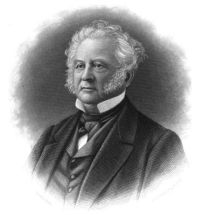 Charles Wentworth Upham,
Salem Witchcraft, Volumes I and II
Charles Wentworth Upham,
Salem Witchcraft, Volumes I and II
“ For there is a chain of government that runs down from God, the Supreme Monarch, whose bright and piercing eyes look through all that he has made, to the lowest degree of the creation; and there are presidential angels of empires and kingdoms, and such as under them have the tutelage of private families; and, lastly, every man's particular guardian genius. ”
Henry K. Rowe, Society: Its Origin and Development
“ Present tendency is in the direction of safeguarding the interests of all by a fully representative government, in which the individual efficiency of prince or commoner alike shall have due weight, but no one sovereign or class shall rule the people as a whole. ”
 John Cassell,
Cassell's Illustrated History of England
(1865)
John Cassell,
Cassell's Illustrated History of England
(1865)
“ In division and controversy moved betwixt princes upon the high sovereign power royal, more evident proof or declaration of truth, right, and God's will, may not be had than by the means of reason, authority, and victory in battles. ”
 Theodore Parker,
The Collected Works of Theodore Parker
(1864)
Theodore Parker,
The Collected Works of Theodore Parker
(1864)
“ Then we are often told, that human government is of Divine appointment, and men morally bound to submit to it; government being used as a collective term to include the political, ecclesiastical, and social establishments of a people, and the officers who administer them. If this means, that, at a certain stage of man's progressive political development, it is necessary to have certain political, ecclesiastical, and social establishments, such as a monarchy or an aristocracy, with persons to administer them, then it is true, and government is of Divine appointment. ”
 Herbert Spencer,
Popular Science Monthly
(1881)
Herbert Spencer,
Popular Science Monthly
(1881)
“ Though the habit, general in past times, of regarding the powers of governments as inherent, has been, by the growth of popular institutions, a good deal qualified; yet, even now, there is no clear apprehension of the fact that governments are not themselves powerful, but are the instrumentalities of a power. ”
Various, The International Magazine, Volume 2…
“ Monarch or People, we will submit ourselves to the power she herself shall organize. Is it possible that so moderate and rational a proposition should be the object of such false interpretations, in a country which reveres the idea of right and of self-government? Is it possible that its leaders should be the object of so much calumny? ”
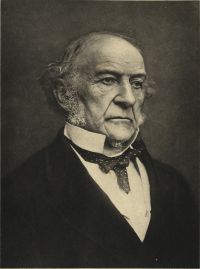 W. E. Gladstone,
Studies on Homer and the Homeric Age…
W. E. Gladstone,
Studies on Homer and the Homeric Age…
“ The king or chief was uplifted to set a high example, to lead the common counsels to common ends, to conduct the public and common intercourse with heaven, to decide the strifes of individuals, to defend the borders of the territory from invasion. ”
 William Henry Giles Kingston,
Mark Seaworth
William Henry Giles Kingston,
Mark Seaworth
“ As I dare say some of my young readers will one of these days become governors of provinces, or hold other offices in our possessions abroad, I wish to impress strongly on their minds that the only just or lawful way of governing a people—the only sure way, indeed, of maintaining authority over them—is to improve, to the utmost of our power, their religious, their moral and physical condition. ”
Strabo, The Geography of Strabo, Volume 1…
“ We distinguish the different kinds of civil government by the office of their chief men, denominating one government a monarchy, or kingdom, another an aristocracy, a third a democracy; for so many we consider are the forms of government, and we designate them by these names, because from them they derive their primary characteristic. ”
Johann Gottlieb Fichte,
Characteristics of the Present Age
(1806)
“ The power of governing others, possessed by the Ruler,—of legislating for them, particularly of legislating for them through the agency of others, became an object of ambition, and in proportion as the capacities of those who were at first willing and obedient subjects were developed, they must have begun to regard with envious eyes the power of government exercised over them by other men. ”
John Stuart Mill,
Considerations on Representative Government
(1861)
“ On the contrary, many a people has gradually emerged from this condition by the aid of a central authority, whose position has made it the rival, and has ended by making it the master, of the local despots, and which, above all, has been single. ”
Daniel Webster,
The Great Speeches and Orations of Daniel Webster
“ Let us endeavor to comprehend in all its magnitude, and to feel in all its importance, the part assigned to us in the great drama of human affairs. We are placed at the head of the system of representative and popular governments. Thus far our example shows that such governments are compatible, not only with respectability and power, but with repose, with peace, with security of personal rights, with good laws, and a just administration. ”
 Karl Marx,
Selected Essays — A Criticism Of The Hegelian Philosophy Of Right
(1926)
Karl Marx,
Selected Essays — A Criticism Of The Hegelian Philosophy Of Right
(1926)
“ The fact that they are ruled, governed, and owned they must acknowledge and confess as a favour of heaven! On the other hand, there are those rulers themselves whose greatness is in inverse proportion to their number. ”
Herbert Spencer,
Essays: Scientific, Political, & Speculative…
“ Classifying these faculties under the heads of Reason, Will, and Passion, he classifies the members of his ideal society under what he regards as three analogous heads:—councillors, who are to exercise government; military or executive, who are to fulfil their behests ”
James Burnes, Sketch of the History of the Knights Templars
“ This our Society, being superintended by one General Prince, while the different governments of which it consists are ruled by various Superior Masters, adapted to various regions and kingdoms, as need requires. ”
Benjamin Rush Davenport, The Crime of Caste in Our Country
“ Ever since Aristotle distinguished them, there have been three recognized types of government—monarchy, oligarchy, and democracy—the rule of one man, the rule of a few men, and the rule of the people. ”
James Baldwin Brown, Misread Passages of Scriptures
“ The king or institution which may best assure this end is the open question in the settlement of which God demands the concert and co-operation of mankind. Every king, every magistrate, every political institution, has a certain Divine sanction, inasmuch as it is the keystone of the arch which He has built, and under whose sheltering dome we live and work. ”
John Austin, Centralization (1847)
“ That the other political authorities in the given society are subordinate to the sovereign or supreme one; deriving their political powers from its express or tacit delegation, and holding those powers at its pleasure. ”
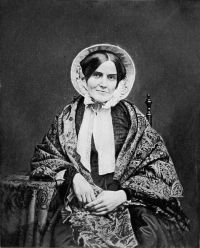 Delia Salter Bacon,
The Philosophy of the Plays of Shakspere Unfolded
Delia Salter Bacon,
The Philosophy of the Plays of Shakspere Unfolded
“ To create a better leadership of men,—to form a new order and union of men,—a new nobility of men, acquainted with the doctrine of their own nature, and in league for its advancement, to seize the 'thoughts' of those whose law is the law of the larger activity, and 'inform them with nobleness,'—was the plan. ”
 Walter Bagehot,
The English Constitution
(1894)
Walter Bagehot,
The English Constitution
(1894)
“ There is an advocate for every interest, and every interest clamours for every advantage. The executive Government by means of its disciplined forces, and the few invaluable members who sit and think, preserves some sort of unity. ”
John Stuart Mill,
Considerations on Representative Government
(1861)
“ I am not aware that history furnishes any example in which a number of these political atoms or corpuscles have coalesced into a body, and learned to feel themselves one people, except through previous subjection to a central authority common to all. [2] It is through the habit of deferring to that authority, entering into its plans and subserving its purposes, that a people such as we have supposed receive into their minds the conception of large interests common to a considerable geographical extent. ”
Andrew W. Young, The government class book
“ But the forms of government which have most prevailed, are designated by the terms, monarchy, aristocracy, and democracy, or republic. These words severally indicate by what persons, and in what manner, the governing power of a state is exercised. This power is usually called the sovereign, or supreme power. Where kings rule, they are called sovereign; and where the power is in the hands of the people, the people are sovereign. ”
Cooper Willyams, An Account of the Campaign in the West Indies…
“ The General thinks it a duty incumbent on him, and which he doubts not will be taken well, to point out further what he thinks necessary, either for their own particular good, or that more noble object, the good of their king and country. ”
William Henry Giles Kingston,
A Voyage round the World
“ The monarchy is hereditary, and limited. The king’s ministry consists of a premier and other officers, similar to those of the English Government, and many of them are English or Americans, and very intelligent men. ”
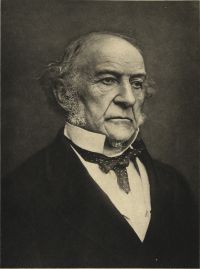 William Ewart Gladstone,
Prose Masterpieces from Modern Essayists…
(1891)
William Ewart Gladstone,
Prose Masterpieces from Modern Essayists…
(1891)
“ The affairs of the three associated kingdoms, with their great diversities of law, interest, and circumstance, make the government of them, even if they stood alone, a business more voluminous, so to speak, than that of any other thirty-three millions of civilized men. ”
William Edward Mead, The Grand Tour in the Eighteenth Century (1914)
“ Minor offices might be filled by persons of no importance, and in some cases men of humble origin rose to positions of great influence, but the policy of the government, the final decision in every matter that might affect the welfare of the ruling class as well as of the uncounted multitude, was commonly reserved for the supreme ruler. ”
Leo XIII,
The Great Encyclical Letters of Pope Leo XIII
(1903)
“ The foremost duty, therefore, of the rulers of the State should be to make sure that the laws and institutions, the general character and administration of the commonwealth, shall be such as of themselves to realize public well-being and private prosperity. ”
Alexander Hamilton, The Federalist (1863, Dawson edition)
“ Civil power, properly organized and exerted, is capable of diffusing its force to a very great extent; and can, in a manner, reproduce itself in every part of a great empire, by a judicious arrangement of subordinate institutions. ”
Herbert Spencer,
Popular Science Monthly
(1881)
“ Where, in virtue of supposed supernatural origin or authority, the king has become absolute, and, owning both subjects and territory, exercises all powers, he is obliged by the multiplicity of his affairs to depute his powers. ”
The Growth of Parliament and the War with Scotland…
“ We declare and ordain, also, that the said King shall have full power to govern freely in his kingdom and its dependencies, and shall be in the state and in the enjoyment of plenary power, in and through everything, even as he was before the aforesaid time. ”
