“ Almost before the "amen" of the benediction was pronounced, he expressed his mind, quite loud enough for the soprano to hear: "It is of no use to bring classic music into this choir; the singers are not equal to it. After all our drill, that A was flatted wretchedly! This is the last time; I shall never again attempt anything but the most ordinary psalm tune."I regret that I cannot give you his rendering of the word "psalm." ”
Psalm tune
Definition and stakes
The theme of “psalm tune” has been addressed by authors such as Lester Hostetler, A. R. Whitham, Alexander Maclaren, Edward Dickinson and Theron Brown. It is often associated with terms like hymn, music, Psalms, church and God.
Quotes about “psalm tune”
Willey Francis Gates, Anecdotes of Great Musicians (1896)
“ To be compelled to listen to a song of a hundred verses would excite almost any one to war, even at the present day. But the old Puritan psalm singers outdid the Greeks in this respect. The writer has a copy of the Covenanter's Psalm Book, dated 1595. In it, among other lugubrious tunes, is the one used to the 119th psalm, and to this tune are set the 176 verses in long array, stringing out their dreary length page after page. We may well believe that a people who could stand such doses as this, could burn their neighbors at the stake for witchcraft. ”
James Paterson, Curiosities of Christian History Prior to the Reformation
“ The sublimity of the music is heightened by the peculiar manner of repeating the same melody in every verse of the psalm, and yet by retarding the tune and swelling or diminishing the sound according to the sense, never allowing the ear to feel the least tediousness. The music score is said to be no correct record of the peculiarity of the melody, and the mode of managing the voices is said to be a secret kept by the chapel-master alone, who hands down the tradition to his successor. ”
Daniel Davenport, The Two Hundredth Anniversary of the Settlement of the Town of New Milford…
“ With the lapse of time and the advent of a new generation, these tunes became jangled together in inextricable confusion. The practice was for a deacon as leader to read a line of the psalm or hymn, and the congregation sang at it as best they could, each one using such tune as he chose, and often sliding from one tune to another in the same line or improvising as he went on. ”
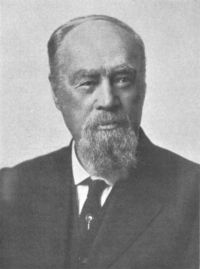 George P. Upton,
The Standard Oratorios: Their Stories…
“ The total neglect of singing psalms by many serious Christians for want of skill in singing psalm-tunes. There are many who never employ their tongues in singing God's praises, because they have no skill. It is with great difficulty that this part of worship is performed, and with great indecency in some congregations for want of skill; it is to be feared singing must be wholly omitted in some places for want of skill if this art is not revived. I was present in a congregation where singing was for a whole Sabbath omitted for want of a man able to lead the assembly in singing. ”
Lester Hostetler, Handbook to the Mennonite Hymnary
“ Scottish Psalter, 1650Psalm 145:1-7. A Festal Anthem.A praise song celebrating the greatness and goodness of God as manifested in all creation. The praise of God and of His marvelous works shall go on forever. The psalm has been called the Te Deum of the Old Testament and this version is worthy of its original.MUSIC. DUKE STREET. For comments on this tune see Hymn 341. ”
A Dictionary of Music and Musicians (1900)
“ He also published sonatas for both violin and flute. Numerous songs by him are to be found in the collections of the period, and some odes and other pieces are still extant in MS. Two psalm tunes attributed to him, St. Ann's and St. Matthew's, and a single chant in B minor, will long live in the Anglican church, even after his fine anthems have become obsolete. ”
William Smyth Rockstro, 1911 Encyclopædia Britannica (1911)
“ Of these classes the most interesting by far is that which includes the psalm-tones, or psalm-tunes, called by modern English historians, the “ Gregorian tones.” The oldest of these are tones 1, 3, 5 and 7, as sung by Ambrose. The antiquity of tones 2, 4, 6 and 8 is less firmly established, though there is no doubt that Gregory the Great sanctioned their use on strong traditional evidence. In addition to these, a peculiarly beautiful melody in mode 9, known as the Tonus peregrin/us, has been sung from time immemorial only to the psalm In exitu Israel. ”
Flower o' the Heather: A Story of the Killing Times
“ The minister mounted his pulpit and I sat down a little below it. In a voice which rang melodiously through the silence he said: "Let us worship God by singing to His praise the 121st psalm." He read the psalm from beginning to end and then the congregation, still sitting, took up the refrain and sang slowly the confident words. It was a psalm which to these hill-folk must have been charged with many memories.There was more of earnestness than of melody in the singing, but suddenly I was aware of one voice that sounded clear and bell-like among the jumble of raucous notes. ”
John Weeks Moore, Complete Encyclopaedia of Music… (1880)
“ But history supports a much stronger claim for a musician by the name of William Franc as its author. Yet it may have been one of those very "secular tunes, such as were easy to learn and play on the viol and other instruments ; " or one of the "most favorite songs of the times ; " 5 or one of those "ballad airs as would best suit its metre ; " or an "opera song ; " [?] all which were sung to the psalms early in the reformation, not only by Lutherans and Calvinists, but Roman Catholics : the latter, however, soon became alarmed, and pronounced psalm singing heretical, and forbade its practice. ”
 Alexander Maclaren,
The Expositor's Bible: The Psalms…
“ The sparkling stream of molten silver as, free from dross, it runs from the melting-pot to the mould on the ground, is a beautiful figure of the word of God, clear of all the impurities of men's words, which the psalm has been bewailing and raining down on the world. God's words are a silver shower, precious and bright. [Pg 115] The last turn of the psalm builds hope on the pure words just heard from heaven. When God speaks a promise, faith repeats it as a certitude and prophesies in the line of the revelation. "Thou shalt" is man's answer to God's "I will." ”
Alexander Maclaren,
The Expositor's Bible: The Psalms…
“ The psalmist's whole being is, as it were, but one stillness of submission. The noises of contending desires, the whispers of earthly hopes, the mutterings of short-sighted fears, the self-asserting accents of an insisting will, are hushed, and all his nature waits mutely for God's voice. No wonder that a psalm which begins thus should end with "God hath spoken once, twice have I heard this"; for such waiting is never in vain. The soul that cleaves to God is still; and, being still, is capable of hearing the Divine whispers which deepen the silence which they bless. "There is no joy but calm" ”
1911 Encyclopædia Britannica (1911)
“ They are: psalms (including canticles) , antiphons, responsories, hymns, lessons, little chapters, versicles and collects. The psalms have already been dealt with, but it may be noted again how the multiplication of saints’ festivals, with practically the same special psalms, tends in practice to constant repetition of about one-third of the Psalter, and correspondingly rare recital of the remaining two-thirds, whereas the Proprium de Tempore, could it be adhered to, would provide equal opportunities for every psalm. ”
Alexander Maclaren,
Expositions of Holy Scripture…
“ In their deeper sense, His words declare that the ears of God and of His Son, the Lord of the temple, are more gladly filled with the praises of the 'little ones,' who know their weakness, and hymn His goodness with simple tongue, than with heartless eloquence of words or pomp of worship. The psalm from which the words are taken declares man's superiority over the highest works of God's hands, and the perfecting of the divine praise from his lips. We are but as the little children of creation, but because we know sin and redemption, we lead the chorus of heaven. ”
 Philip Schaff,
Nicene and Post-Nicene Fathers…
(1885)
“ A psalm is souls’ calm, herald of peace, hushing the swell and agitation of thoughts. It soothes the passions of the soul; it brings her license under law. A psalm is welder of friendship, atonement of adversaries, reconciliation of haters. Who can regard a man as his enemy, when they have lifted up one voice to God together? So Psalmody gives us the best of all boons, love. Psalmody has bethought her of concerted singing as a mighty bond of union, and links the people together in a symphony of one song. A psalm puts fiends to flight, and brings the aid of angels to our side ”
 Arthur Christopher Benson,
The Upton Letters
“ I declare that the effect of this amazing lyric grows upon me every time that I hear it. Some Psalms, like the delicate and tender cxix., steal into the heart after long and quiet use. How dull I used to find it as a child; how I love it now! But this is not the case with the Venite; its noble simplicity and directness has no touch of intentional subtlety about it. Rather the subtlety was in the true insight, which saw that, if ever there was a Psalm which should at once give the reins to joy, and at the same time pierce the careless heart with a sharp arrow of thought, this was the Psalm. ”
George P. Upton,
The Standard Oratorios: Their Stories…
“ It is the duty of Christians to praise God publicly by singing of psalms together in the congregation, and also privately in the family. In singing of psalms the voice is to be audible and gravely ordered; but the chief care must be to sing with understanding and with grace in the heart, making melody unto the Lord. That the whole congregation may join therein, every one that can read is to have a psalm-book, and all others not disabled by age or otherwise are to be exhorted to learn to read. ”
Ernest Edwin Ryden, The Story of Our Hymns
“ It was slow, uniform and measured, without rhythm and beat, and thus it approached the old recitative method of psalm singing. While it is true that it raised the church music to a higher, nobler and more dignified level, its fatal defect lay in the fact that it could be rendered worthily only by trained choirs and singers. Congregational singing soon became a thing of the past. The common people thenceforth became silent and passive worshipers, and the congregational hymn was superseded by a clerical liturgy. ”
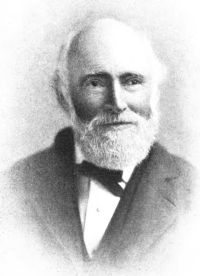 John Sullivan Dwight,
Aesthetic Papers
(1849)
“ Then, too, besides this captivating music of the Catholic church, we should think of the plain church, the voices of the united multitude, in simple, solemn, sublime strains, presenting themselves as one before the Lord. Even our modern psalm, as monotonous and artificial as it often is, satisfying scarcely more than the grammatical conditions of a musical proposition, has oftentimes an unsurpassable grandeur. ”
Various, The Catholic World, Vol. 21, April…
“ And the sacred poet points all round to the illimitable, beyond the boundaries of time out into eternity, shows the relation of all things, created and uncreated, to the symbol of grace, and how all nations look up to Him in worship.“The universe in its thousand-fold phenomena, with the chorus of all its myriad voices, becomes one sublime psalm to the praise of the Most Holy; heaven and earth lay their gifts at his feet ”
Various, Graham's Magazine, Vol. XXXVII, No…
“ The hundredth psalm, rising in the fullness of three thousand voices up into the clear sky, broken among rocks, prolonged and modulated through valleys, softened over the surface of mountain-guarded lakes, had a grandeur and a majesty, contrasted with which mere art is poverty and meanness. ”
Walter F. Adeney, The Expositor's Bible: The Song of Solomon and the Lamentations of Jeremiah
“ Yet the psalm is of value as a revelation of a soul's agony relieved by prayer; and there are occasions when its very words can be repeated by men and women who are indeed overwhelmed by trouble. If we do not spoil the occasional by attempting to make it habitual it is wonderful to see how rich the Bible is in utterances to suit all cases and all conditions. Such an outpouring of a distressed heart as the elegist hints at and the psalmist illustrates, is itself full of profound significance. The stirring of a soul to its depths is a revelation of its depths. ”
David Baron, The Ancient Scriptures and the Modern Jew… (1901)
“ Though it is the shortest psalm in the collection, it is most comprehensive. It is a psalm for Israel, yet it is universal and cosmopolitan, embracing in its scope " all nations and peoples," so that in the Epistle to the Romans it forms part of the Apostle's argument that Gentiles too are called upon to glorify God for His mercy. It is a thoroughly evangelical psalm, for it sings of grace and truth ; it is a beautiful psalm of praise, for it begins with a Hallelujah and ends with a Hallelujah, and there is a third fervent call to praise in between. ”
Ruth Ellis Messenger, Christian Hymns of the First Three Centuries
“ Let us abandon at once our contemporary connotation of the word hymn which is derived ultimately from the hymns of Ambrose, 340-397, that is, a metrical lyric constructed in stanzas. In the pre-Ambrosian period Christian hymns were largely of the psalm type, to be chanted in rhythmic periods without rhyme. Not only should the word hymn be conceived in terms of ancient thought, but also the futile attempt to differentiate among psalms, hymns and canticles should be avoided. ”
 Edwin Paxton Hood,
Isaac Watts; his life and writings…
(1875)
“ I have made psalms of praise in the holy assembly the chief delightful exercise of my religion and my life, and have helped to bear down all the objections which I have heard against church music and against the 149th and 150th Psalms. It was not the least comfort I had in the converse with my late dear wife, that our first in the morning and last at night was a psalm of praise, till the hearing of others interrupted it. Let those that savour not melody leave others to their different appetites, and be content to be so far strangers to their delights. ”
P. L. Jacob, Military and religious life in the Middle Ages and at the period of the Renaissance (1870)
“ Until the fifth century vespers were the last prayers of the day, and included the psalms, which were said separately in the following century, as a last service, termed Compline, and which at first only contained three psalms—it was not till the ninth century that the thirtieth psalm was added. ”
With the World's Great Travellers…
“ And lastly, one night in the spring time—or say one morning rather, at the peep of day—late folk may hear the voices of many men singing a psalm in unison from a church on one side of the old High Street, and a little after or perhaps a little before, the sound of many men singing a psalm in unison from another church on the opposite side of the way. ”
Alexander Maclaren,
Expositions of Holy Scripture: Psalms
“ This psalm has for its burden a cry for deliverance; but the Psalmist begins where it is very hard for a struggling man to begin, but where we always should begin, with grateful remembrance of God's mercy. His wondrous dealings seem to the Psalmist's thankful heart as numberless as the blades of grass which carpet the fields, or as the wavelets which glance in the moonlight and break in silver upon the sand. They come pouring out continuously, like the innumerable undulations of the ether which make upon the eyeballs the single sensation of light. ”
Arthur E. Gregory, The Hymn-Book of the Modern Church…
“ More strong than all poetic thought.But though the primitive Church had no great hymn-book, it had its ephemeral ‘songs and solos,’ its minor poets who helped many an earnest worshipper to draw nigh to God with the voice of a psalm. Indeed, there is some reason to think that the Corinthian Church suffered from too great a number of would-be poets, for there ‘every one’ had ‘a psalm,’ and St. Paul would obviously have liked to issue, as John Wesley actually did, a rule against the giving out of hymns of the preacher’s own composing. ”
 Edwin Abbott Abbott,
Philochristus
(1878)
“ But against this hope there set themselves those last words which had come from the mouth of Jesus on the cross, "My God, my God, why hast thou forsaken me?" Now these words are the first words, and as it were the prelude, of one of our psalms. So I began to repeat to myself the words of the psalm; which beginneth with sadness, yea even from the depths of sorrow, but these words follow afterwards: "I will declare thy name unto my brethren: in the midst of the congregation will I praise thee. For he hath not despised nor abhorred the affliction of the afflicted ”
Alexander Maclaren,
The Life of David: As Reflected in His Psalms
“ If, with the majority of modern commentators, we take them as a picturesque embodiment of eager haste in the pursuit, the conqueror "faint, yet pursuing," and stooping for a moment to drink, then hurrying on with renewed strength after the fugitives, one can scarcely help feeling that such a close to such a psalm is trivial and liker the artificial play of fancy than the work of the prophetic spirit, to say nothing of the fact that there is nothing about pursuit in the psalm. ”
Related terms
Authors who wrote about “psalm tune”
Lester HostetlerA. R. WhithamAlexander MaclarenEdward DickinsonTheron BrownCharles Gordon CummingArthur E. GregoryDaniel Davenport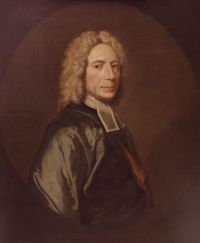 Isaac WattsErnest Edwin RydenRuth Ellis MessengerGeorge P. UptonVariousWalter F. AdeneyMatthew HenryArthur Christopher BensonPansy AldenJohn Weeks MooreJames PatersonWilliam Smyth Rockstro
Alexander MaclarenEdward DickinsonTheron BrownCharles Gordon CummingArthur E. GregoryDaniel DavenportIsaac WattsErnest Edwin RydenRuth Ellis MessengerGeorge P. UptonVariousWalter F. AdeneyMatthew HenryArthur Christopher BensonPansy AldenJohn Weeks MooreJames PatersonWilliam Smyth Rockstro