Immanuel Kant,
Idea for a Universal History from a Cosmopolitan Point of View
Immanuel Kant,
Idea for a Universal History from a Cosmopolitan Point of View
“ Is it reasonable to assume a purposiveness in all the parts of nature and to deny it to the whole? ”
Immanuel Kant,
Idea for a Universal History from a Cosmopolitan Point of View
“ Is it reasonable to assume a purposiveness in all the parts of nature and to deny it to the whole? ”
“ I do not believe that the theory of evolution would have made its way so easily and so quickly after Darwin took up the cudgels in favour of it if he had not been able to support it by a principle which was capable of solving, in a simple manner, the greatest riddle that living nature presents to us,—I mean the purposiveness of every living form relative to the conditions of its life and its marvellously exact adaptation to these. ”
Immanuel Kant,
Index of the Project Gutenberg Works of Immanuel Kant
“ The judgement of taste has nothing at its basis but the form of the purposiveness of an object (or of its mode of representation) 69 § 12. The judgement of taste rests on a priori grounds 70 § 13. The pure judgement of taste is independent of charm and emotion 72 § 14. Elucidation by means of examples 73 § 15. The judgement of taste is quite independent of the concept of perfection 77 § 16. ”
George Tybout Purves, Joy in Service; Forgetting, and Pressing Onward…
“ And then, what should we say of one who seeks after truth and righteousness, and yet does not yield obedience to him who is the source of all things—the truth, the righteousness? We should probably conclude that his search was a fancy, his aspiration an illusion. No! What we need is to love the Lord our God with all our heart, to feel that he is the wisest, the most lovely—the embodiment and the source of all other wisdom and goodness; the Sun by which the other planets shine, by whose rays the world of nature receives its life and beauty. We need to love God supremely ”
 George William Curtis,
From the Easy Chair, Volume 2
George William Curtis,
From the Easy Chair, Volume 2
“ The mingled strength and simplicity and sweetness of his nature, the lofty sense of justice, the tranquil and complete devotion to duty, the large and humane sympathy, not lost in vague philanthropic feeling, but mindful of every detail of relief—the sound and steady judgment, the noble independence of thought and perfect courage of conviction, the blended manliness and modesty of a life which was unstained, and of a character which seemed without a flaw, all belonged to what we call the ideal man. ”
 Orison Swett Marden,
Pushing to the Front
Orison Swett Marden,
Pushing to the Front
“ Blessed art thou, most favored of God, whose THOUGHTS are chastened; whose imagination will not breathe or fly in tainted air, and whose path hath been measured by the golden reed of purity." To be pure in heart is the youth's first great commandment. Do not listen to men who tell you that "vice is a necessity." Nothing is a necessity that is wrong,—that debauches self-respect. "All wickedness is weakness." Vice and vigor have nothing in common. Purity is strength, health, power. Do not imagine that impurity can be hidden! ”
George Ticknor Curtis, Creation or Evolution? A Philosophical Inquiry
“ Absolute perfection of moral character can not be described by a definition; but, as we know that a measurable goodness which we can describe exists, wherein consists the failure or lapse of a thinkable relation, when we reason from that which exists in a measurable degree to that which transcends all degree? We are all the while thinking of goodness or virtue, whether we think of it as limited and imperfect, or as unlimited and perfect. Take another quality—power. We know that there is such a quality as power, wielded by human beings, and guided by their will. ”
George Tybout Purves, Joy in Service; Forgetting, and Pressing Onward…
“ No later fame or success, no gaudy robes of human praise, no gilded crown of human admiration, are needed to adorn him. He discloses the very ideal of a godly life. All our poor efforts at obedience, all our faint aspirations after the knowledge and love of God, all our unfulfilled prayers, and falling flights, and unredeemed promises and sin-stained attempts to serve, confess the ideal perfectness of him who could truthfully say, "My meat is to do the will of him that sent me, and to finish his work." ”
 Herbert Spencer,
The Data of Ethics
Herbert Spencer,
The Data of Ethics
“ And we found that every other proposed standard of conduct derives its authority from this standard. Whether perfection of nature is the assigned proper aim, or virtuousness of action, or rectitude of motive, we saw that definition of the perfection, the virtue, the rectitude, inevitably brings us down to happiness experienced in some form, at some time, by some person, as the fundamental idea. Nor could we discover any intelligible conception of blessedness, save one which implies a raising of consciousness, individual or general, to a happier state ”
Eveleen Laura Mason, An episode in the doings of the dualized (1898)
“ Purity knows how to deal in an offhand way with its own nature and needs, being full of the courage of its own convictions as to what it wants to do and be.“The courage of purity is full of simplicity and high achievement ”
Robert H. Milligan, The jungle folk of Africa (1908)
“ Your virtues, and the graces of mind and character upon which you pride yourself—your strength and composure, your patience and devotion to duty, your honesty, your justice, your purity—all these belong not only to yourself but to the society which has produced you and of which you are a part. ”
“ And thus setting bounds to the emotional motions, it engenders in the unreasoning part of the soul moral virtues, which are the mean between excess and deficiency. Not that we can say that all virtue exists in the mean, but knowledge and prudence being in no need of the unreasoning element, and being situated in the pure and unemotional part of the soul, is a complete perfection and power of reason, whereby we get the most divine and happy fruit of understanding. ”
 Adam Smith,
The Essays of Adam Smith
Adam Smith,
The Essays of Adam Smith
“ CONCLUSION OF THE SIXTH PART. CONCERN for our own happiness recommends to us the virtue of prudence: concern for that of other people, the virtues of justice and beneficence; of which, the one restrains us from hurting, the other prompts us to promote that happiness. Independent of any regard either to what are, or to what ought to be, or to what upon a certain condition would be, the sentiments of other people, the first of those three virtues is originally recommended to us by our selfish, the other two by our benevolent affections. ”
 J. R. Miller,
Girls: Faults and Ideals
J. R. Miller,
Girls: Faults and Ideals
“ I need not quote the words. I need only remind you that purity must have its home in the heart, if it is to be the glory of the life. "Blessed are the pure in heart," is the Master's beatitude. "You are pure, you say ”
William Forster Lloyd, Two Lectures on the Checks to Population (1833)
“ Generally speaking, prudence, or the habit of attending to future consequences, is a virtue seldom acquired in any great degree of perfection until late in life. It is the result of long observation and repeated experience. ”
 Maria Edgeworth,
Practical Education, Volume II
Maria Edgeworth,
Practical Education, Volume II
“ Moral reasoning, and the habit of acting in consequence of the conviction of the judgment, we call prudence; a virtue of so much consequence to all the other virtues; a virtue of so much consequence to ourselves and to our friends, that it surely merits a whole chapter to itself in Practical Education. ”
Mary F. Porter, Applied Psychology for Nurses
“ And because we can never point out any one quality in the outside world and say “This is purity, and all of purity; this is goodness; or this good plus this good plus this makes all of goodness”; because of this impossibility we speak of these concepts as having reality somewhere. They are absolutes, universals, abstract quality concepts—the unfound all of which the things we call pure and good are but the part. ”
 Georg Wilhelm Friedrich Hegel,
Hegel's Philosophy of Mind
Georg Wilhelm Friedrich Hegel,
Hegel's Philosophy of Mind
“ And first, there is the career of honesty and worldly prudence, which makes the duty of the citizen. Secondly, there is the progress in purity which casts earthly things behind, and reaches the angelic height of passionless serenity. ”
 Henry David Thoreau,
Walden
(1854)
Henry David Thoreau,
Walden
(1854)
“ Who knows what sort of life would result if we had attained to purity? If I knew so wise a man as could teach me purity I would go to seek him forthwith. "A command over our passions, and over the external senses of the body, and good acts, are declared by the Ved to be indispensable in the mind's approximation to God." ”
 Sarah Margaret Fuller,
Papers on Literature and Art
(1846)
Sarah Margaret Fuller,
Papers on Literature and Art
(1846)
“ For so it is, “what makes our virtues thrive openly, will also, if we be not watchful, make our faults thrive in secret;”? and vice versa. Let us admire his varied knowledge, his refinement of thought, which was such that only his truly philosophic turn could have prevented it from degenerating into sophistry; his devotion, even more tender than enthusiastic, to the highest interests of humanity; that beautiful fairness of mind, in which he was unequalled, a fairness which evidenced equal modesty, generosity, and pure attachment to truth ”
 Marcus Tullius Cicero,
The Orations of Marcus Tullius Cicero…
Marcus Tullius Cicero,
The Orations of Marcus Tullius Cicero…
“ The power of virtue then is twofold, for virtue is distinguished either by theory or by practice. For that which is called prudence, or shrewdness, or (if we must have the most dignified title for it) wisdom, is all theoretical. But that which is praised as regulating the passions, and restraining the feelings of the mind, finds its exercise in practice. ”
Saint Aquinas Thomas, On prayer and the contemplative life
“ In the same way, then, as we said above that in the case of a man who directs them to the repose of contemplation, the moral virtues pertain to the contemplative life, so also the knowledge which is prudence, and which is by its very nature directed to the operations of the moral virtues, directly pertains to the active life—that is, of course, on the supposition that prudence is understood in the strict sense in which the Philosopher speaks of it. ”
R. Elton Smile, The Manatitlans
“ All of your adherents have acknowledged themselves better and happier than they ever expected to be in life. Still, you doubt our ability to enlist, with the simplicity and purity of our example, the affectionate reciprocations of your women? Surely you speak in riddles of enactment and theory, as perplexing as if in discourse you should say, empty barns full of grain. Are there not many others among your learned men equally able to distinguish that purity and goodness are in reality the source of happiness ”
Mark Hopkins, The Connexion Between Taste and Morals…
“ There is in those works an unnatural separation made between the principle of virtue and that which gives to virtue its beauty; and principle is represented as formal and cold, and perhaps ridiculous. Prudence, especially, is a virtue which no heroine of a novel must ever be guilty of. ”
H. M. Balyuzi, The Báb: The Herald of the Day of Days
“ Such must be the purity of your character and the degree of your renunciation, that the people of the earth may through you recognise and be drawn closer to the heavenly Father who is the Source of purity and grace. ”
George Tybout Purves, Joy in Service; Forgetting, and Pressing Onward…
“ In all, infinite wisdom, the Father's goodness, and eternal righteousness move. He shows the way, and man's highest privilege—yea, man's strength and food—is to do his will, because we love and trust and adore him so entirely that what he wishes, that we are glad to do. ”
 James Anthony Froude,
Short Studies on Great Subjects
James Anthony Froude,
Short Studies on Great Subjects
“ But one lesson there does seem to lie in such a life of such a man,—a lesson which he taught equally by example and in word,—that wherever there is genuine and thorough love for good and goodness, no speculative superstructure of opinion can be so extravagant as to forfeit those graces which are promised, not to clearness of intellect, but to purity of heart. ”
B. G. Jefferis, Searchlights on Health: Light on Dark Corners
“ Why not pay careful attention to man in all his elements of strength, physical, mental, and moral? Why not make personal purity a fixed principle in the manhood of the present and coming generations, and thus insure the best men the world has ever seen? ”
 William Herman,
The Dance of Death
William Herman,
The Dance of Death
“ Of course, they will tell you, there are persons who are excited impurely by the waltz, but these are persons who would be immoral under any circumstances. "To the pure all things are pure." It is astonishing how apt they are with these tongue-worn aphorisms. To the pure all things are pure,—yes, but purity is only a relative virtue whose value is fixed by the moral standard of the individual. ”
 Johan Huizinga,
Erasmus and the Age of Reformation
Johan Huizinga,
Erasmus and the Age of Reformation
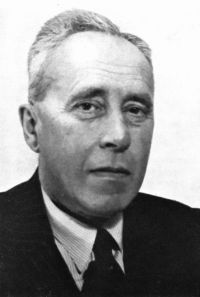
“ At the root of his moral being we find—a key to the understanding of his character—that same profound need of purity which drove him to the sources of sacred science. Purity in the material and the moral sense is what he desires for himself and others, always and in all things. ”
 James Mill,
Analysis of the Phenomena of the Human Mind
James Mill,
Analysis of the Phenomena of the Human Mind
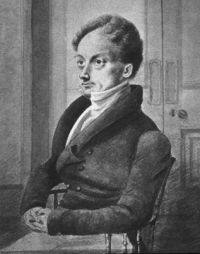
“ Having considered the associations which each of us has with the ideas of his own acts of Prudence, Fortitude, Justice, and Beneficence, it remains that we consider the associations which each of us has with other men’s acts of Prudence, Fortitude, Justice, and Beneficence.We have already observed, that the Prudence of other men is primarily useful to themselves, secondarily useful to others. A man who is to a certain degree imprudent, deprives himself of the power of being useful either to himself or to others. ”
 Evelyn Underhill,
Practical Mysticism: A Little Book for Normal People
Evelyn Underhill,
Practical Mysticism: A Little Book for Normal People
“ Their purity is an affirmative state; something strong, clean, and crystalline, capable of a wholeness of adjustment to the wholeness of a God-inhabited world. The pure soul is like a lens from which all irrelevancies and excrescences, all the beams and motes of egotism and prejudice, have been removed; so that it may reflect a clear image of the one Transcendent Fact within which all others facts are held. ”
 James Cowan,
Daybreak: A Romance of an Old World
James Cowan,
Daybreak: A Romance of an Old World
“ My message, O men, shall be a plea for purity. If you would seek to make your world the better for your visit here, teach men everywhere to be pure, a hard lesson to learn, but one that will bring a rich reward. ”
Lady Charlotte Campbell Bury, The Exclusives (vol. 1 of 3)
“ What a melancholy prospect, he inwardly exclaimed, lies before that beautiful creature, whose principles have never been formed to virtue, and who has been cast among those whose every axiom is contrary to the laws of purity and truth! ”
 John Gregory,
A Father's Legacy to his Daughters…
(1808)
John Gregory,
A Father's Legacy to his Daughters…
(1808)
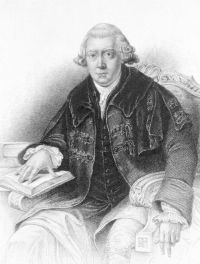
“ If you have any sensibility or imagination, this will establish such an intercourse between you and the Supreme Being, as will be of infinite consequence to you in life. It will communicate an habitual cheerfulness to your tempers, give a firmness and steadiness to your virtue, and enable you to go through all the vicissitudes of human life with propriety and dignity. ”
 Ellice Hopkins,
The Power of Womanhood, or Mothers and Sons
Ellice Hopkins,
The Power of Womanhood, or Mothers and Sons
“ Truthfulness, conscientiousness that refuses to scamp work, devotion to duty, temperance in food and drink, rectitude—these things are the bastions of purity of life, as well as of all high character. ”
Maria Edgeworth,
Practical Education, Volume II
“ Prudence is a virtue compounded of judgment and resolution: we do not here speak of that narrow species of prudence, which is more properly called worldly wisdom; but we mean that enlarged, comprehensive wisdom, which, after taking a calm view of the objects of happiness, steadily prefers the greatest portion of felicity. This is not a selfish virtue; for, according to our definition, benevolence, as one of the greatest sources of our pleasures, must be included in the truly prudent man's estimate. ”
 Luis de la Puente,
Meditations On The Mysteries Of Our Holy Faith…
(1852)
Luis de la Puente,
Meditations On The Mysteries Of Our Holy Faith…
(1852)
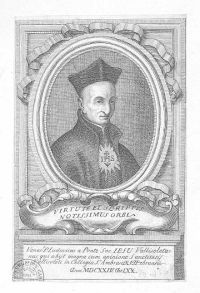
“ Therefore, O my soul, fly from pride, if it be but to avoid thy damage, and embrace humility, though it but for thy own profit. For it is a general law, from which thou shalt not be excepted, that whosoever is proud shall be humbled, and that "whosoever humbleth himself shall be exalted." Comply with that which belongs to thee, humbling thyself for thy sins, and God will perform what belongs to Him, exalting thee with His gifts. ”
Charles J. Callan, Moral Theology
“ Relations between Prudence and Other Virtues.—In the preceding paragraphs the possession of prudence has been joined with the moral virtues. Hence the question presents itself: Can one who lacks the moral virtues possess prudence? ”
Paul Janet, Elements of Morals
“ We have already (page 87) made a similar observation in regard to prudence and wisdom, namely, that virtue in general is both wisdom and courage: for it presupposes at the same time strength and light. As strength, it is courage, energy, greatness of soul; as light, it is prudence and wisdom. ”
Freiherr von Friedrich Hügel, The Mystical Element of Religion…
“ In her greatest sayings, and in her actual life, Purity is found to be Love, and this Love is exercised, not only in the inward, home-coming, recollective movement,—in the purifying of the soul’s dispositions, but also in the outgoing, world-visiting, dispersive movement,—in action towards fellow-souls. ”