Railway curve

Definition and stakes

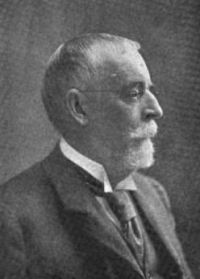
Portrait of George Findlay George Findlay,  The Working and Management of an English Railway (1889)

“ Railway curves are invariably arcs of circles of greater or less radius, except for a short length, where they join or leave the straight line. Where the radius of the curve is uniform, a uniform super-elevation is given to the outer rail, but this elevation dies away gradually to the straight line, where the rails become level. As the super-elevation decreases the radius of the curve increases until it becomes infinite, or, in other words, until the straight line is reached. ”
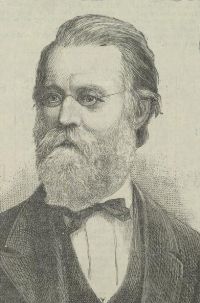
Source: Wikisource

Portrait of Thomas Low Nichols Thomas Low Nichols,  Once a Week (1862)

“ The prairies have a monotony of their own. Your eye searches all round the horizon for the joyous blue peak of a far-off mountain. You cannot even see a tree. The railway itself is tiresome in its straight-lined and dead-level uniformity. A deep cut, a high embankment, a heavy grade, or a sharp curve, would be a relief. The only variety we had was that of the violent motion caused by the displacement of the ties by frost. This was so great at times as to set all the cars dancing, and almost to throw the passengers from their seats. ”
Source: Wikisource

William Hemingway Mills,  Railway Construction

“ Although a high-class fast train may be allowed to run round an 80 chain (5280 feet) curve at almost unrestricted speed, safety demands that there should be a reduction of speed on curves of 40 or 30 chains radius, and a very much greater reduction for curves of 20 chains radius and under. A sharp curve will in some places form a greater check to fast trains than a length of moderately steep gradient on a straight line. ”
Source: Gutenberg

Get perspective with Kwize: daily news enlightened by great literature