Refracting telescope

Definition and stakes

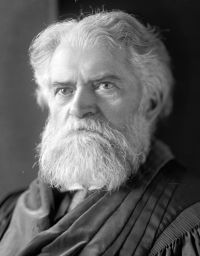
J. S. Plaskett,  The Dominion Astrophysical Observatory…

“ The refracting telescope is the most familiar type as the ordinary spyglass or draw-tube telescope and the field or opera glass are all refracting telescopes. The refracting telescope is so called because the light from the distant object is refracted through a lens at the outer end of the tube and forms an image of the object at the inner end, just as a camera forms an image on the ground glass or film, and this image is viewed and magnified by the eyepiece or ocular. ”
Source: Gutenberg

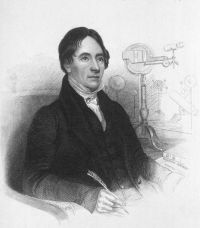
Portrait of Thomas Dick Thomas Dick,  The Practical Astronomer

“ But it is to be considered, that if the power of magnifying be increased, while the length of the telescope remains the same, it is necessary to diminish the focal length of the eye-glass in the same proportion, and this cannot be done on account of the great distortion and colouring which would then appear in the image, arising both from the deep convexity of the lens and the different refrangibility of the rays of light. It is found that the length of common refracting telescopes must be increased in proportion to the square of the increase of their magnifying power ”
Source: Gutenberg

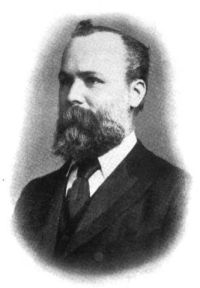
Portrait of Robert S. Ball Robert S. Ball,  Great Astronomers

“ It had been supposed that the reason why success had not been attained in the construction of a refracting telescope was due to the fact that the object glass, made as it then was of a single piece, had not been properly shaped. Mathematicians had abundantly demonstrated that a single lens, if properly figured, must conduct all rays of light to the same focus, provided all rays experienced equal refraction in passing through the glass. Until Newton's discovery of the composition of white light, it had been taken for granted that the several rays in a white beam were equally refrangible. ”
Source: Gutenberg

Get perspective with Kwize: daily news enlightened by great literature