Rotation (astronomy)

Definition and stakes

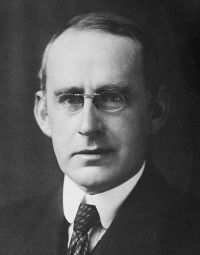
Portrait of George Biddell Airy George Biddell Airy,  Popular Astronomy: A Series of Lectures Delivered at Ipswich (1881)

“ Therefore, we must make the following supposition: that if the earth does turn round the sun, its axis of rotation remains parallel to itself, having no reference whatever to the sun, whilst the earth is going round the sun; or, to express it in other words—that the earth has the power of preserving its axis of rotation in the same position all the time. Now, it is remarkable, as a mechanical fact, that nothing is so permanent in nature as the axis of rotation of anything which is rapidly whirled. We have examples of this in every-day practice. The first is the motion of a boy's hoop. ”

Source: Wikisource

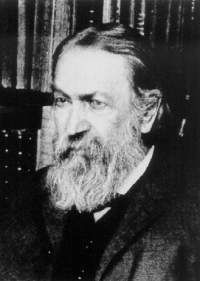
J. A. Gillet,  The Heavens Above: A Popular Handbook of Astronomy

“ Since the sum total of rotary motion now seen in the planetary system must have been there from the beginning, he conceives the immense vaporous mass forming the sun and his atmosphere to have had a slow rotation on its axis. As the intensely hot mass gradually cooled, it would contract towards the centre. As it contracted, its velocity of rotation would, by the laws of mechanics, constantly increase; so that a time would arrive, when, at the outer boundary of the mass, the centrifugal force due to the rotation would counterbalance the attractive force of the central mass. ”
Source: Gutenberg

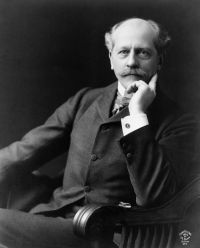
Portrait of Willem de Sitter Willem de Sitter,  On the bearing of the Principle of Relativity on Gravitational Astronomy (1911)

“ Astronomical time is defined by the rotation of the Earth, and is measured by the hour-angle of the axis of . Such deviations from uniformity as are derived from the action of known causes—which are, however, negligible, and remain negligible under the new law—are allowed for, and the thus corrected rotation is supposed to be uniform. ”
Source: Wikisource

Get perspective with Kwize: daily news enlightened by great literature