Royal court

Definition and stakes

S. A. Reilly Our Legal Heritage : 600-1776 King Aethelbert - King George III

The Royal Court had grown substantially and was not always presided over by the King. To avoid court agents from having too much discretionary power, there was a systematic procedure for bringing cases to the Royal Court. First, a plaintiff had to apply to the King's Chancery for a standardized writ into which the cause had to fit. The plaintiff had to pay a fee and provide a surety that the plea was brought in good faith.
Source: Gutenberg

S. A. Reilly Our Legal Heritage: King AEthelbert - King George III, 600 A.D. - 1776

The elections of members to Parliament were interfered with and Parliament was rarely held. Barons and earls fought their disputes in the field rather than in the royal courts. Litigation was expensive, so men relied increasingly on the protection of the great men of their neighborhood and less on the King's courts for the safety of their lives and land. Local men involved in court functions usually owed allegiance to a lord which compromised the exercise of justice. Men serving in an assize often lied to please their lord instead of telling the truth.
Source: Gutenberg

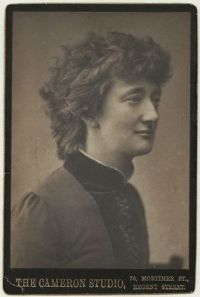
Portrait of Alice Stopford Green Alice Stopford Green Henry the Second

The tenant-in-chief of the king who was rich enough had his cause carried to the King's Court of barons, where he was tried by his peers. The poorer vassals, with the mass of the people, sought such justice as was to be had in the old English courts, the Shire Court held by the sheriff, and, where this survived, the Hundred Court summoned by the bailiff. The lowest orders of the peasant class, shut out from the royal courts, could only plead in questions of property in the manor courts of their lords.
Source: Gutenberg

Get perspective with Kwize: daily news enlightened by great literature