Royal patent

Definition and stakes

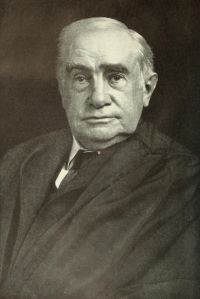
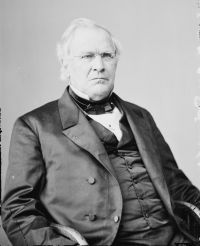
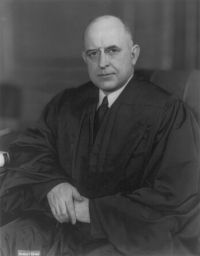
Portrait of Stanley Forman Reed Stanley Forman Reed,  United States v. Line Materials Company…

“ A patent to an inventor took nothing from the public which the public or the inventor's competitors already had. By hypothesis, it dealt with a new asset available to civilization only through its inventor. The royal patent served to encourage the inventor to disclose his invention. By granting to the inventor the right to exclude all others from making, using or selling the invention for a limited time, it was felt that the public was well served by the invention's disclosure, its early availability under the patent and its later general availability to everyone. ”
Source: Wikisource

Various,  Recent discussions on the abolition of patents for inventions in the United Kingdom… (1869)

“ I believe in the possibility and advisableness of presenting, as a substitute for Patents, a system of rewards which will reconcile the honour and interests of men of science and those of practical men, the interests of the master and those of his workmen, the interests of the many and those of the few. Such a system, while entirely emancipating commerce and industry, must, as its condition, deal out its rewards more equitably than the Patent system does, and with more regard to the just claims of inventors. ”
Source: Gutenberg

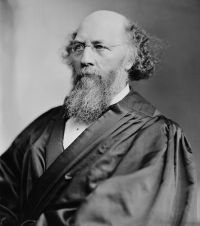
Nathan Clifford,  Dunbar v. Myers — Opinion of the Court

“ Inventions, in order that the inventors may be entitled to patents for the same, must be new and useful; and the better opinion is, that the improvement must be of such a character that it involved invention to make it, as the Patent Act confers no right to obtain a patent except to a person who has invented or discovered some new and useful art, machine, manufacture, or composition of matter, or some new and useful improvement in one or the other of those described subject-matters. ”
Source: Wikisource

Get perspective with Kwize: daily news enlightened by great literature