“ There is, however, something which the ordinary human mind finds soothing and delightful in this formula of 'the sanctity of human life,' when combined with a corresponding disregard for human and for all other life. ”
Sanctity of human life
Definition and stakes
The theme of “sanctity of human life” has been addressed by authors such as Andrew Murray, Marcus Dods, Christian D. Larson, Benjamin Fiske Barrett and Various. It is often associated with terms like God, Christianity, virtue, conscience and morality.
Quotes about “sanctity of human life”
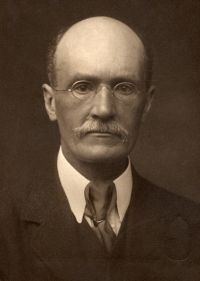 Gilbert Murray,
Five Stages of Greek Religion
Gilbert Murray,
Five Stages of Greek Religion
“ The problem is to combine the absolute value of that Goodness which, as we say, 'saves the soul' with the relative values of the various good things that soothe or beautify life. For, if there is any value at all—I will not say in health and happiness, but in art, poetry, knowledge, refinement, public esteem, or human affection, and if their claims do clash, as in common opinion they sometimes do, with the demands of absolute sanctity, how is the balance to be struck? ”
P. V. N. Myers, History as past ethics; an introduction to the history of morals (1913)
“ The Christian doctrine of man’s divine sonship and of his eternal destiny gave infinite worth to every human life, and, investing man as man with an inviolable sanctity, worked effectively in widening the range of the moral sympathies and in bringing within the scope of the moral law all classes and conditions of men. ”
 William Edward Hartpole Lecky,
History of European Morals From Augustus to Charlemagne…
William Edward Hartpole Lecky,
History of European Morals From Augustus to Charlemagne…
“ Considered as immortal beings, destined for the extremes of happiness or of misery, and united to one another by a special community of redemption, the first and most manifest duty of a Christian man was to look upon his fellow-men as sacred beings, and from this notion grew up the eminently Christian idea of the sanctity of all human life. ”
 George Santayana,
The Life of Reason: The Phases of Human Progress
George Santayana,
The Life of Reason: The Phases of Human Progress
“ A sanctity hangs about the sources of our being, whether physical, social, or imaginative. ”
 Amelia Opie,
Memorials of the Life of Amelia Opie
Amelia Opie,
Memorials of the Life of Amelia Opie
“ Free from any overstrained odour of sanctity, it yet teaches with earnestness and sincerity the value of religious as well as moral principle, and that no virtue can be exercised—no good principle can be carried out—without strength from above.”—Norwich Mercury. ”
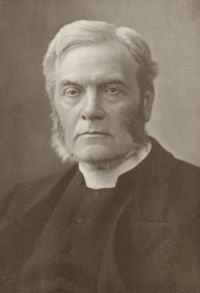 Marcus Dods,
The Expositor's Bible: The Book of Genesis
Marcus Dods,
The Expositor's Bible: The Book of Genesis
“ Now, of course, righteousness of life and character, or perfect manhood, is the end at which all that we call salvation aims, and that which can give us the purest, ripest character is salvation for us; that which can make us, for all purposes, most serviceable and strong. And when we are confronted with persons who might speak of service we cannot render, of an upright, unfaltering carriage we cannot assume, of a general human worthiness we can make no pretension to, we are justly perturbed, and should regain our equanimity only under the influence of the most undoubted truth and fact. ”
 Brigham Young,
Journal of Discourses — Volume 2…
Brigham Young,
Journal of Discourses — Volume 2…
“ In this sense virtue embraces all good; it branches out into every avenue of mortal life, passes through the ranks of the sanctified in heaven, and makes its throne in the breast of the Deity. When the Lord commands the people, let them obey. ”
 Edison Marshall,
Shepherds of the Wild
(1922)
Edison Marshall,
Shepherds of the Wild
(1922)
“ He had lost faith in the world, conceiving virtue as the exception rather than the rule, doubting the compensation of clean living, the sanctity of homes, the solace of religion, the pride of good work, the purity of womanhood, the immortality of ideals. ”
M. Valentine, Theoretical Ethics
“ Forgiveness of sin, justification by faith, stands as only the first step in the application of redemption, and beyond this Christianity pre-eminently means a life, the increasing recovery and perfection of human nature in its ethical character and action, enthroning the principles of duty, love, and righteousness in the conscience and the heart, and bringing personal conduct into rhythmic harmony with eternal righteousness and goodness. ”
Marcus Dods,
The Expositor's Bible: The First Epistle to the Corinthians
“ And this is true, but how are we to get men to accept it? Teach men to believe in a future life and you strengthen every moral sentiment and every Godward aspiration by revealing the true dignity of human nature. ”
 B. H. Roberts,
The Seventy's Course in Theology…
B. H. Roberts,
The Seventy's Course in Theology…
“ These principles enlarge the view of the importance of the earth-life of man, and give the idea of sanctity to the commandment, "Be Fruitful." Undoubtedly the most important thing in life is life itself, since there flows from life all other things,—experiences, joys, sorrows, sympathies, achievements, righteousness, honor, power—it is the root, the base of all. ”
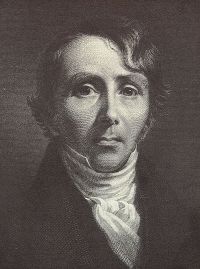 William Ellery Channing,
Unitarian Christianity
(1819)
William Ellery Channing,
Unitarian Christianity
(1819)
“ On Virtue Having thus stated our views of the highest object of Christ's mission, that it is the recovery of men to virtue, or holiness, I shall now, in the last place, give our views of the nature of Christian virtue, or true holiness. We believe that all virtue has its foundation in the moral nature of man, that is, in conscience, or his sense of duty, and in the power of forming his temper and life according to conscience. ”
 Jean-Marie Guyau,
The Non-religion of the Future…
Jean-Marie Guyau,
The Non-religion of the Future…
“ God having become one with the moral law, a further step may be taken; one may regard Christ who immolated Himself to save the world as a moral symbol of self-sacrifice, as the sublime type in which we find united all the suffering of human life and all the ideal grandeur of morality. ”
 James George Frazer,
The Golden Bough
(1922)
James George Frazer,
The Golden Bough
(1922)
“ Both preached moral virtue as the means of accomplishing what they regarded as the supreme object of life, the eternal salvation of the individual soul, though by a curious antithesis the one sought that salvation in a blissful eternity, the other in a final release from suffering, in annihilation. ”
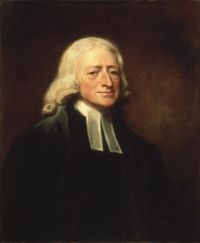 John Wesley,
The works of the Rev. John Wesley…
(1771)
John Wesley,
The works of the Rev. John Wesley…
(1771)
“ But till you are thus renewed in the spirit of your minds, your virtues are only taught practices, and grafted upon a corrupt bottom. Every thing you do, will be a mixture of good or bad; your humility will help you to pride, your charity to others will give nourishment to your own self-love, and as your prayers increase, so will the opinion of your own sanctity. ”
Prefaces and prologues to famous books
“ This conception, in its turn, depends on a third one, still more general, that of moral perfection as this is found in a perfect God, the impeccable judge, the stern overseer, who regards every soul as sinful, meriting punishment, incapable of virtue or of salvation, except through a stricken conscience which He provokes and the renewal of the heart which He brings about. Here is the master conception, consisting of duty erected into the absolute sovereign of human life, and which prostrates all other ideals at the feet of the moral ideal. ”
Durant Drake, Problems of Conduct: An Introductory Survey of Ethics
“ A high enough morality, a complete enough consecration, will lead, in all but very abnormal cases, to happiness in the individual life, as well as make its due contribution to the happiness of others. ”
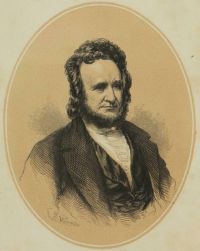 John Bovee Dods,
Twenty-Four Short Sermons On The Doctrine Of Universal Salvation
John Bovee Dods,
Twenty-Four Short Sermons On The Doctrine Of Universal Salvation
“ Let us make the most of life we may, and not turn our present existence, which is one of heaven's choicest blessings, into a curse. Let us do good in our day and generation, and render ourselves blessings to mankind, by living soberly, righteously and peaceably in the world? Let us do justly, love mercy, and walk humbly with God—visit the widow and the fatherless in their affliction, and keep ourselves unspotted from the world. ”
 Theodore Parker,
Speeches, Addresses, and Occasional Sermons…
Theodore Parker,
Speeches, Addresses, and Occasional Sermons…
“ By fair-dealing, justice, kindness, self-control, and the great work of helping others while you help yourself, let your life prove a worship. These are the real sacraments and Christian communion with God, to which water and wine are only helps. Criticize the world not by censure only, but by the example of a great life. ”
 William Ralph Inge,
Christian Mysticism
William Ralph Inge,
Christian Mysticism
“ The ground of all the virtues is humility; thence proceed, in order, obedience, renunciation of our own will, patience, gentleness, piety, sympathy, bountifulness, strength and impulse for all virtues, soberness and temperance, chastity. "This is the active life, which is necessary for us all, if we wish to follow Christ, and to reign with Him in His everlasting kingdom." ”
Brigham Young,
Journal of Discourses — Volume 8…
“ The wicked seek to destroy the kingdom of God, and it is for us to build it up, and promote righteousness upon the earth. When we do this, we shall promote honesty in all our conduct and transactions. As we increase in understanding we shall increase our efforts to adorn our minds, our families, our possessions, and our neigbourhoods, and seek to promote every pure, holy, graceful, and delightful principle, custom, habit, or whatever else pertaineth to correct human conduct. This will increase the Spirit of life in the people, and will make the aged beautiful as well as the young. ”
Joseph Cross, Old Wine and New: Occasional Discourses
“ While we recognize in such cases only a conscientious service rendered to God or a life of superior charity to his rational and immortal creatures, we can but admire and honor the noble principle that thus renounces the conveniences and advantages of high birth and ample fortune for the lowest conditions of civilized humanity. The impulse is divine; the spirit is that of Christ. Some become poor through misfortune, some through improvidence, some through criminal indulgence, these through stanch adherence to duty. ”
Richard Hurd, The works of Richard Hurd, volume 6…
“ And thus, that Charity, which a pure mind gives the liberty of exerting, and which a good conscience manifests and at the same time improves, will, further, be so sublimed and perfected by the influence of divine faith, as will render it the sovereign guide of life, and the pride and ornament of humanity. ”
Rev. W. Harris, The Preacher's Complete Homiletic Commentary on the Books of the Bible…
“ He who seeks mercy and righteousness from God by faith becomes, as we have seen, a righteous and merciful man. This in itself is moral life—a quickening of the spiritual capabilities—an awakening to spiritual realities and joys which were before unknown—an entrance into the possession of all that makes existence worth having. Such a man gets honour of a real and lasting nature—the goodwill of all the good in all worlds and the favour of God Himself. ”
 Phillips Brooks,
Addresses by the Right Reverend Phillips Brooks
Phillips Brooks,
Addresses by the Right Reverend Phillips Brooks
“ Shall a man serve the world, strive to increase the kingdom of God in the world? Yes, indeed, he shall. How shall he do it? By cultivating himself, and instantly he is thrown back upon his own life. "For their sakes I sanctify myself, that they also might be sanctified." ”
Catherine Mumford Booth, Godliness : being reports of a series of addresses delivered at James's Hall…
“ Now, what is the whole duty of man? To love mercy, to do justly, and walk humbly with God; and, when the Holy Spirit has brought about that result in your soul, God will look on you with a beneficent eye, with a smile of approbation, and its genial influence will sun your whole being, and you will walk in the light of it, even as the angels do in Heaven. "Do justice, love mercy, and walk humbly with God;" that is the whole duty of man—everything is included in that. ”
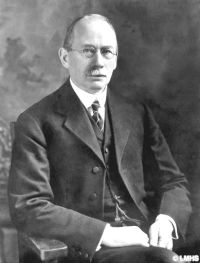 Rufus M. Jones,
Spiritual Reformers in the 16th & 17th Centuries
Rufus M. Jones,
Spiritual Reformers in the 16th & 17th Centuries
“ He shows the moral supremacy, even in this imperfect empirical world, of the perfectly good will, and He impresses those who see Him—see Him, I mean, with eyes that can penetrate through the temporal to the eternal and find His real nature—as being the supreme personal unveiling of God, as worthy to be our Leader, our Ideal Life, our typical personal Character, and strong enough in His infinite Grace and divine self-giving to convince us of the eternal co-operation of God with our struggling humanity, and to settle our Faith in the essential Saviourhood of God. ”
Charles J. Callan, Moral Theology
“ In the three Questions that preceded we spoke of the means by which man is sanctified and is enabled to secure supernatural rewards through the merits of his own works; for the virtues make their possessor as well as his acts morally righteous, while through God’s grace the good deeds done for His sake entitle the doer to the crown of eternal life. ”
 Josiah Royce,
The Religious Aspect of Philosophy
(1885)
Josiah Royce,
The Religious Aspect of Philosophy
(1885)
“ Here is not the ideal. “Would that there were a higher life! To that we would devote ourselves. We will serve humanity, but how can we worship it?” Such is the thought of many an ardent soul that seeks no personal rewards in serving the good, but that does seek some great Reality that shall surely be worthy of service. To such, our religious insight points out this higher reality. You that have been willing to devote yourselves to humanity, here is a Life greater in infinite degree than humanity. ”
M. Valentine, Theoretical Ethics
“ All the distinctly religious interests and forces, reverence of Deity, repentance before God, gratitude, faith, love, hope, spiritual joy, aspiration, desire of immortality and endless blessedness, thus brought into concurrent action with the Christianly enlightened natural conscience, bring an immensely advantageous condition for the actualization of the ethical life. ”
Rufus M. Jones,
Spiritual Reformers in the 16th & 17th Centuries
“ This inward life and spiritual appreciation do not give any ground for relaxing the moral obligations of life. No fulfilling of the law by Christ, no vanishing of the outward and temporal, furnish any excuse to us for slacking a jot or tittle of anything which belongs to the inherent nature of moral goodness. ”
 James Hutchins Baker,
Education and life
(1900)
James Hutchins Baker,
Education and life
(1900)
“ In the fifth book of the “Laws” is an exhortation to right living that partakes of the spirit of the Christian philosophy. Every man is to honor his own soul with an honor that regards divine good, to value principle higher than life, to place virtue above all gold, to glory in following the better course, to count reverence in children a greater heritage than riches, to regard a contract as a holy thing, to avoid excess of self-love and to adhere to the truth as the beginning of every good. ”
English Critical Essays: Nineteenth Century
“ Christianism emblemed the Law of Human Duty, the Moral Law of Man. One was for the sensuous nature: a rude helpless utterance of the first Thought of men,—the chief recognized virtue, Courage, Superiority to Fear. ”
Edith H. Allen, Home Missions in Action
“ The concept of the Christian ideal to-day is that it shall save the individual, but also remove that which produces crime and makes sin almost inevitable—in short, that it shall seek to redeem the environment as well as the sinner, and give more wholesomeness, more fullness, more joy to life through redeeming its conditions, as well as saving its soul. ”
 Benjamin Fiske Barrett,
The Doctrines of the New Church Briefly Explained
(1883)
Benjamin Fiske Barrett,
The Doctrines of the New Church Briefly Explained
(1883)
“ As we deny self, and encourage and strengthen in our hearts purity of motive, nobleness of purpose, and an unselfish desire to serve and thus promote the welfare of others, we receive more of God's own life, become more like Him, and so have a better understanding or clearer view of Him. ”
Brigham Young,
Journal of Discourses — Volume 5…
“ I say to this people, Do as you are told; and if you live by every righteous principle that you can learn and forsake every evil principle and act through your whole lives as becometh Saints of the Most High, all will be well. Can men live so that they can have the serene, blessed, calm, soft, soothing Spirit of the Lord always to abide with them? ”
James B. Walker, Philosophy of the Plan of Salvation…
“ Thus was the whole force of the Saviour’s teaching and example designed and adapted to produce righteousness and benevolence; and as these are the only exercises from which man’s true happiness can arise, it follows that the principles involved in the instruction of Christ, connecting happiness with holiness, are the only principles which can, in accordance with the character of God and the constitution of man, produce the greatest good of the human soul. ”
James Baldwin Brown, Misread Passages of Scriptures
“ Free use of all God's good gifts with bold conscience is to be the law of Christian living, the daily practice and habit of the life. Voluntary abstinence, forbearance in the use of the freedom, is demanded of us by a yet higher law, the law of Christian charity, the charity which has Christ for its model and inspiration; but only when we find that it will be helpful to a weak brother in our personal intercourse with and influence over his soul. ”
John Wesley,
The works of the Rev. John Wesley…
(1771)
“ Take no man’s goods, nor covet your neighbour’s goods; but be content with your own, and bestow them charitably, as need requireth. Flee all idolatry, witchcraft, perjury; commit no manner of adultery, fornication, or other unchastity in will or deed. And labouring continually in thus keeping the commandments, which, wrought in faith, God hath ordained to be the path-way unto heaven, you shall not fail to come to that everlasting life, where you shall live in glory with God for ever. ”
George Hay, Works of the Right Rev. Bishop Hay of Edinburgh… (1871)
“ To do justice to all His holy saints, that they who in this life have for His sake suffered numberless afflictions and calamities before men, might be glorified and rewarded by Him before the whole universe, in a manner worthy of Himself, and so as to justify, in the eyes of all mankind, the whole of His conduct towards them. ”