Soapmaking

Definition and stakes

John Carmichael,  A Treatise on Soap-Making (1807)

“ Unless a soap-ley be rendered caustic, or deprived of its fixed air, it can have no natural attraction for vegetable or animal subtsances, such as oil, tallow, or grease of any kind, so as to convert them into a soap. For the sole purpose, therefore, of extracting the fixed air from the leys, do soapmakers use quicklime. Depriving the mild alkali of its fixed air, renders it caustic, or of a burning, corroding quality, and of that peculiar nature that instantly attach themselves to all greasy substances, and converts them into soap. ”
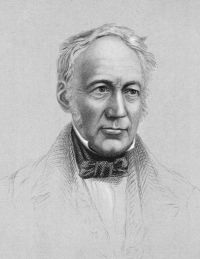
Source: Wikisource

H. A. Appleton,  The Handbook of Soap Manufacture

“ The materials employed in making mottled soap comprise bleached palm oil, tallow, bone fat, cocoa-nut oil, palm-kernel oil, cotton-seed oil, and, in some instances, rosin.
The choice of a charge will naturally depend upon the cost; the property of absorbing a large amount of liquor, which is characteristic of soaps made from cocoa-nut oil and palm-kernel oil, is taken advantage of, as are also the physical properties of the various fats and oils, with a view to the crystallisation of the resultant soap and the development of the mottle.
”
Source: Gutenberg

H. A. Appleton,  The Handbook of Soap Manufacture

“ Another operation in which soap is used, is that of milling or fulling, whereby the fabric is made to shrink and thus becomes more compact and closer in texture. The fabric is thoroughly cleansed, for which purpose the soap should be neutral and free from rosin and silicates, otherwise a harsh feeling or stickiness will be produced. Curd soaps or finely-fitted soaps made from tallow or bleached palm oil, with or without the addition of cocoa-nut oil, give the best results. All traces of soap must be carefully removed if the fabric is to be dyed. ”
Source: Gutenberg

Get perspective with Kwize: daily news enlightened by great literature