Spondee

Definition and stakes

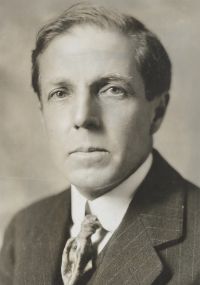
Portrait of Edgar Allan Poe Edgar Allan Poe,  The Rationale of Verse

“ Of the Greek hexameter the intentional basis is spondaic. The dactyls are the variation of the theme. It will be observed that there is no absolute certainty about their points of interposition. The penultimate foot, it is true, is usually a dactyl but not uniformly so, while the ultimate, on which the ear lingers, is always a spondee. Even that the penultimate is usually a dactyl may be clearly referred to the necessity of winding up with the distinctive spondee. ”
Source: Wikisource

Charles E. Bennett,  New Latin Grammar

“ Beātus ille quī procul negōtiīs.
The Caesura usually occurs in the third foot; less frequently in the fourth.
2. In place of the Iambus, a Tribrach ( ) may stand in any foot but the last. In the odd feet (first, third, and fifth) may stand a Spondee, Dactyl, or Anapaest, though the last two are less frequent. Sometimes a Proceleusmatic ( ) occurs.
3. In the Latin comic writers, Plautus and Terence, great freedom is permitted, and the various equivalents of the Iambus, viz. the Dactyl, Anapaest, Spondee, Tribrach, Proceleusmatic, are freely admitted in any foot except the last.
”
Source: Gutenberg

Get perspective with Kwize: daily news enlightened by great literature