Supply ship

Definition and stakes

James A. Williamson,  Maritime enterprise, 1485-1558 (1913)

“ Clearing a cargo from an English port was a complicated process. When the goods were brought down to the wharf they were taken over by the packer and his underlings, whose duty it was to pack them and enter them at the custom-house, giving a true inventory of the contents of the bales. The merchant having paid the duties to the customers, the latter sent ‘cocketts’ or tallies for the same to the searcher, who searched the ship to see if they were true. ”
Source: Gutenberg

David W. Bone,  Merchantmen-at-arms : the British merchants' service in the war

“ But, if we are insistent in our search, we may borrow from the naval charters, and read that not all the glory of our sea-history lies with the thunder of broadsides and the impact of a close boarding. Engagement with the elements—a contest with powers more cruel and implacable than keen steel—efforts to further able navigation, the standard of our seamanship—drew notable recruits to the humbler sea-life. The small crews and less lavish gear on the freighters brought the essentials of the sea-trade to each individual of the ship's company. ”
Source: Gutenberg

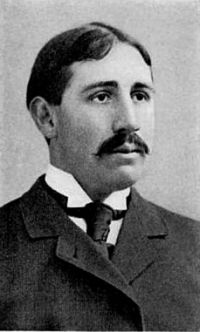
Portrait of Ralph Delahaye Paine Ralph Delahaye Paine,  The ships and sailors of old Salem (1912)

“ Its commerce is speculative but vast and successful. It is a frequent circumstance that a ship goes out without a cargo for a voyage around the world. In such a case the captain puts his elder children to school, takes his wife and younger children and starts for some semi-barbarous place where he procures some odd kind of cargo which he exchanges with advantage for another somewhere else; and so goes trafficking around the world, bringing home a freight of the highest value. ”
Source: Gutenberg

Get perspective with Kwize: daily news enlightened by great literature