William James, Memories and Studies
“ If, namely, one takes the theory of evolution radically, one ought to apply it not only to the rock-strata, the animals and the plants but to the stars, to the chemical elements, and to the laws of nature. ”
William James, Memories and Studies
“ If, namely, one takes the theory of evolution radically, one ought to apply it not only to the rock-strata, the animals and the plants but to the stars, to the chemical elements, and to the laws of nature. ”
Theodore Graebner, Evolution: An Investigation and a Critique
“ If the theory of evolution be true, during the many thousands of years covered in whole or in part by present human knowledge, there would certainly be known at least a few instances, or at least one instance, of the evolution of one species from another. ”
Cora May Williams, A Review of the Systems of Ethics Founded on the Theory of Evolution
“ Between the theory of Evolution and the idea of Creation as a primal formation of matter with force or motion in accordance with fixed laws, between it and the idea of an initial application of force from without,—an impulsion which set the universe in motion,—between it and the conception of a transcendental guidance through natural law or of a pantheistic order of development, there is no such necessary contradiction as could justify the denial of Evolution from the standpoint of any of these theories. ”
“ Historically, the theory of evolution in its first manifestation was an extension to the historical sciences generally of a purely biological conception, that of the origin of species as a consequence of the struggle for existence. ”
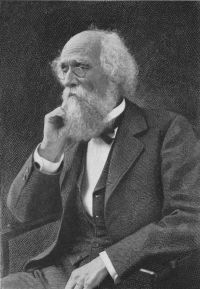 Joseph LeConte,
Evolution: Its nature, its evidence…
Joseph LeConte,
Evolution: Its nature, its evidence…
“ The great objections to the sufficiency of the theory of evolution, as left by Darwin, were twofold: 1. While natural selection accounts completely for the formation of useful structures or adaptive modifications, and therefore for differences characterizing classes, orders, families, and even genera—for these are all adaptive—it can not so completely account for those constituting species ”
Arthur M. Lewis, Evolution Social and Organic
“ Of all the mischievous misconceptions of Darwin’s theory none have worked so much harm as that which regards natural selection as the active and efficient cause of evolution. Although evolution is an established fact, our knowledge of its processes are incomplete and must always remain so until we have solved that most vexed of all biological problems, the “causes of variation.” ”
George Ticknor Curtis, Creation or Evolution? A Philosophical Inquiry
“ But if there has ever been such an instance of the evolution of any known species of animal out of other species shown by satisfactory proof, or if we assume such an occurrence in the past as the theory calls for, what reason have we to suppose that the process of evolution is still going on, and to expect it to go on to the end of time? We must judge of the future by the past, for we have no other means of judging it. ”
George Archdall Reid, The present evolution of man — Part 1… (1896)
“ The theory of evolution may be put to the test of experiment. We may take any species of plant and animal, and by copying the process of natural selection, by destroying those individuals of the species which we regard as unfit,—i.e. those which vary unfavourably as regards any peculiarity we wish to develop,—and by allowing only those individuals who vary favourably as regards that peculiarity to continue the race, we may develop the chosen peculiarity in the chosen species to almost any extent ”
Chauncey Giles, The True and False Theory of Evolution… (1887)
“ The theory of evolution as it is commonly understood is that they are original, but not intelligent causes; that they are the drift of blind and purposeless forces, and that the products of these forces and substances are the creation of the wonderful organisms and conscious activities we find in the three kingdoms of Nature. But how do the scientists know that Nature has this power? ”
George John Romanes, The Scientific Evidences of Organic Evolution
“ The theory of evolution by natural selection supposes that hereditary characters admit of being slowly modified wherever their modification will render an organism better suited to a change in its conditions of life. ”
George Ticknor Curtis, Creation or Evolution? A Philosophical Inquiry
“ If the theory that the different species of animals now known to us have been evolved successively by descent from some primordial simplest form through modifications induced by change of habitation, of medium of life, and accumulation of new structures occurring through an immense period of time, be a sound hypothesis, the process which has evolved superior out of inferior organizations ought, in consistency with itself and with all its supposed conditions, to be capable of being reversed, so as to lead to the evolution of inferior out of superior organisms. ”
Edmund Swift, Evolution and Natural Selection in the Light of the New Church (1879)
“ The theory of Evolution as taught by Darwin and his disciples is, that some thing or some power created, from material substances, a living germ, and from it, by some law or force inherent in those substances, all other material forms were evolved or developed without any definite plan or without any necessary sentient all-controlling power. ”
George Ticknor Curtis, Creation or Evolution? A Philosophical Inquiry
“ But one difficulty with the evolution theory as the sole method by which the past or present inhabitants of the world have come into existence is that, so far as we can judge, it has done and completed its work just as effectually and finally as special creation appears to have terminated in certain forms, some of which are extinct and some of which are living. Take the Darwinian pedigree of man, as stated in a former chapter, or any other mode of tracing the supposed stages of animal evolution. ”
W. R. Sorley, On the Ethics of Naturalism
“ In general, the theory of evolution is an assertion of the unity of life, or, in its widest form, of the unity of existence. Progressive modifications and hereditary transmission of such modifications are, it is contended, sufficient to explain the different forms and species which life now manifests. ”
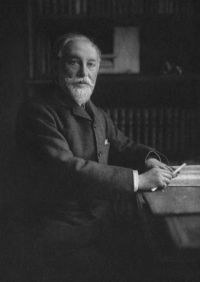 Frederic Harrison,
The Herbert Spencer lecture
(1905)
Frederic Harrison,
The Herbert Spencer lecture
(1905)
“ Let us turn to define Evolution—a word about which much ambiguity exists. In its narrower sense 'Evolution,' a term not at first used by Darwin, means the morphological and physiological variations of organic beings by the action of natural selection. It then came to be loosely applied to almost any specific theory about the origin and development of things. ”
 Augustus Hopkins Strong,
Systematic Theology (Volume 2 of 3…
Augustus Hopkins Strong,
Systematic Theology (Volume 2 of 3…
“ Freedom, 76—“When we admit that Darwin's argument in favor of the theory of evolution proves its truth, we doubt whether natural selection can be in any sense the cause of the origin of species. It has probably played an important part in the history of evolution; its rôle has been that of increasing the rapidity with which the process of development has proceeded. Of itself it has probably been powerless to originate a species ”
Cora May Williams, A Review of the Systems of Ethics Founded on the Theory of Evolution
“ Or if freedom is asserted of the whole range of animal will, not, however, of plant movement or the motions of the inorganic, we may again inquire as to the point of exact division between the animal and the plant. Evolution is, by definition, a gradual process, a growth in which there are no gaps, and of which our finest and most minute calculations by infinitesimals can give us only a faint conception. ”
 George Edward Moore,
Principia Ethica — Chapter II
(1903)
George Edward Moore,
Principia Ethica — Chapter II
(1903)
“ This theory, to which Darwin gave the name ‘Natural Selection,’ was also called the theory of survival of the fittest. The natural process which it thus described was called evolution. It was very natural to suppose that evolution meant evolution from what was lower into what was higher; in fact it was observed that at least one species, commonly called higher—the species man—had so survived, and among men again it was supposed that the higher races, ourselves for example, had shewn a tendency to survive the lower, such as the North American Indians. ”
George John Romanes, Darwin, and After Darwin, Volumes 1 and 3
“ The only element of theory in his doctrine of evolution by natural selection has reference to the degree in which these observable facts, when thus brought together, are adequate to account for the process of evolution. ”
George John Romanes, The Scientific Evidences of Organic Evolution
“ With the general aim of the present abstract being thus understood, I shall start at the beginning of my subject by very briefly describing the theory of natural selection. It is a pg. 3matter of observable fact that all plants and animals are perpetually engaged in what Mr. Darwin calls a “struggle for existence.” That is to say, in every generation of every species a great many more individuals are born than can possibly survive; so that there is in consequence a perpetual battle for life going on among all the constituent individuals of any given generation. ”
Rudolf Schmid, The Theories of Darwin and Their Relation to Philosophy…
“ The evolution theory could only pass beyond the rank of a hypothesis, if we should succeed in showing the impelling forces of such an origin of species through development. Such an attempt can be made in two ways—the metaphysical and the scientific-empirical. ”
George Barry O'Toole, The case against evolution (1925)
“ Evolution, or transformism, as it is more properly called, may be defined as the theory which regards the present species of plants and animals as modified descendants of earlier forms of life. Nowadays, therefore, the principal use of the term evolution is to denote the developmental theory of organic species. ”
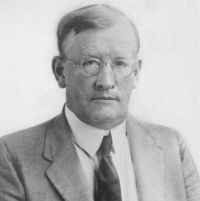 George McCready Price,
Q. E. D., or New Light on the Doctrine of Creation
George McCready Price,
Q. E. D., or New Light on the Doctrine of Creation
“ And we may add that the extent of its spread is directly proportioned to the need felt for this doctrine as a support of the theory of evolution, while the vociferance of its advocates is inversely proportioned to the evidence in its support. As a result of extensive modern experiments and discussion, biologists have grown very cautious, and are by no means so positive as they were twenty years ago in affirming just how species have come into existence. ”
George McCready Price,
Q. E. D., or New Light on the Doctrine of Creation
“ Quite obviously this succession of life was antagonistic to the former views of a literal Creation; and only on this supposed fact as an outline has the modern theory of biological evolution been built up. For if geology cannot furnish the most unquestionable proof that life has occurred in a very definite and invariable order, what is the use of talking about the development of one form of life into another by a gradual process of evolution? ”
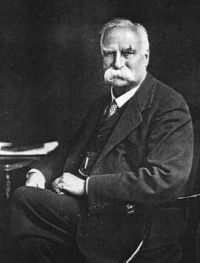 Sir Edward Bagnall Poulton,
Charles Darwin and the Theory of Natural Selection
Sir Edward Bagnall Poulton,
Charles Darwin and the Theory of Natural Selection
“ The following are among the most confident statements about evolution to be found in this essay. Speaking of the “Origin,” he says (p. 229) :—132 “... the general doctrine of evolution, to one side of which it gives expression, obtains, in the phenomena of biology, a firm base of operations whence it may conduct its conquest of the whole realm of nature.” ”
 Charles Darwin,
Life and Letters of Charles Darwin…
Charles Darwin,
Life and Letters of Charles Darwin…
“ Darwin begs me to say that he receives so many letters, that he cannot answer them all. "He considers that the theory of Evolution is quite compatible with the belief in a God; but that you must remember that different persons have different definitions of what they mean by God." ”
Cora May Williams, A Review of the Systems of Ethics Founded on the Theory of Evolution
“ While admitting, as Darwin always admitted, the coöperation of the fundamental laws of growth and variation, of correlation and heredity, in determining the direction of lines of variation, or in the initiation of peculiar organs, we find that variation and natural selection are ever-present agencies which take possession, as it were, of every minute change originated by these fundamental causes, check or favor their further development, or modify them in countless ways according to the varying needs of the organism. ”
Rudolf Schmid, The Theories of Darwin and Their Relation to Philosophy…
“ For if the evolution theory is right, those periods of the history of our globe in which new species originated—namely, the periods of geology—must show us also the forms of transition between the different species. ”
“ We do not here propose to sketch the development of the idea, either before or after Darwin; but only, in the first place, to state the grounds on which the belief in Evolution is based, and, in the second, to trace roughly the lines along which animal Evolution has proceeded. In the first few pages of this book, then, we shall endeavour to bring forward some of the evidence on which the modern Evolution theory rests. EvolutionFig. ”
George Edward Moore,
Principia Ethica — Contents
(1903)
“ Darwin's scientific theory of 'natural selection,' which has mainly caused the modern vogue of the term 'Evolution,' must be carefully distinguished from certain ideas which are commonly associated with the latter term. ”
Charles Darwin,
The Origin of Species
(1873)
“ The abrupt manner in which whole groups of species suddenly appear in certain formations, has been urged by several palæontologists — for instance, by Agassiz, Pictet, and Sedgwick — as a fatal objection to the belief in the transmutation of species. If numerous species, belonging to the same genera or families, have really started into life at once, the fact would be fatal to the theory of evolution through natural selection. For the development by this means of a group of forms, all of which are descended from some one progenitor, must have been an extremely slow process; ”
 Miguel de Unamuno,
Tragic Sense Of Life
Miguel de Unamuno,
Tragic Sense Of Life
“ In fact, for a voluntarist like Schopenhauer, a theory so sanely and cautiously empirical and rational as that of Darwin left out of account the inward force, the essential motive, of evolution. For what is, in effect, the hidden force, the ultimate agent, which impels organisms to perpetuate themselves and to fight for their persistence and propagation? Selection, adaptation, heredity, these are only external conditions. ”
 Henry Edward Crampton,
The Doctrine of Evolution: Its Basis and Its Scope
Henry Edward Crampton,
The Doctrine of Evolution: Its Basis and Its Scope
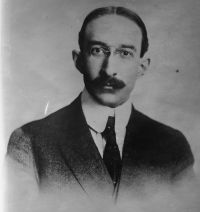
“ But it is possible to obtain a clear conception of certain of the fundamental principles that fall into line with the other parts of the doctrine of organic evolution with which we have now become acquainted. ”
 A. E. Taylor,
Elements of metaphysics
(1903)
A. E. Taylor,
Elements of metaphysics
(1903)
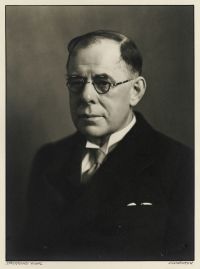
“ In the evolutionary theories of modern biology, it is precisely the problems of the origination of new species, and of the special character of the relations between the species and its environment by which this process is conditioned, that have attracted almost exclusive attention. And, with the steadily increasing success of evolutionary hypotheses in dealing with biological problems, there has naturally arisen a tendency to extend the application of the general concept of evolution far beyond the sphere in which it first originated. ”
 Thomas Henry Huxley,
Science and Culture, and Other Essays
Thomas Henry Huxley,
Science and Culture, and Other Essays
“ The doctrine of evolution in biology is the necessary result of the logical application of the principles of uniformitarianism to the phenomena of life. Darwin is the natural successor of Hutton and Lyell, and the “Origin of Species” the logical sequence of the “Principles of Geology.” ”
 Herbert Spencer,
The Principles of Biology — Chapter II.10
(1898)
Herbert Spencer,
The Principles of Biology — Chapter II.10
(1898)
“ We see that the maintenance of life in the successive generations of a species, becomes a consequence of the continual incidence of new forces on the species, to replace the forces that are ever being rhythmically equilibrated in the propagation of the species. And we thus see that these apparently-exceptional phenomena displayed in the multiplication of organic beings, fall into their places as results of the general laws of Evolution. We have, therefore, weighty reasons for entertaining the hypothesis which affords us this interpretation. ”
Samuel Christian Schmucker, The Meaning of Evolution
“ One of the strongest objections to Darwin's idea of evolution by natural selection of small and favorable variations, is that the process is too inconceivably slow to account for the enormous progress which has been made. ”
Sir P. Chalmers Mitchell, Thomas Henry Huxley; A Sketch Of His Life And Work
“ The question as to whether or no natural selection were the sole or chief cause, or indeed a cause at all, of evolution is not yet, and perhaps never will be, a matter of knowledge in the scientific sense. At the most, we can see for ourselves only that selection does bring about changes at least as great as the differences [106] between natural species. ”
Various, The Catholic World, Vol. 10, October…
“ The question then recurs, Are the favorable modifications which have arisen, or which may arise, due to evolution or to reversion? Until this point is settled in favor of the ascription to evolution, Darwin's argument from natural selection is wholly irrelevant. ”
 Lester Frank Ward,
Popular Science Monthly
(1876)
Lester Frank Ward,
Popular Science Monthly
(1876)
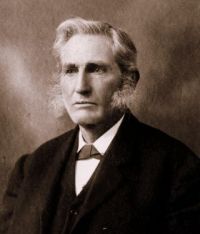
“ It is this statical condition which is apt to be lost sight of in the modern philosophy of evolution. The modification of species, the survival and advancement of some and the depauperating and extinction of others, all forms of variation and transmutation—these are dynamical phenomena, and only take place under the influence of disturbing agencies. ”
Henry Edward Crampton William A. WilliamsGeorge John RomanesThomas Henry HuxleyAlexander PattersonGeorge McCready PriceW. R. SorleyTheodore GraebnerHerbert Spencer
 Rudolf OttoSir P. Chalmers MitchellJoseph LeConteCora May WilliamsWilliam A. LocyRudolf Schmid
 F. B. JevonsArthur M. LewisSir Edward Bagnall PoultonArthur Selwyn-BrownSamuel Christian Schmucker