Thermal expansion

Definition and stakes

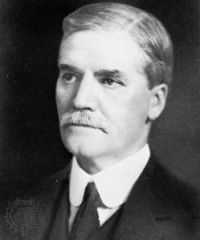
Portrait of Dugald Clerk Dugald Clerk,  1911 Encyclopædia Britannica, Volume 11… (1911)

“ Adiabatic expansion reduces the pressure and temperature of the working fluid until the volume is the same as the original volume before compression, and the necessary heat is discharged from the cycle at constant volume during falling temperature. Here also it can be shown that the thermal efficiency depends on the ratio between the temperature before compression and the temperature after compression. ”
Source: Wikisource

by Sadi Carnot,  Reflections on the Motive Power of Heat (1897)

“ Vapors of water can be formed only through the intervention of a boiler, while atmospheric air could be heated directly by combustion carried on within its own mass. Considerable loss could thus be prevented, not only in the quantity of heat, but also in its temperature. This advantage belongs exclusively to atmospheric air. Other gases do not possess it. They would be even more difficult to heat than vapor of water.
(3) In order to give to air great increase of volume, and by that expansion to produce a great change of temperature, it must first be taken under a sufficiently high pressure
”
Source: Wikisource

active 1883-1912 James Weir,  The Energy System of Matter: A Deduction from Terrestrial Energy Phenomena

“ Work is thus done by the expanding gas, and in consequence of this work done, a definite quantity of atmospheric material gains energy of position or potential energy relative to the earth's surface. At the same time, the rise of temperature of the gas will indicate an accession of heat energy to its mass. These familiar phenomena of expansion under constant pressure serve to illustrate the important fact that, when heat energy is applied to a gaseous mass, it really manifests itself therein in two aspects, namely, heat energy and work energy. ”
Source: Gutenberg

Get perspective with Kwize: daily news enlightened by great literature