Till (geology)

Definition and stakes

William Harmon Norton,  The Elements of Geology

“ TILL. The unstratified portion of the drift consists chiefly of sheets of dense, stony clay called till, which clearly are the ground moraines of ancient continental glaciers. Till is an unsorted mixture of materials of all sizes, from fine clay and sand, gravel, pebbles, and cobblestones, to large bowlders. The stones of the till are of many kinds, some having been plucked from the bed rock of the locality where they are found, and others having been brought from outside and often distant places. Land ice is the only agent known which can spread unstratified material in such extensive sheets. ”
Source: Gutenberg

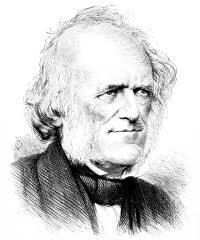
Portrait of Sir Charles Lyell Sir Charles Lyell,  A Manual of Elementary Geology

“ To this unstratified form of the deposit, the name of till has been applied in Scotland. It generally contains numerous fragments of rocks, some angular and others rounded, which have been derived from formations of all ages, both fossiliferous, volcanic, and hypogene, and which have often been brought from great distances. Some of the travelled blocks are of enormous size, several feet or yards in diameter; their average dimensions increasing as we advance northwards. The till is almost everywhere devoid of organic remains, unless where these have been washed into it from older formations ”
Source: Gutenberg

Portrait of Sir Charles Lyell Sir Charles Lyell,  A Manual of Elementary Geology

“ No doubt the vacant space left by the missing rocks, after extensive denudation, is less imposing to the imagination than a vast thickness of conglomerate or sandstone, or the bodily presence as it were of a mountain-chain, with all its inclined and curved strata. But the denuded tracts speak a clear and emphatic language to our reason, and, like repeated layers of fossil nummulites, corals or shells, or like numerous seams of coal, each based on its under clay full of the roots of trees, still remaining in their natural position, demand an indefinite lapse of time for their elaboration. ”
Source: Gutenberg

Get perspective with Kwize: daily news enlightened by great literature