Time-value of money

Definition and stakes

Benjamin M. Anderson,  The Value of Money

“ The nominal interest, in times of falling value of money, tends to exceed the pure rate by an amount which compensates for the loss in value of future income as the dollar falls in value. We have here, however, a principle different from the principle of time discount. It is not the influence of time, which makes a given value appear smaller as it is further removed in time, but it is an anticipated lessening in the value of the income itself, that counts. ”
Source: Gutenberg

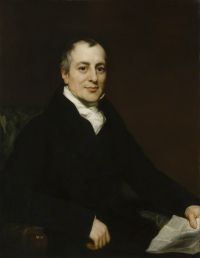
Portrait of John Stuart Mill John Stuart Mill,  Principles of Political Economy (1871)

“ And the quantity of money in circulation, is equal to the money value of all the goods sold, divided by the number which expresses the rapidity of circulation.
The phrase, rapidity of circulation, requires some comment. It must not be understood to mean, the number of purchases made by each piece of money in a given time. Time is not the thing to be considered. The state of society may be such, that each piece of money hardly performs more than one purchase in a year
”
Source: Wikisource

Benjamin M. Anderson,  The Value of Money

“ It is enough to point out that the increased amount of capital, meaning better provision for present wants—wants concerned with gold in the arts and with money for productive exchanges, as well as goods generally since part of the new gold will be exported for other things—will lessen the pressure of present as compared with future wants, and so lessen the rate of interest on the time-preference theory. ”
Source: Gutenberg

Get perspective with Kwize: daily news enlightened by great literature