Tin horn

Definition and stakes

Legends of Texas (1924)

“ The horns so fastened are said to bring good luck to those who pass under them.
The medicinal properties ascribed to horns among primitive peoples have a corollary interest here. In a letter accompanying his legend of “The Horn Worshipers,” Mr. Bertillion says: “As late as ten years ago I bought a beautiful pair of buck horns, several points of which I had to sharpen because they had been sawed off a half inch or more for the purpose of curing some disease, which, to the best of my memory, was measles, the cure being a dose of pulverized horn, about a teaspoonful.”
”
Source: Gutenberg

John Keast Lord,  The Naturalist in Vancouver Island and British Columbia…

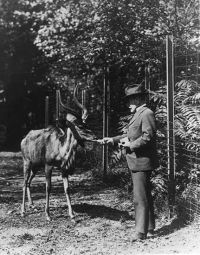
“ Above this snag, the horns have a shiny surface, are rounded, and taper gradually to a sharp tip, bent into a hook. The horns vary greatly in the males. I have sometimes shot them with the prong hardly developed, sometimes springing from the horn near the tip, and in others growing close to the head, where it is always uneven and warty. The female is devoid of horns, or only has them in a rudimentary condition. ”
Source: Gutenberg

Fred. W. Burgess,  Chats on Household Curios

“ Among household curios are drinking horns elaborately etched, and frequently turned in a lathe. They were popular in the seventeenth and early eighteenth centuries, and the turned patterns then so common were copied by the silversmiths, who made silver tankards and drinking cups on the same models. The cornucopia or horn of abundance figures frequently in sculpture, paintings, and works of art. The horn is one of the early instruments of music (see Chapter XV) , and has long been associated with sports. ”
Source: Gutenberg

Get perspective with Kwize: daily news enlightened by great literature