Tin (metal)

Definition and stakes

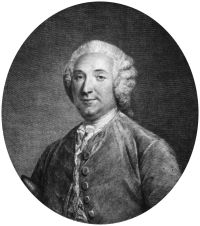
Portrait of Pierre Joseph Macquer Pierre Joseph Macquer,  Elements of the Theory and Practice of Chymistry…

“ Tin is the lightest of all metals. Though it yields easily to the impression of hard bodies, it has but little ductility. Being bent backwards and forwards it makes a small crackling noise. It flows with a very moderate degree of fire, and long before it comes to be red-hot. When it is in fusion, its surface soon grows dusty, and there forms upon it a thin dark-coloured dusty pellicle, which is no other than a part of the Tin that has lost its phlogiston, or a calx of Tin. The metal thus calcined easily recovers its metalline form on the addition of a phlogiston. ”
Source: Gutenberg

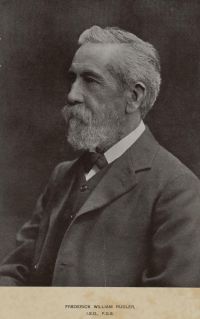
Portrait of Frederick William Rudler Frederick William Rudler,  1911 Encyclopædia Britannica (1911)

“ This detrital tin-ore was probably used as a source of the metal before the primitive miners had learnt to attack the solid tin-bearing rocks.
Pure cassiterite may be colourless, or white, as seen in certain specimens from the Malay Peninsula; but usually the mineral is brown or even black, the colour being referred to the presence of ferric oxide or other impurity. Occasionally the tin-stone is red. In microscopic sections the colour is often seen to be disposed in zones, following the contour of the crystal. A brown variety, with rather resinous lustre, is termed “rosin tin.”
”
Source: Wikisource

William Bingley,  Useful Knowledge: Volume 1. Minerals

“ When tin is 202melted in an open vessel, its surface is soon found to be covered with a grey powder, which is an oxide (21) of the metal, and is generally called dross. If the heat be continued, the colour of this powder becomes yellow. In this state it is known by the name of tin-putty, and is employed in polishing glass, steel, and other hard substances. When the heat is very violent, the metal takes fire, and is converted into a fine white oxide, which is used to render glass opaque, for the forming of enamel. Oxide of tin is also an important article to dyers. ”
Source: Gutenberg

Get perspective with Kwize: daily news enlightened by great literature