“ On this occasion the spirit guardian appears to have been favorable, for they surprised four outlying camps of their enemies, took a dozen scalps, and carried off fifteen women and children as captives besides two grown men whom they subjected to the death penalty by fire. During this action Tokulki had the good fortune to save the life of the war chief’s servant by engaging an enemy, about to strike him from behind. Therefore, after the triumphant return, he received the much coveted feather headdress, his first war name, and a seat in the eastern cabin of the square. ”
Quotes about “tokul”
“ With the Medicine Maker of Tulsa, his instructor and uncle, Tokulki now came to be on the most friendly terms. It was natural that a man of such advanced mentality as Tokulki and such steadfastness of purpose should excite interest in his superior. It became evident that when the Medicine Maker died or gave up his spiritual headship his position would fall to Tokulki. ”
“ At intervals during all this time Tokulki had seen bands of warriors, including sometimes his father and uncles, march out against their enemies, and in particular there was an enemy to the westward, not large in numbers but led by a chief of rare size, strength, and sagacity, whose activities were constantly more threatening, and who was aided and abetted by a much more numerous people beyond him called Long Hairs. ”
“ The doorway which had so early attracted Tokulki’s attention was to the east where the first rays of the sun could steal into it, but it was seldom that it found any one but very young babies to awaken, for the duties of the day were assumed early and ended soon, except in times of merry-making or the great ceremonials. There was no vent for the escape of smoke which sometimes accumulated to an extent which would render the inside unendurable to a white man ”
Ferdinand Werne, Expedition to discover the sources of the White Nile… (1849)
“ An enormous meadow land lies in the water before the river’s edge, upon which tokuls are observed, at not quite an hour’s distance, called Biut (from Beit-House) , because these huts, as it is said, are somewhat different in form from those commonly met with in the land of Sudàn. The right shore joins the horizon in a wide creek, and approaches us again at half-past eight o’clock, when we are sailing S.W., whilst the villages on the deserted ancient shores, extend from west to south. ”
Ferdinand Werne, Expedition to discover the sources of the White Nile… (1849)
“ Half-past nine o’clock, S., then S.W., subsequently S., and then S.E., with four miles’ course.Once more we see, after a lapse of a long time, a certain number of people, said to form a considerable nation, under the name of Kèks. The little village yonder contains only thirteen wretched tokuls; the pointed roofs are low, and, like the walls, of straw. Among the trees there are some which branch out vigorously, and have a thick green foliage; they are said also to be found in upper Kordofàn or Nuba, where, according to Mariàn, they are called Tihls. ”
“ At last, raids from this quarter became 137 so numerous and so many injuries were suffered that a great council was held in Tulsa and it was determined to draw their settlements closer together and erect a strong stockade about them. Tokulki, although still too young for the heavier work, was called upon to render such assistance as he could in the completion of the structure. ”
H. Bedford-Jones, Rajah of Hell Island — 3. Tan Tock's Story (1917)
“ You wanted the woman yourself and intended to run away with her. Good! You would keep her safe against Tuan Benbow—good! So instead of killing you and taking the woman on to my master, I decided to let you protect her and to send for my master. When he comes he may punish or release you as he wills, and he will find the woman safe also—”“What mad talk is all this?” exclaimed Stone, dimly comprehending and yet shrinking from belief in what he heard. “You have sent for the Sultan? How, in the name of Allah?”Tan Tock grinned fleetingly. “Tuan, he will come to-morrow, if the waters are quiet. ”
William Henry Furness, The home-life of Borneo head-hunters (1902)
“ Those who were once our enemies, hereby become our guardians, our friends, our benefactors.’ ‘But,’ I interrupted, ‘how does Aban Avit know that these dried heads do all this? Don’t you make it an excuse just because you like to shed blood and to kill?’ ‘Ah, Tuan, you white men had no great Chief, like Tokong, to show you what was right; haven’t you ever heard the story of Tokong and his people? He was Rajah of the Sibops and the father of all the Kayans, and lived long, long, long ago.’ I was not acquainted with the story of Tokong, so I begged him to relate it ”
Sir Alexander Burnes, Travels Into Bokhara (Volume 2 of 3…
“ The manners and customs of the Toorkmuns, in the odious practices which they pursue against their fellow man, sap the best principles of human nature, and we consequently find this people wanting in much of the honour which is often seen among half-civilised nations. “A Toorkmun,” the people will tell you, “is a dog, and will only be kept quiet with a bit of bread, like a dog: give it then, is the doctrine of the traveller, and pass on unmolested.” ”
H. Bedford-Jones, Rajah of Hell Island — 3. Tan Tock's Story (1917)
“ He turned to the squatting Tan Tock. “Your master, the Sultan, wrote for this white woman to come. Why?”“For what except to enter into his harem, tuan?”A cry broke from Miss Bretton. “Not true—it’s not true! I—”“Quiet, please!” Stone hushed her imperatively; it was unpleasant work, but it had to be done. “Tan Tock, answer this question truly, and I will give you a revolver with which to fight; you are too brave a man to be slain for serving your master faithfully. Is a Christian mission to be established at Kuala Gajah? Is there to be a mosque of Christians built there?” ”
Sir Alexander Burnes, Travels Into Bokhara (Volume 2 of 3…
“ He was the harbinger of good news to the Toorkmuns: for they, who plunder every one, had been themselves plundered by the Mezenderan troops, who had proceeded to join the army through their territories. The Prince had ordered a register of their losses to be communicated; and our Khan moved from camp to camp as a welcome visiter. I continued with him for four days, which I passed in pleasing observation of Toorkmun habits and customs. No opportunity could have been more favourable to the purpose, since we were every where well received by them ”
B. B. Thatcher, Indian Biography; Vol. 1 (of 2…
“ The captain then advanced towards the Sachem, and addressed him. "Opechancanough," said he, "I perceive you are plotting to murder me, but I fear you not. As yet neither your men nor mine have done much harm. Now therefore take your arms—as you see here are mine—my body shall be as naked as yours—the island in the river is a fit place for a combat, and the conqueror of us two, shall be master of all. If you have not men enough about you, take time to muster more—has many as you will—only let everyone bring his basket of corn, and against that I will stake the value in copper." ”
Sir Alexander Burnes, Travels Into Bokhara (Volume 2 of 3…
“ Seeing the Toorkmuns in a body, it may be certainly distinguished, that they have something Tatar in their appearance; their eyes are small, and the eyelids appear swollen. They are a handsome race of people. All of them were dressed in the “tilpak,” a square or conical black cap of sheep-skin, about a foot high, which is far more becoming than a turban, and gives to a party of Toorkmuns the appearance of a soldierlike and disciplined body. ”
B. B. Thatcher, Indian Biography; Vol. 2 (of 2…
“ Tecumseh, who found himself in a small minority on this occasion, replied thus:"Elder brothers!—We have listened with attention to what you have said to us. We thank the Great Spirit for inclining your hearts to pity us; we now pity ourselves; our hearts are good; they never were bad. Governor Harrison made war on my people in my absence; it was the Great Spirit's will he should do so. We hope it will please Him that the white people may let us live in peace. We will not disturb them; neither have we done it, except when they come to our village with the intention of destroying us. ”
Sir Alexander Burnes, Travels Into Bokhara (Volume 2 of 3…
“ The Toorkmuns are Toorks; but they differ from the Uzbeks, and are entirely devoted to a pastoral life. There are several great tribes of the race, all of whom claim a common origin; we had seen the Ersarees on the Oxus, and were now mingling with the tribe of Saruk, beyond which are the Salore. Towards the Caspian lie the Tuka, Goklan, and Yumood, all of them great tribes, and of which I shall speak as we advance. ”
Sir Alexander Burnes, Travels Into Bokhara (Volume 2 of 3…
“ Nothing is more remarkable to a traveller in Toorkistan than the entire want of chiefs, or Sirdars, among the people, as in India and Cabool. Here there are no great men, no Khans, or nobles, and no one of consequence, but the court and the priesthood. The whole of the governments are either held by slaves or dependents of the minister; and every town and village is ruled by the Moollahs or Khwajus, the descendants of the first Caliphs. ”
Sir Alexander Burnes, Travels Into Bokhara (Volume 2 of 3…
“ The Toorkmuns have no mosques; they say their prayers in the tent or in the desert, without ablution, and without a carpet. They have few Moollahs or priests, for the church has little honour among them, and they are but poor followers of the prophet. They have no education to assuage the fiercer passions, which renders the men unsusceptible of pity, and the women indifferent to chastity. The men perform all the out-door employments, and the women work at home. The Toorkmuns are a race of people who court alternate activity and idleness. ”
Sir Alexander Burnes, Travels Into Bokhara (Volume 2 of 3…
“ Most of the people were Toorkmuns of the Oxus, dressed in high sheepskin caps, like the natives of Orgunje. There were about 2000 or 3000 people in the bazar; but there was very little bustle and confusion, though there was much both of buying and selling. The custom of having market days is uncommon in India and Cabool, but of universal use in Toorkistan: it perhaps gives a stimulus to trade, and is most convenient; since all the people of the country, for miles round, assemble on the occasion. Every person seems to think it incumbent upon him to be present. ”
 Mór Jókai,
The Slaves of the Padishah
Mór Jókai,
The Slaves of the Padishah
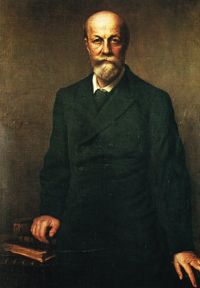
“ Tököly, always avid of fame and glory, threw himself heart and soul into this new enterprise, but it was only when he saw the army with which he was to conquer Transylvania that he had misgivings. His soldiers were good for robbing and burning, they had been used to that for a long time, but when it came to fighting there was no power on earth capable of keeping them together. ”
 Louis Becke,
The Call of the South
Louis Becke,
The Call of the South
“ Lirou laughed. 'Have no fear. I am no boaster. But we cannot fight him here in Roân Kiti, which is open to the sea, and never can we make it a strong fort, for here we have no falat,{*} nor yet any great forest trees. But at Tokolmé are many thousands of the great stones and mighty trees in plenty. Ah, my father was a foolish man to give such a place to people who fought against us. Are we fools, to build here another weak town, and let Roka bear the more heavily upon us? ”
 Leo Tolstoy,
Twenty-three Tales
(1906)
Leo Tolstoy,
Twenty-three Tales
(1906)
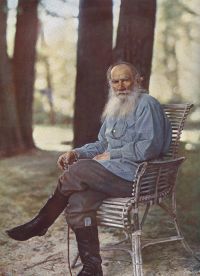
“ One who has been to Mecca is called "Hadji," and wears a turban. He does not like you fellows. He tells me to kill you. But I can't kill you. I have paid money for you and, besides, I have grown fond of you, Iván. Far from killing you, I would not even let you go if I had not promised.' And he laughed, saying in Russian, 'You, Iván, good; I, Abdul, good!' iv Zhílin lived in this way for a month. During the day he sauntered about the Aoul or busied himself with some handicraft, but at night, when all was silent in the Aoul, he dug at the floor of the barn. ”
Sir Thomas Hungerford Holdich, The Gates of India: Being an Historical Narrative
“ The Tochi, and the Gomul River south of it, must be regarded as highways to Ghazni, but there is no comparison between the two as regards their facilities or the amount of traffic which they carry. All the carrying trade of the Ghazni province is condensed into the narrow ways of the Gomul. Trade in the Tochi hardly extends farther than the villages at its head. About the Gomul there hangs many a tale of adventure, albeit adventure of rather ancient date, for it is exceedingly doubtful if any living European has ever trod more than the lower steps of that ancient staircase. ”
 Austen Henry Layard,
Discoveries Among the Ruins of Nineveh and Babylon
Austen Henry Layard,
Discoveries Among the Ruins of Nineveh and Babylon
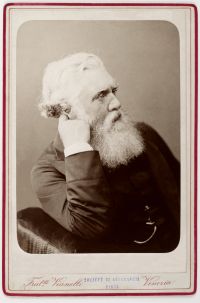
“ Their name has been read Tokkari, and they have been identified with an Asiatic nation. We have seen that in the inscriptions on the bulls, the Tokkari are mentioned amongst the people conquered by Sennacherib [102] , and it is highly probable that the captives in the bas-reliefs I am describing belonged to them. Unfortunately no epigraph, or vestige of an inscription, remained on the sculptures themselves, to enable us to identify them. A captive (of the Tokkari?) Kouyunjik. ”
H. Bedford-Jones, Rajah of Hell Island — 3. Tan Tock's Story (1917)
“ Stone laughed the joyous laugh of a boy.“The raja—behold him! Hell Island—behold it!” He swept out his hand. “That is the native name for this island. From this moment I am its ruler, I, Richard the First and Only! Sultan Lumpur is served by crafty dogs like Tan Tock, ministers of wickedness, ames damnés; but the Raja of Hell Island is served by—himself.“Now, Miss Bretton,” and the mirthful jesting passed from his eyes, to be replaced by a sudden deep and earnest grimness, “right does not make might, but might in this case makes right. ”
Various, Blackwood's Edinburgh Magazine… (1854)
“ In appearance Tokla was more curious than beautiful. He had a little lean body, which no feeding could fatten, covered with a darkish brindly-spotted coat not unlike a hyena’s, and supported by legs as unlike those of any other animal as possible, being in colour white, with dark leopard spots, the hind-legs remarkably long, and so doubled under him that when walking, or rather prowling about, it was doubtful if he touched the ground oftenest with his feet or elbows.... To account for his perpetual thinness, it only requires to state his mode of feeding. ”
H. Bedford-Jones, Rajah of Hell Island — 3. Tan Tock's Story (1917)
“ By now it was lost in the darkness, on the way to Kuala Gajah!For a moment Stone felt madness bite at his brain—felt the impulse to rush back and throttle Tan Tock, the steward. Then he laughed harshly. A faithful steward indeed! The realization of the yellow man’s greatness came gradually to him.Tan Tock, expecting to be killed by Stone, had not deserted his charge, but was serving his master truly—a man true to his salt, even unto death. ”
Ray Palmer, In the Sphere of Time
“ Picking up a stone lounge, Toka slammed it to the doors. The heavy lounge shattered—the doors stood impervious. Why hadn't he and Rok used their battle-axes when they had the chance!The great doors suddenly opened and the cortege was there.Toka's voice was a whip. "Where are my comrades!"Alota bowed servantly. "Only the Council Of Kosanna's Old Ones may now answer Toka's divine testing."If only these princesses were men so a man could beat a straight answer out of them! "Then take me to the Old Ones at once!" Toka strode into the Hall Of Life and followed Alota. ”
“ All Teheran was burning with desire to know the princes, and especially the big-nosed one: and so on the day of his arrival all the town crowded to the gate by which he was to enter the capital. The Prince of Tokay, accompanied by his inseparable nose and a modest escort, entered the city and proceeded directly to the palace."What beauty!" cried the people. "With such a nose, well distributed, there would be an end to all the pug-nosed people in the world." ”
Mór Jókai,
The Slaves of the Padishah
“ The mercurial youth seems to have no idea that within an hour he will be jeopardizing his head by engaging in a foolhardy enterprise which runs counter to the whole policy of the Turkish Empire. But Tököly's mind never impeded his heart. ”
George Francis White, Views in India, chiefly among the Himalaya Mountains (1838)
“ The horse merchants from Bokhara and Cabool occupy the stony central parts of the river, while those from Torkistan take up their quarters in small enclosures behind the houses of the town. These men are famed for their ponies and galloways, animals of great power, called Toorkies, some of which bear very high prices. ”
