Transfer printing

Definition and stakes

Alfred Seymour,  Practical Lithography

“ Direct Tin Printing—The Machine—Peculiarities of Impression—Cylinder Covering—Colour Sequence—Printing Inks—Drying Racks—Air Drying and Stoving.
“Direct tin printing” is not, as the term might suggest, a direct impression of the printing forme on the metal plate. It is in reality a transfer printing process in which the transferring medium is a cylinder with an elastic covering.
”
Source: Gutenberg

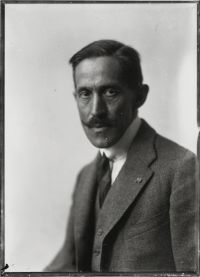
Portrait of Emil Mayer Emil Mayer,  Bromoil printing and bromoil transfer (1923)

“ The transfer printer must always keep in view the fact that he must prepare the way for his final artistic [147] results in all previous phases of the technical preparation of his print. He will, for this reason, in a careful and well planned working up of the negative, bring out the characteristics and feeling of his ideal result by toning down or suppression of such parts of the picture as may be necessary, a task which has nothing in common with the process generally called retouching. ”
Source: Gutenberg

Portrait of Emil Mayer Emil Mayer,  Bromoil printing and bromoil transfer (1923)

“ In choosing the paper destined for the transfer, therefore, attention not only has to be paid to the structure, which must serve the artistic purpose, but one must be certain of the amount of sizing; this latter is necessary so that one may correctly carry out the actual printing process.
As a basic principle the worker should use only pure rag paper and avoid all paper containing wood pulp.
”
Source: Gutenberg

Get perspective with Kwize: daily news enlightened by great literature