“ People talk so much of the expense of foreign travel, but to my mind the greatest expenditures are in paying for extra luggage and in fees. Otherwise, I fancy that travel is much the same if one travels luxuriously, and that in the long run things would be about equal. The great difference is that in America all travel luxuries are given to you for the price of your ticket, and here you pay for each separate necessity, to say nothing of luxury, and your ticket only permits you to breathe. But the annoyance of this continuous habit of feeing makes life a burden. One pays for everything. ”
Travel expense
Definition and stakes
Quotes about “travel expense”
Bayard Taylor,
Views A-foot; Or, Europe Seen with Knapsack and Staff
“ Indeed, it is my belief, from observation, that, with few exceptions, throughout Europe, where a traveler enjoys the same comfort and abundance as in America, he must pay the same prices. The principal difference is, that he only pays for what he gets, so that, if he be content with the necessities of life, without its luxuries, the expense is in proportion. I have given, at times, through the foregoing chapters, the cost of travel and residence in Europe, yet a connected estimate will better show the minimum expense of a two years' pilgrimage: Voyage to Liverpool, in the second cabin . ”
Adèle Hommaire de Hell,
Travels in the Steppes of the Caspian Sea…
“ Supposing even that he was possessed of all this travelling apparatus, still the expense of carriage would imperatively forbid his taking it with him, whereas the Russians, who generally travel with their own horses, may have a dozen without adding to their expenses. As for those who have recourse to the post, they care very little about economy, and provided they have a good dinner prepared by their own cooks, a soft bed and all other physical comforts, they never trouble themselves to calculate the cost. ”
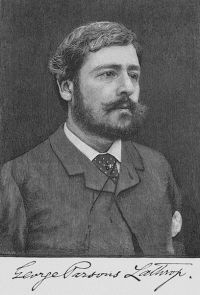
George Parsons Lathrop,
Spanish Vistas
“ Expense of Travel.—From what has been said about circular tickets and hotel prices, some notion can be formed as to the general cost of a Spanish expedition. Housing and transportation should not be reckoned at less than six dollars a day ”
M. Garnier, An Inquiry Into the Nature and Causes of the Wealth of Nations
“ This expense, however, is most immediately and directly beneficial to those who travel or carry goods from one place to another, and to those who consume such goods. The turnpike tolls in England, and the duties called peages in other countries, lay it altogether upon those two different sets of people, and thereby discharge the general revenue of the society from a very considerable burden. ”
J. H. Holdsworth, Memoranda on Tours and Touraine
“ Fifteen pounds of luggage are allowed, and twenty-one francs per cent is charged for the overplus. The usual charges for meals to the passengers in the diligence are, for dinner 4 fr.; for supper 31⁄2 fr; for breakfast 31⁄2 fr. The average expense of travelling by the diligence, including the pour-boire of the coachman and conductor, is about 75 centimes per league. They usually travel about two leagues an hour.Offices in Paris from which the Tours diligences set out.—Rue du Bouloy, Nos 9 and 24—Rue N.-D. des Victoires, No 22. ”
Frank Murphy, Commissioner of Internal Revenue v…
“ The railroad gained nothing from this arrangement except the personal satisfaction of the taxpayer.Travel expenses in pursuit of business within the meaning of § 23 (a) (1) (A) could arise only when the railroad's business forced the taxpayer to travel and to live temporarily at some place other than Mobile, thereby advancing the interests of the railroad. Business trips are to be identified in relation to business demands and the traveler's business headquarters. The exigencies of business rather than the personal conveniences and necessities of the traveler must be the motivating factors. ”
E. S. Bates, Touring in 1600: A Study in the Development of Travel as a Means of Education
“ The cost of travelling divides itself into two kinds; direct and indirect: that is, into the outlay which the traveller must reckon on and that which he has to reckon with. The first kind, the necessities, consists of fares, food, lodging, passports, tolls, etc., together with loss by exchange of money or by charges on remittances. The second kind, the possibilities, includes loss by robbery, by war, by disease, lack of legal privileges, ignorance of local custom, and such like eventualities in so far as any one was liable to suffer from them through being a stranger in a strange land. ”
Thomas Wallace Knox,
How to Travel
“ This allows for first-class places on all conveyances, and good rooms at good hotels—requires no rigid economy, and permits no extravagance. For a journey around the world, to occupy ten or twelve months, and visiting Japan, China, Siam, Java, India, Egypt, Italy, France, and England, together with the run across the American continent, the cost will be about four or five thousand dollars. But, as before stated, there can be no fixed rule, and the amount of expenditure depends largely upon the tastes and habits of the traveler and the amount of money at his disposal. ”
Thomas Wallace Knox,
How to Travel
“ A party of two or more will travel somewhat cheaper than the same number of individuals alone, for the reason that many items are no more for two than for one. Including all the expenses of travel—railways, steamships, hotels, carriages, fees, and the like—an extended journey may be made for ten dollars a day in England and Europe, and twelve dollars for the United States. ”
William Edmund Aughinbaugh, Selling Latin America: A Problem in International Salesmanship
“ Travel facilities are poor, distances between markets long and much time must be consumed in each city visited, especially in the preliminary trips, all of which increases the cost of the traveller, and for the first few years makes him a rather expensive luxury. ”
Josiah Flynt,
Tramping with Tramps: Studies and Sketches of Vagabond Life
“ The average number of miles traveled daily by each man at this season of the year is about fifty, which, if paid for at regular rates, would cost, say, a dollar. Of course one should not ordinarily pay so much to [Pg 306] ride in a box-car as in a passenger-coach, but the ordinary tramp is about as comfortable in one as in the other, and, on the dollar-a-trip basis, he and his 59,999 companions succeed in getting out of the railroad companies sixty thousand dollars' worth of free transportation every day that they all travel. ”
Various, Harper's Round Table, May 5, 1896
“ You can see, then, that so far as going from America to England is concerned not much expense is involved; $60 to $70 will procure the round-trip passage, which will occupy about sixteen to twenty days. On the other side the travelling expenses with a wheel may be made almost anything the individual chooses to make them. One wheelman will ride from city to city, stopping at large hotels in each city, spending several days there, and going to theatres and places of amusement. ”
Karl Baedeker, The Mediterranean (1911)
“ Cook & Son, Ludgate Circus, and by other tourist-agents. It may be noted here that the ‘pleasure-cruises’ organized by many of the companies offer great attractions at moderate cost, but at the almost entire sacrifice of personal independence, while the fellow-passengers with whom one is associated for weeks may not always be congenial.As a general rule it is pleasanter and less expensive to travel with one or more companions than alone. Apart from hotel charges and railway and steamboat fares, the cost for two or three persons is often no greater than for one. ”
William Edward Mead, The Grand Tour in the Eighteenth Century (1914)
“ As for the particular fares of stage-coaches, we shall mention them in each journey; only we are to observe here that the expence of baggage is paid apart, and is generally three sols for every pound above fourteen or fifteen pound weight, which is free. With regard to provisions on the road, your safest way, if you travel post, is to know the price of everything before you order it; but with the stage-coach, your meals are generally regulated at fixed prices, as with us; your entertainment is exceeding good, and the whole expence seldom exceeds five or six livres a day. ”
George W. Bush,
Proclamation 7556
“ Preliminary numbers show that last year, the industry created approximately $545 billion in total travel expenditures and provided $94 billion in tax revenue to local, State, and Federal governments. As one of our Nation's largest employers, travel and tourism supports more than 7 million jobs. ”
E. S. Bates, Touring in 1600: A Study in the Development of Travel as a Means of Education
“ Guide-books seem to have been from two to four times the price of Baedekers, a minor item, but considerable, like food and lodging. It may seem, at first sight, as if food and lodging were far from minor items, and that truly, of course, if only the total expenditure is considered. But in considering, as is being done here, relative cost only, that is, the cost of travel in so far as it has altered since three centuries ago, it has to be borne in mind that the average cost of food and shelter never alters; it is only standards of living that alter. ”
“ A guide’s fee for taking a person to the summit of Mont Blanc and back, is twenty dollars—and he earns it. The time employed is usually three days, and there is enough early rising in it to make a man far more “healthy and wealthy and wise” than any one man has any right to be. The porter’s fee for the same trip is ten dollars. Several fools—no, I mean several tourists—usually go together, and divide up the expense, and thus make it light; for if only one f—tourist, I mean—went, he would have to have several guides and porters, and that would make the matter costly. ”
Chautauqua Institution, The Chautauquan, Vol. 04, July 1884…
“ On the Continent the associations of the third-class carriage are by no means unpleasant—nearly all students and many professional men travel in that way. It is, too, the only way in which to come in contact with the people and study their habits:First-class traveling may be estimated at about $7 per day in Great Britain, and $6 on the Continent. The items which must be added to the usual hotel expenses and car and carriage rates consist largely of fees to servants in the hotels and restaurants, and to the guards, porters and guides that seem to be essential to each traveler. ”
E. S. Bates, Touring in 1600: A Study in the Development of Travel as a Means of Education
“ From all this one may conclude that the equivalent of four hundred pounds a year was the minimum for respectable travelling and that the Average Tourist would certainly need at least half as much again. But this is assuming that all who were respectable, or above the need to be so, paid all their own expenses, which was far from being the case. There were plenty of rich travellers who defrayed all charges for a large following. ”
Thomas Wallace Knox,
How to Travel
“ The cost to each excursionist varies from $175 to $700, and these figures include first-class transportation, hotel accommodations, carriage drives, lunches and all incidentals. From the time he embarks to the day he returns to New York, the tourist is not obliged to take out an additional cent from his purse. ”
Anthony Trollope,
North America — Volume 2
“ They are so high that I consider travelling in America, for an Englishman with his wife or family, to be more expensive than travelling in any part of Europe. First in the list of extras comes that matter of the sitting-room, and by that for a man and his wife the whole first expense is at once doubled. The ordinary charge is five dollars, or one pound a day! A guest intending to stay for two or three weeks at an hotel, or perhaps for one week, may, by agreement, have this charge reduced. ”
E. S. Bates, Touring in 1600: A Study in the Development of Travel as a Means of Education
“ Stowe, 180; and Bertie, Busbecq, Carmoly, Cobham, Courthop, Dallam, Khitrowo, Moryson, Mundy, Röhricht, Vargas. Contarini, Tommaso; takes peat from Flanders to Italy, 140. [409] Conversation-difficulties; see Linguistics. Coryat, Tom; in Palestine, 232, 329. Cost of Travel in 1600. —— Direct (see Coinage, Fares, Finance, Food, Guides, Licences, Lodging, Luggage, Outfit, Passports, Pilgrimage—Jerusalem, River-travel, Tolls) ; estimates of annual, 314-7; means of economizing, 318-25; foreigners more liable to overcharge then than now, 330; "conducted" travel, 216, 331-2; crossing the Alps, 332-4 ”
George H. Heffner, The Youthful Wanderer
“ A tour of ordinary length and duration can now be made through the western nations of Europe, with less expense than is generally believed, as may be inferred from the fact that my entire tour of nearly fourteen thousand miles, cost less than seven hundred dollars. Many travelers lose forty percent of their money by imposition, and others are more careless and extravagant than they ought. ”
Florence Howe Hall,
Good Form for All Occasions
“ If one of the number then offers to take them there in his car, it is understood of course that his hospitality extends only to the means of transportation. All procure their tickets beforehand, and the expense of the entertainment at the hotel is divided among them. When one is doubtful on which plan the trip is to be conducted, one should by all means endeavor to pay one’s share. It is best in a case of this sort for a single individual to speak for the rest. ”
E. S. Bates, Touring in 1600: A Study in the Development of Travel as a Means of Education
“ A modern tourist often finds himself in the position of drawing his income from a locality where money is cheaper or dearer than in the districts where he is making his payments. Now, three hundred years ago, he would have met with these fluctuations more frequently and more suddenly than would be the case to-day; and when met with, they would often have been more violent. In so far as this was the case, so far is the relative cost affected. ”
Henry Rowe Schoolcraft,
Narrative of an Expedition Through the Upper Mississippi to Itasca Lake…
“ No trader, will however, deny the existence of the evil, as an abstract question. Neither is it denied, that ardent spirits is a tax upon the trade, in the exact ratio of its entire cost, doubled, and trebled, and quadrupled, as this cost is by the expense of interior transportation. ”
E. Ernest Bilbrough, 'Twixt France and Spain; Or, A Spring in the Pyrenees
“ It is difficult to give a hard-and-fast amount per diem as to expenditure, as it depends so much on the drives, excursions, &c.; as above stated 10 frs. per day paid all hotel expenses (including vin ordinaire) , and we consider that in the spring, with several excursions, and "a landau and four" for the principal drives—such as Bigorre to Luchon, Lourdes to St. Sauveur, St. Sauveur to Gavarnie, &c. &c.—25 frs. or £1 per day ought to cover the whole daily expense of each person. In the summer of course 35 frs., or even 40 frs., would be required for the same period. ”
E. S. Bates, Touring in 1600: A Study in the Development of Travel as a Means of Education
“ By far the greater number had their money advised at a cost of five to fifteen per cent, usually ten per cent, as against the three-quarters per cent which would probably represent a maximum of loss by exchange to-day to tourists. An unknown quantity lay in the differences of values, which might yield a profit, or might involve heavy loss. ”
Edwin A. Pratt,
A History of Inland Transport and Communication in England…
(1912)
“ Increase of expenditure is found in the higher wages bills, in the ever-expanding items of rates and taxes, in the heavier cost of raw materials, in the greater amount of clerical and other work resulting from the sending of frequent small consignments in place of consignments in bulk, and in the provision of greater conveniences and luxuries in travel. ”
Thomas Wallace Knox,
How to Travel
“ The usual allowance to commercial travelers for their expenses, exclusive of railway fares, is one pound sterling daily in England, and twenty francs on the continent; and it is probable that the most of them manage to keep within their allowances. ”
Frank Murphy, Commissioner of Internal Revenue v…
“ In pertinent part, this interpretation states that 'Traveling expenses, as ordinarily understood, include railroad fares and meals and lodging. If the trip is undertaken for other than business purposes, the railroad fares are personal expenses and the meals and lodging are living expenses. If the trip is solely on business, the reasonable and necessary traveling expenses, including railroad fares, meals, and lodging, are business expenses. ”
Thomas Wallace Knox,
How to Travel
“ Expenses may be roughly set down at five dollars a day, not including railway or other fares, and not including luxuries of any kind. Ordinary hotel expenses will be not far from three dollars a day, leaving two dollars for incidentals. ”