Type metal

Definition and stakes

Portrait of Talbot Baines Reed Talbot Baines Reed,  A History of the Old English Letter Foundries

“ As to the metal in which the type was cast, we find mention made of almost every metal, several of which, however, refer to the punches and matrices, leaving tin, lead, and antimony as the staple ingredients of the type-metal. Of the types themselves, we find these in most essential particulars to be the same as those cast at a later date. We see, however, evidence of perforated, mould-cast type, and, in the absence of a nick, a “shamfer” at the foot, from which the jet appears to have been sawn or cut, instead of being broken. ”
Source: Gutenberg

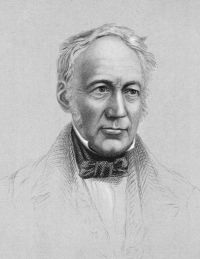
Portrait of Andrew Ure Andrew Ure,  A Dictionary of Arts, Manufactures and Mines

“ This term formerly signified a compound of gold and silver, with some metal of inferior value, but it now means any compound of any two or more metals whatever. Thus, bronze is an alloy of copper and tin; brass, an alloy of copper and zinc; and type metal, an alloy of lead and antimony. All the alloys possess metallic lustre, even when cut or broken to pieces; they are opaque; are excellent conductors of heat and electricity; are frequently susceptible of crystallising; are more or less ductile, malleable, elastic, and sonorous. ”
Source: Gutenberg

Rufus P. Williams,  An Introduction to Chemical Science

“ Gun-metal, bell-metal, and speculum-metal are each alloys of Cu and Sn. Speculum-metal, used for reflectors in telescopes, has relatively more Sn than either of the others; gun-metal has the least. An alloy of Sb and Pb is employed for type-metal as it expands at the instant of solidification. Pewter is composed of Sn and Pb; brass, of Cu and Zn ”
Source: Gutenberg

Get perspective with Kwize: daily news enlightened by great literature