Universal gravitation

Definition and stakes

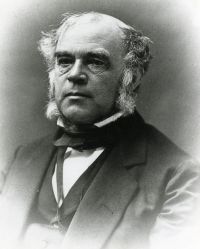
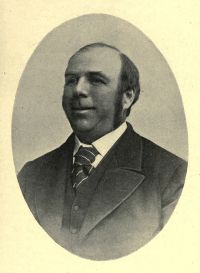
Portrait of William Whewell William Whewell,  Astronomy and General Physics Considered with Reference to Natural Theology

“ Such is the law of universal gravitation. Now, the question is, why do either the attractions of masses, or those of their component particles, follow this law of the inverse square of the distance rather than any other? When the distance becomes one, two, and three, why should not the force also become one, two, and three?—or if it must be weaker at points more remote from the attracting body, why should it not be one, a half, a third? ”
Source: Gutenberg

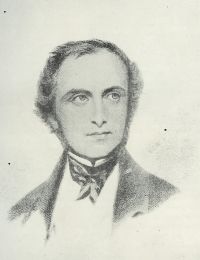
Portrait of John Elliot Drinkwater Bethune John Elliot Drinkwater Bethune,  The Life of Galileo Galilei, with Illustrations of the Advancement of Experimental Philosophy

“ The principle of universal gravitation, though not the varying proportion, is distinctly assumed in it, as the following passages will sufficiently prove: "In every single particle of the earth, and the terrestrial elements, is a certain property or accident which we suppose common to the whole system of the world, by virtue of which all its parts are forced together, and reciprocally attract each other; and this property is found in a greater or less degree in the different particles, according to their density. ”
Source: Gutenberg

Get perspective with Kwize: daily news enlightened by great literature