Universalism, a theological concept grounded in worldviews and religious philosophy, proposes a unifying principle that goes beyond individual differences. Scholars such as Wilhelm Max Wundt emphasized its association with individualism as a defining feature of cultural development, while Cora May Williams examined the ethical conflict between universal moral standards and personal variation.
Alfred H. Lloyd underscored the indefinite yet universal character of human experiences, ranging from political to spiritual, and Charles Dudley Warner described diversity within unity as the core of progress. These viewpoints together illustrate universalism as a dynamic balance between unity and diversity, grounding human experience in both shared understanding and personal uniqueness.
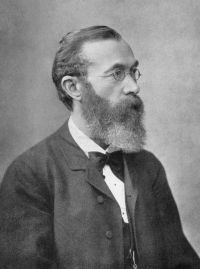 Wilhelm Max Wundt,
Elements of Folk Psychology
Wilhelm Max Wundt,
Elements of Folk Psychology