
“ Some unwritten law should also render impossible those verbal libels which are continually published by persons cunning enough to keep to the windward side of law in the offensive matter which they write. ”
Unwritten law
Definition and stakes
The theme of “unwritten law” has been addressed by authors such as Sir John W. Salmond, John Arthur Andrews, Samuel Chase, Thomas Hobbes and Albert Richard Parsons. It is often associated with terms like statute, rights, Constitution, punishment and court.
Quotes about “unwritten law”
Mahlon Pitney, International News Service v. Associated Press…
“ It would require the making of a new rule in analogy to existing ones. The unwritten law possesses capacity for growth; and has often satisfied new demands for justice by invoking analogies or by expanding a rule or principle. ”
 Henry James Sumner Maine,
Ancient Law
(1861)
Henry James Sumner Maine,
Ancient Law
(1861)
“ English case-law is sometimes spoken of as unwritten, and there are some English theorists who assure us that if a code of English jurisprudence were prepared we should be turning unwritten law into written—conversion, as they insist, if not of doubtful policy, at all events of the greatest seriousness. Now, it is quite true that there was once a period at which the English common law might reasonably have been termed unwritten. ”
Samuel Butler, The Note-Books of Samuel Butler (1912)
“ The written law is binding, but the unwritten law is much more so. You may break the written law at a pinch and on the sly if you can, but the unwritten law—which often comprises the written—must not be broken. ”
A Selection of Cases on the Law of Torts (1893)
“ Where, however, it is, to say the least, doubtful whether the rule contended for is in accordance with our situation, condition, and wants as a people, where for a series of years there has been no legislation recognizing the existence of such a rule, and where custom and habit have uniformly negatived its existence, we feel entirely justified in giving force to these acts which, if they do not expressly, certainly do impliedly, change the unwritten law. ”
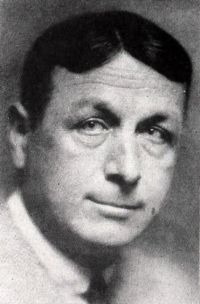 Arthur Cheney Train,
By Advice of Counsel
Arthur Cheney Train,
By Advice of Counsel
“ For every statute in print there are a hundred that have no tangible existence, based on our sense of decency, of duty and of honor, which are equally controlling and which it has never been found necessary to reduce to writing, since their infraction usually brings its own penalty or infringes the more delicate domain of private conscience where the crude processes of the criminal law cannot follow. ”
Legal Tender Cases (79 U.S. 457…
“ The genius, the nature, and the spirit of our State governments amount to a prohibition of such acts of legislation, and the general principles of law and reason forbid them. The legislature may enjoin, permit, forbid, and punish; they may declare new crimes, and establish rules of conduct for all its citizens in future cases; they may command what is right and prohibit what is wrong, but they cannot change innocence into guilt, or punish innocence as a crime, or violate the rights of an antecedent lawful private contract, or the right of private property. ”
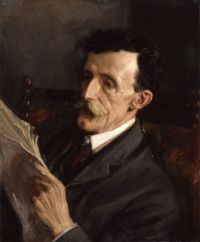 Frederic William Maitland,
Why the History of English Law is Not Written
(1888)
Frederic William Maitland,
Why the History of English Law is Not Written
(1888)
“ The lawyer must be orthodox otherwise he is no lawyer; an orthodox history seems to me a contradiction in terms. If this truth is hidden from us by current phrases about 'historical methods of legal study', that is another reason why the history of our law is unwritten. If we try to make history the handmaid of dogma she will soon cease to be history. ”
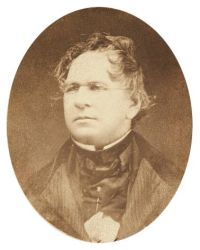 Henry Rowe Schoolcraft,
Western Scenes and Reminiscences
Henry Rowe Schoolcraft,
Western Scenes and Reminiscences
“ These are very mixed principles, containing no basis of a government; yet, futile as they are, we apprehend they contain no effective power for their enforcement. A law without a penalty is like a rope of sand. ”
by George Howard Earle, Jr., The Liberty to Trade as Buttressed by National Law…
“ No conduct has such an absolute privilege as to justify all possible schemes of which it may be a part. The most innocent and constitutionally protected of acts or omissions may be made a step in a criminal plot, and if it is a step in a plot neither its innocence nor the Constitution is sufficient to prevent the punishment of the plot by law. ”
 Melville Fuller,
Pettibone v. United States — Opinion of the Court
Melville Fuller,
Pettibone v. United States — Opinion of the Court
“ It is insisted, however, that the evil intent is to be found, not in the intent to violate the United States statute, but in the intent to commit an unlawful act, in the doing of which justice was in fact obstructed, and that, therefore, the intent to proceed in the obstruction of justice must be supplied by a fiction of law. ”
 Lysander Spooner,
An Essay on the Trial By Jury
Lysander Spooner,
An Essay on the Trial By Jury
“ The whole object of legislation, excepting that legislation which merely makes regulations, and provides instrumentalities for carrying other laws into effect, is to overturn natural law, and substitute for it the arbitrary will of power. In other words, the whole object of it is to destroy men's rights. ”
Oliver Wendell Holmes, Jr., Fox v. Washington — Opinion of the Court
“ The statute is as follows: 'Every person who shall wilfully print, publish, edit, issue, or knowingly circulate, sell, distribute or display any book, paper, document, or written or printed matter, in any form, advocating, encouraging or inciting, or having a tendency to encourage or incite the commission of any crime, breach of the peace, or act of violence, or which shall tend to encourage or advocate disrespect for law or for any court or courts of justice, shall be guilty of a gross misdemeanor;' Rem. ”
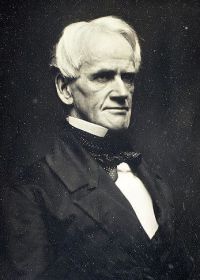 Horace Mann,
Slavery: letters and speeches
(1851)
Horace Mann,
Slavery: letters and speeches
(1851)
“ That, even if the framers of the constitution did leave an unguarded opening, through which such a law could be introduced without a breach in the structure of that instrument, still, that it is a cruel law, that it discards all those principles of evidence and forms of proceeding which have been devised by the wisdom of ages for the protection of innocence against power, and that in its whole scope and spirit it is in conflict with our fundamental ideas of human liberty. ”
Albert Richard Parsons, The Chicago Martyrs (1899)
“ They punish all who violate them, and reward all who obey them. They cannot be repealed, amended, dodged, or bribed, and it costs neither time, money, nor attention to apply them. It is time to stop legislating against them. We want to obey laws, not men, not the tricks of men. Statutes are human tricks. The law—the statute law—is the coward's weapon ”
Lysander Spooner,
An Essay on the Trial By Jury
“ This preposterous doctrine, that "ignorance of the law excuses no one," is asserted by courts because it is an indispensable one to the maintenance of absolute power in the government. It is indispensable for this purpose, because, if it be once admitted that the people have any rights and liberties which the government cannot lawfully take from them, then the question arises in regard to every statute of the government, whether it be law, or not; that is, whether it infringe, or not, the rights and liberties of the people. ”
 Robert Green Ingersoll,
The Works of Robert G. Ingersoll…
Robert Green Ingersoll,
The Works of Robert G. Ingersoll…
“ We know it, We call upon the Christian world to expunge obscenity from their book, and until that is expunged we demand that the laws against obscene literature shall be executed. And how can we, in the next resolution, say those laws ought all to be repealed? We cannot do that. I have always been in favor of such an amendment of the law that by no trick, by no device, by no judicial discretion, an honest, high, pure-minded man should be subjected to punishment simply for giving his best and his honest thought. What more do we need? ”
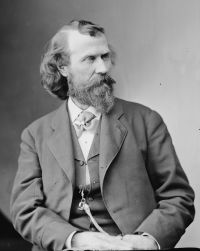 Cincinnatus Heine Miller,
Life Amongst the Modocs: Unwritten History
(1873)
Cincinnatus Heine Miller,
Life Amongst the Modocs: Unwritten History
(1873)
“ I had always hated war and despised warriors. Warriors a re coarse - natured men trained to destroy what refined and gentle men build up. Men fight for freedom of body. There is no such thing. For six thousand years men have struggled for a mistake. There is a freedom of mind, and a man can have that just as much in a monarchy as in a land even beyond the pale of law. A shoemaker or mender of nets may be as free of mind as a monarch. Give us freedom of mind, or rather let each man emancipate his mind, and all the rest will follow. ”
 George Howard Earle, Jr.,
The Uncertainty of the Act
(1920)
George Howard Earle, Jr.,
The Uncertainty of the Act
(1920)
“ Indeed, upon general principles of jurisprudence, has it not always been the law that men, forced to reach conclusions, must be kept free from even the possibility of civil, much less criminal liability, for error in the conclusions that they may reach? ”
 Hypatia Bradlaugh Bonner,
Charles Bradlaugh: a Record of His Life and Work…
Hypatia Bradlaugh Bonner,
Charles Bradlaugh: a Record of His Life and Work…
“ I submit that any hindrance which is not prescribed by law is an act which in itself is flagrantly wrong, whoever may commit it, and that the mere fact that a majority of voices in one Chamber may prevent a citizen from appealing to the law in no sense lessens the iniquity of the illegal act, and that history will so judge it, whatever to-day you may think it your right and your duty to do. ”
Ward Hunt, Neblett v. Macfarland — Opinion of the Court
“ If they are caught in their own toils, and are themselves the sufferers, it is a legitimate consequence of their violation of the rules of law and morality. Those who violate these laws must suffer the penalty. ”
by George Howard Earle, Jr., The Liberty to Trade as Buttressed by National Law…
“ Intent The Anti-Trust Act, being a criminal as well as remedial statute, intent is, of course, necessary. But it is also, of course, only intent as legally defined. As Mr. Justice Holmes so felicitously puts it in Ellis vs. United States: [1] "If a man intentionally adopts certain conduct in certain circumstances known to him, and that conduct is forbidden by the law under those circumstances he intentionally breaks the law in the only sense in which the law ever considers intent." ”
Otto Hehner, 1911 Encyclopædia Britannica, Volume 1… (1911)
“ The line dividing the legitimate and laudable from the fraudulent and punishable is so thin and difficult to draw that neither the law nor its officers have ventured to draw it, and yet it is a matter which urgently requires regulation at the hands of the state. ”
Arthur Cheney Train,
Courts and Criminals
“ Thanks to human sympathy, the law governing insanity has had comparatively few victims, but the fact remains that more than one irresponsible insane man has swung miserably from the scaffold. But "hard cases" do more than "make bad law," they make lawlessness. A statute systematically violated is worse than no statute at all, and exactly in so far as we secure a sort of justice by evading the law as it stands, we make a laughing-stock of our procedure. ”
Jonathan Elliot, Debates in the Several State Conventions on the Adoption of the Federal Constitution (1907)
“ To those who concurred in the act, under the extraordinary belief that the option lay between the passing of such an act, and leaving in force the common law of libels, which punishes truth equally with falsehood, and submits fine and imprisonment to the indefinite discretion of the court, the merit of good intentions ought surely not to be refused. A like merit may perhaps be due for the discontinuance of the corporal punishment, which the common law also leaves to the discretion of the court. ”
Henry James Sumner Maine,
Ancient Law
(1861)
“ It is unworthy of us to effect an admittedly beneficial object by so rude a device as a legal fiction. I cannot admit any anomaly to be innocent, which makes the law either more difficult to understand or harder to arrange in harmonious order. Now legal fictions are the greatest of obstacles to symmetrical classification. The rule of law remains sticking in the system, but it is a mere shell. It has been long ago undermined, and a new rule hides itself under its cover. ”
by John Marshall Harlan, Parkersburg Ohio River Transp Company v…
“ To burden the exercise of a constitutional right with conditions which materially impair its value, or which, practically, compel the abandonment of the right rather than to submit to the conditions, is, in law, an infringement of that right. ”
Oliver Wendell Holmes, Jr., Otis v. Parker — Opinion of the Court
“ If the state thinks that an admitted evil cannot be prevented except by prohibiting a calling or transaction not in itself necessarily objectionable, the courts cannot interfere, unless, in looking at the substance of the matter, they can see that it 'is a clear, unmistakable infringement of rights secured by the fundamental law.' Booth v. ”
Henry James Sumner Maine,
Ancient Law
(1861)
“ If therefore the criterion of a delict, wrong, or tort be that the person who suffers it, and not the State, is conceived to be wronged, it may be asserted that in the infancy of jurisprudence the citizen depends for protection against violence or fraud not on the Law of Crime but on the Law of Tort. ”
Sir John W. Salmond, Jurisprudence (1913)
“ In all ordinary cases the legal recognition of an act as a wrong involves the suppression or punishment of it by the physical force of the state, this being the essential purpose for which the judicial action of the state is ordained. We shall see later, however, that such forcible constraint is not an invariable or essential incident, and that there are other possible forms of effective legal recognition. The essence of a legal wrong consists in its recognition as wrong by the law, not in the resulting suppression or punishment of it. A legal wrong is a violation of justice according to law. ”
 Hugo Black,
James v. United States (366 U.S. 213…
Hugo Black,
James v. United States (366 U.S. 213…
“ In the first place, a criminal statute that is so ambiguous in scope that an interpretation of it brings about totally unexpected results, thereby subjecting people to penalties and punishments for conduct which they could not know was criminal under existing law, raises serious questions of unconstitutional vagueness. ”
Robert Green Ingersoll,
The Works of Robert G. Ingersoll…
“ Statutes passed for the purpose of enabling man to enslave his fellow-man, resulted from a conspiracy entered into by the representatives of brute force. Nothing can be more absurd than to call such a statute, born of such a conspiracy a law. According to the idea of the Supreme Court, man never had property until he had passed a law upon the subject. ”
 Euphemia Vale Blake,
Popular Science Monthly
(1879)
Euphemia Vale Blake,
Popular Science Monthly
(1879)
“ Acts innocent in themselves—such, for instance, as buying goods in a foreign market and bringing them for use to this—may be made a legal crime by statute law, while other acts which are monstrous violations of natural human rights may be and are ignored by the code, and are perpetrated with impunity in the highest grades of civilized society. ”
Oliver Wendell Holmes, Jr., Patterson v. Colorado ex rel. Attorney General of the State of Colorado…
“ The preliminary freedom extends as well to the false as to the true; the subsequent punishment may extend as well to the true as to the false. This was the law of criminal libel apart from statute in most cases, if not in all. ”
Lysander Spooner,
An Essay on the Trial By Jury
“ To enforce any other law, to the extent of taking a man's goods, rights, or person, would be making some of the parties to the association accomplices in what they regard as acts of injustice. It would also be making them consent to what they regard as the destruction of their own rights. These are things which no legitimate system or theory of government can require of any of the parties to it. ”
Lady Anne Hamilton, Secret History of the Court of England…
“ We say persecution, because almost every person is aware, that filing a criminal information against an individual can be done only with a view of preventing the exposure of truth, which, though such procedure be according to English law, cannot be reconciled with the original intention of law, namely—to do justice both to the libelled and the libeller! In America, no such monstrosities disgrace the statute-book ”
Frank Maloy Anderson, The Constitutions and Other Select Documents Illustrative of the History of France… (1908)
“ No man can be questioned or prosecuted on account of writings which he shall have caused to be printed or published upon any matter whatsoever, unless he has intentionally instigated disobedience to the law, contempt for the constituted authorities, resistance to their acts, or any of the acts declared crimes or offences by the law. ”
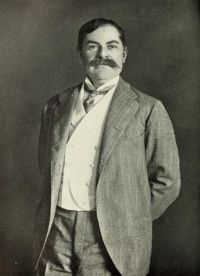 Thomas Nelson Page,
The Sheriffs Bluff
Thomas Nelson Page,
The Sheriffs Bluff
“ To the inhibition of Holy Writ is added the cumulative if inferential prohibition of the Law, which declines to consider inebriety, though extreme enough in degree to impair if not destroy the reasoning faculty, in mitigation of crime of the highest—— dignity. ”
Oliver Wendell Holmes, The Path of the Law
“ The primary rights and duties with which jurisprudence busies itself again are nothing but prophecies. One of the many evil effects of the confusion between legal and moral ideas, about which I shall have something to say in a moment, is that theory is apt to get the cart before the horse, and consider the right or the duty as something existing apart from and independent of the consequences of its breach, to which certain sanctions are added afterward. ”
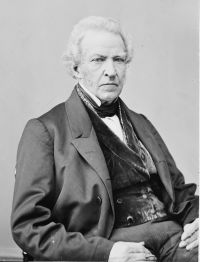 James Moore Wayne,
Harris v. Runnels — Opinion of the Court
James Moore Wayne,
Harris v. Runnels — Opinion of the Court
“ It prohibits every thing which is unjust or contra bonos mores. The object of all law is to repress vice and to promote the general welfare of society; and it does not give its assistance to a person to enforce a demand, originating in his breach or violation of its principles and enactments. Contracts in violation of statutes are void; and they are so whether the consideration to be performed or the act to be done be a violation of the statute. ”
Related terms
Authors who wrote about “unwritten law”
Sir John W. SalmondJohn Arthur AndrewsSamuel Chase Thomas HobbesAlbert Richard ParsonsOliver Wendell HolmesFrederic William MaitlandLysander SpoonerHenry James Sumner Maineby George Howard Earle, Jr.Oliver Wendell Holmes, Jr.
 John Law
 Frédéric BastiatHugo BlackRobert Green Ingersoll
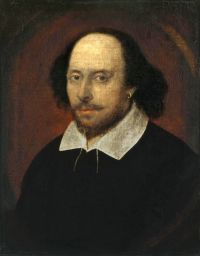 William ShakespeareArthur Cheney Train
 Johann Gottlieb Fichte
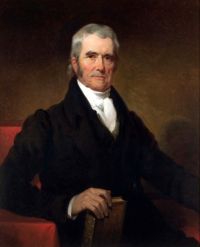 John Marshall
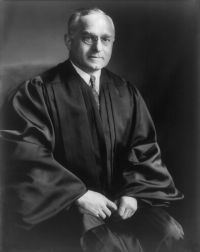 Felix Frankfurter
Thomas HobbesAlbert Richard ParsonsOliver Wendell HolmesFrederic William MaitlandLysander SpoonerHenry James Sumner Maineby George Howard Earle, Jr.Oliver Wendell Holmes, Jr.John LawFrédéric BastiatHugo BlackRobert Green IngersollWilliam ShakespeareArthur Cheney TrainJohann Gottlieb FichteJohn MarshallFelix Frankfurter