“ But a consensus of opinion seems to prove that the keynote of Vers de Société is lightness, both of theme and treatment. Yet though light, it must not be trashy. It is the lightness of beaten gold-leaf, not the lightness of chaff. It is valuable, not worthless.The spirit of the work depends on an instant perception [xxvii] and a fine appreciation of values, seen through the medium of a whimsical kindliness.Let this be expressed with perfect taste and skill, and with a courtly sense of humor, and the result may be classed among those immortal ephemeræ which we call Vers de Société. ”
Quotes about “vers de société”
“ Mortimer Collins, himself a writer of Vers de Société, declared that the lines by Ben Jonson, beginning, “Follow a shadow, it still flies you;” is the most perfect bit of society verse written in our language. And speaking of the same poem, Mr. W. Davenport Adams says, “I cannot bring myself to look upon Ben Jonson as a ‘society poet,’ or upon the verses in question as a ‘society poem’ in the proper sense of the term—in the sense at least, in which I understand them.” ”
“ INTRODUCTION ALL collectors of Vers de Société agree that there is no possibility of an English equivalent for the French term. None exists; and the attempts to coin one have invariably resulted in failure.Society Verse, Familiar Verse and Occasional Verse are all wide of the mark in one direction or another; and perhaps, after all, the simple term Light Verse strikes nearest home. ”
“ Mr. Adams tells us that “Vers de Société should be applied to the poetry of fashionable life alone; should be limited to the doings and sayings of the world of fashion, and should deal exclusively with [xxii] such things as routs and balls, and dinners and receptions.”Our own American collector, Mr. Brander Matthews, inclines to Mr. Locker-Lampson’s views, and therefore prefers the term Familiar Verse, as allowing excursions outside of Vanity Fair ”
“ Though manner is equally important, yet the choice of matter for Vers de Société depends upon certain definite characteristics.But to limit these characteristics is to ask the question, “who shall decide when doctors disagree?” ”
“ Granting then that there is no perfect English translation of the French phrase, and accepting Vers de Société as our field, we are again confronted by great difficulties and embarrassments in defining its boundaries.One of the greatest masters of the art, Mr. Austin Dobson, gives us twelve definite rules for our [xxi] guidance; but of these, only three refer to the matter of the poems, the others being advice as to manner. ”
“ Mr. Adams corroborates this by saying: “Although a clever literary artist may so far throw himself into the position of a man of society as to be able to write very agreeable Society verse, yet few can hope to write the best and most genuine Vers de Société who are not, or have not at one time been, [xxvi] in some measure at any rate, inhabitants of ‘Society.’” ”
“ The scholarly gentlemen who have devoted special attention to the matter, advance conflicting opinions.Frederick Locker-Lampson, doubtless the greatest master of the art, both in a critical and creative way, allows wide latitude of discretion. But so infallible is his individual judgment and so unerring his taste, that it is with him, a case of “Know the Rules, and when to break them.”He asserts that “Vers de Société by no means need be confined to topics of conventional life.”Contradicting this, is the word of W. Davenport Adams, whose collection of “Songs of Society ”
“ ANTHOLOGIES BY CAROLYN WELLS Each 16mo. Leather, $1.50 net. Cloth, $1.25 net.“Carolyn Wells is a natural-born humorist as well as a humorous anthologist. Anthologies before Carolyn Wells took to making them were grave and formidable things.”—N. Y. Times Review. A Vers de Société AnthologyThis book, the fifth in Miss Wells’ popular series of anthologies, contains the cream of that department of verse which can be described adequately only by the French term, “Vers de Société.” From François Villon to the present time almost all the great writers are represented. ”
“ Edmund Clarence Stedman’s views coincide with those above quoted, and are thus briefly summed up: “In fine, the true kind is marked by humor, by spontaneity, joined with extreme elegance of finish, by the quality we call breeding,—above all, by lightness of touch.”These same authorities agree that not every poet may write Vers de Société. To quote Mr. Locker-Lampson: “The writer of Occasional verse, in order to be genuinely successful, must not only be something of a poet, but he must also be a man of the world, in the liberal sense of the expression ”
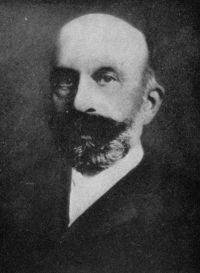 Albion Woodbury Small,
The American Journal of Sociology
(1896)
“ The millions have fragmentary knowledge of societary relations, and they are trying to transmute that meager knowledge into social doctrine and policy. The peculiar element of danger in the situation was just now suggested. ”
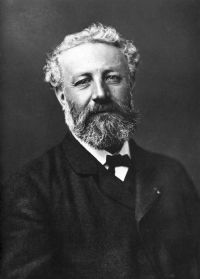 Jules Verne,
From the Earth to the Moon — Chapter XXVI
“ All the various classes of American society were mingled together in terms of absolute equality. Bankers, farmers, sailors, cotton-planters, brokers, merchants, watermen, magistrates, elbowed each other in the most free-and-easy way. ”
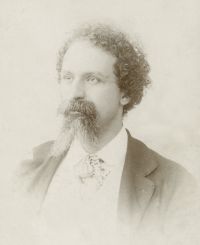 Enrico Ferri,
Socialism and Modern Science (Darwin…
“ The economic conditions—which are the resultant of the ethnical energies and aptitudes acting in a given physical environment—are the determining basis of all the moral, juridical and political phenomenal manifestations of human life, both individual and social. ”
Sinclair Lewis, The Job : Man and Woman — Chapter 19 (1917)
“ She believed again, as in commercial college she had callowly believed, that business was beginning to see itself as communal, world-ruling, and beginning to be inspired to communal, kingly virtues and responsibility. ”
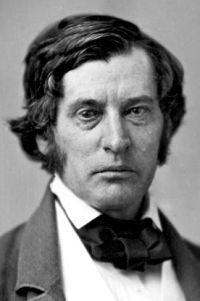 Charles Sumner,
The Crime against Kansas
(1856)
“ Here, sir, is the secret of the Emigrant Aid Company. By this single principle, which is now practically applied for the first time in history, and which has the simplicity of genius, a business association at a distance, without a large capital, has become a beneficent instrument of civilization, exercising the functions of various Societies, and in itself being a Missionary Society, a Bible Society, a Tract Society, an Education Society and a Society for the Diffusion of the Mechanic Arts. ”
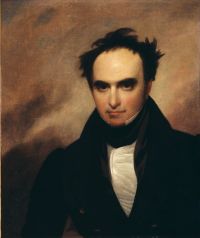 Daniel Webster,
The Great Speeches and Orations of Daniel Webster
“ What would become of society itself? How could it exist? And is that to be considered a charity which strikes at the root of all this; which subverts all the excellence and the charms of social life; which tends to destroy the very foundation and frame-work of society, both in its practices and in its opinions; which subverts the whole decency, the whole morality, as well as the whole Christianity and government, of society? ”
 Nesta Helen Webster,
Secret societies and subversive movements
“ Can a few hundreds, or even thousands, of men and women, drawn largely by curiosity or want of occupation into societies of which the very names are hardly known to the general public, exercise any influence on the world at large? ”
 Robert W. Chambers,
The Maids of Paradise
“ The avowed object of the society was the advancement of universal brotherhood, of liberty and equality, the annihilation of those arbitrary barriers called national frontiers—in short, a society for the encouragement of the millennium, which, however, appeared to be coy. ”
John Rae, Contemporary Socialism
“ Many other social forces, national character, ideas, customs—the whole inherited ethos of the people—individual peculiarities, love of power, sense of fair dealing, public opinion, conscience, local ties, family connections, civil legislation—all exercise upon industrial affairs as real an influence as personal interest, and, furthermore, they exercise an influence of precisely the same kind. They all operate ethically, through human will, judgment, motives, and in this respect one of them has no advantage over another. ”
“ An unspeakable society—a hollow, heartless, callous, wicked brood. Compare that crew of furious money-grabbers with our modern gentlemen and ladies! We have our faults—crime and vice flourish; but, from the Court down to the simplest middle-class society in our provincial towns, the spread of seemliness and purity is distinctly marked. ”
 Lucy Maynard Salmon,
Domestic service
(1897)
“ The different economic, social, and moral questions connected with these various conditions, the illustrations of which could be multiplied indefinitely, may be, generally are, decided by each individual without reference to society at large. ”
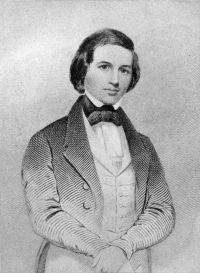 T. S. Arthur,
Grappling with the Monster; Or…
“ This society now publishes books and tracts upon the moral, economical, physiological, political, financial, religious, medical and social phases of the reform. We have the writings of over two hundred different persons in almost every walk and station in life. We already have a literature of no mean character. Its influence is not only felt in every State and Territory in the land, but in every country on the globe. ”
 Robert Ezra Park,
The City: Suggestions for the investigation of human behavior in the city environment
(1915)
“ How far is occupation, rather than association, responsible for the mental attitude and moral predilections? Do men in the same profession or trade, but representing different nationalities and different cultural groups, hold characteristic and identical opinions? To what extent is the social or political creed, that is, socialism, anarchism, syndicalism, etc., determined by occupation? by temperament? To what extent have social doctrine and social idealism superseded and taken the place of religious faith in the different occupations, and why? ”
 Carl Schurz,
Speeches, correspondence and political papers of Carl Schurz
(1913)
“ Moreover, he had to appeal to a population still in a raw social state, poor, and in their struggles with the necessities of the day naturally disposed to understand the coarse voice of interest more easily than the whispers of the finer feelings. ”
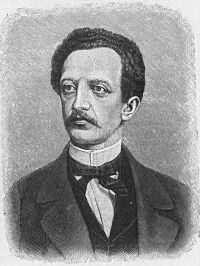 Ferdinand Lassalle,
The Working Man's Programme
(1884)
“ As this class stood over against the legally privileged classes of the community, so it understood itself at that time, at the first moment, to be identified with the whole people, and its interests to be identical with the interests of the whole of humanity. ”
René Worms, The American Journal of Sociology… (1895)
“ In all times there have been diverse views which have presided as a sort of authority over the regulation of labor, or over the levying of customs; precepts of conduct have been furnished to men by laws, by religion, by the morality accepted in their country ”
George Thomas Daly, Catholic Problems in Western Canada
“ The very foundations of political and social life, of our economic system, of morals, of religion are being sharply scrutinized, and this, not only by a few writers and speakers, but by a very large number of people in every class of life, especially among the workers. ”
 Gustave Droz,
Monsieur, Madame, and Bébé — Volume 02
“ It became very fashionable, as you are aware, and the good fathers organized, in turn, a registry for men servants; and the result is that, from one thing leading to another, the community has become extremely wealthy. ”
P.-J. Proudhon, System of Economical Contradictions…
“ Why on the part of man this transcendental confession of society, when society itself was there, present, visible, palpable, willing, and acting,—when, in short, it was known as society and named as such?No, it is said, society did not exist; men were agglomerated, but not associated; the arbitrary constitution of property and the State, as well as the intolerant dogmatism of religion, prove it. ”
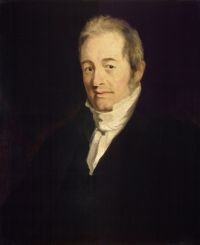 John Galt,
The Life, Studies, and Works of Benjamin West…
“ He represented the institutions of civilized society as calculated to make him dependant on the labour of others, and subject to every chance that might interrupt their disposition to supply his wants. ”
Johann Jacoby, The Object of the Labor Movement (1887)
“ Permit me to-day to make the Labor Movement, the so-called Social Question, the subject of my remarks. In view of the close connection between the political and the social conditions of a nation, every constituent has a well-founded right to demand of his representative a social confession of faith besides his political one. ”
Abner E. Woodruff, The Evolution of Industrial Democracy (c/1917)
“ They find themselves subjected to almost identical conditions in all sections and begin to recognize themselves as a class, regardless of races, nationalities or creeds. Recognition of class generates that sense of duty known as the social conscience—the moral sense of the working class. ”
 John R. Commons,
The American Journal of Sociology
(1901)
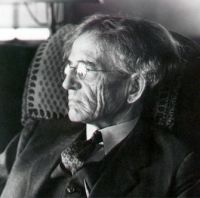
“ The same is true of the large array of people who, in the domestic and ecclesiastical institutions, are teaching the children at home or in the schools and churches ; of the policemen and prison officials who are dealing with anti-social classes ; of the charity workers and pauper overseers who are dealing with the sub-social classes ; these are fitting social material for society, just as the other technical workers are fitting natural material for society's uses. ”
 Frank B. Anderson,
Morals in Trade and Commerce
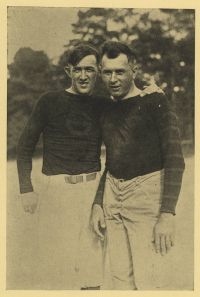
“ The communal conscience has changed, and some things regarded right and proper twenty years ago are frowned upon to-day. But business methods tend to become rigid and inelastic, and a sudden evolution of the public conscience leaves them in the rear. ”
 John Ruskin,
Unto This Last, and Other Essays on Political Economy
“ Kind persons among the rich, and wise among the poor, modify the connexion of the classes: the efforts made to raise and relieve on the one side, and the success and honest toil on the other, bind and blend the orders of society into the confused tissue of half-felt obligation, sullenly-rendered obedience, and variously-directed, or mis-directed, toil, which form the warp of daily life. ”
 Georg Simmel,
The Persistence of Social Groups
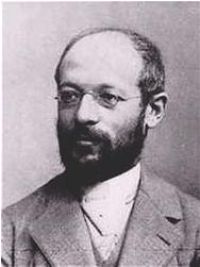
“ The subject-matter of sociology is, therefore, the forms or ways in which human beings exist beside, for, and with each other. The purposes for the sake of which these socializations come into being—economic and social, [2] religious and criminal, sexual and military, political and ethical, etc.—will be treated by other sciences. ”
Charles A. Ellwood, Sociology and Modern Social Problems
“ The word social, then, is much broader than the words industrial, political, moral, religious, and embraces them all; that is, social phenomena are all phenomena which involve the interaction of two or more individuals. The word social, then, includes the economic, political, moral, religious, etc., and must not be thought of as something set in opposition to, for instance, the industrial or the political.Society and its Products.—Beneath all the forms and processes of human society lies the fact of association itself. ”
 H. G. Wells,
First and Last Things: A Confession of Faith and Rule of Life
“ I have decided for myself that the general business of life is the development of a collective consciousness and will and purpose out of a chaos of individual consciousnesses and wills and purposes, and that the way to that is through the development of the Socialist State, through the socialization of existing State organizations and their merger of pacific association in a World State. ”
 George Stuart Fullerton,
A Handbook of Ethical Theory
“ The social will is brought to bear upon the individual through a variety of agencies. The family, the neighborhood, the church, the trade or profession, the political party, the social class—all these have their habits and maxims. They tend to mold to their type those whom they count among their members. The pressure which they bring to bear is felt as a sense of moral obligation. ”
B. G. Jefferis and J. L. Nichols, Searchlights on Health — Social Duties (1919)
“ A WHINING COMPLAINER.—Society, as it is called, is far more apt to pay its dues to the individual than the individual to society. Have you, young man, who are at home whining over the fact that you cannot get into society, done anything to give you a claim to social recognition? ”
 John Humphrey Noyes,
History of American Socialisms
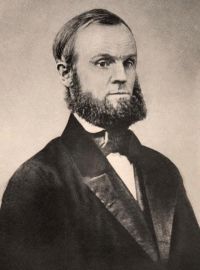
“ The possibility of establishing true social relations, increased production, and the embodiment of the religious sentiment, are, if we read the signs aright, the points upon which the question of Association now hinges in the public mind. ”
Daniel Webster,
The Great Speeches and Orations of Daniel Webster
“ With the rise and growth of this new class of society, not only did commerce and the arts increase, but better education, a greater degree of knowledge, juster notions of the true ends of government, and sentiments favorable to civil liberty, began to spread abroad, and become more and more common. ”
