
“ And I, at Heav’n’s appointed hour, may find Your warlike ensigns waving in the wind. Meantime the rites and fun’ral pomps prepare, Due to your dead companions of the war: The last respect the living can bestow, To shield their shadows from contempt below. ”
Warlike
Definition and stakes
The theme of “warlike” has been addressed by authors such as Virgil, Edith Wharton, Havelock Ellis, William James and Dom. It is often associated with terms like war, peace, courage, enemy and army.
Quotes about “warlike”
 Edith Wharton,
Fighting France, from Dunkerque to Belfort
Edith Wharton,
Fighting France, from Dunkerque to Belfort
“ When a warlike race has an invader on its soil, the men holding back the invader can never be said to be inactive. But behind the army were the waiting millions to whom that long motionless line in the trenches might gradually have become a mere condition of thought, an accepted limitation to all sorts of activities and pleasures. The danger was that such a war—static, dogged, uneventful—might gradually cramp instead of enlarging the mood of the lookers-on. ”
 Havelock Ellis,
The Task of Social Hygiene
Havelock Ellis,
The Task of Social Hygiene
“ Such warlike spirit as exists to-day must be considerably discounted by the fact that those who manifest it are not usually the people who would actually have to do the fighting. It is more important to point out (as is done in a historical sketch of warfare by A. Sutherland, Nineteenth Century, April, 1899) that, as a matter of fact, war is becoming both less frequent and less ferocious. ”
William James, Memories and Studies
“ We inherit the warlike type; and for most of the capacities of heroism that the human race is full of we have to thank this cruel history. Dead men tell no tales, and if there were any tribes of other type than this they have left no survivors. Our ancestors have bred pugnacity into our bone and marrow, and thousands of years of peace won't breed it out of us. The popular imagination fairly fattens on the thought of wars. Let public opinion once reach a certain fighting pitch, and no ruler can withstand it. ”
“ We threaten peace of others with war. We rouse ourselves with the cry to arms. In peace or war we are restless. In peace we amuse ourselves by sparring and wargames .In war we sing our lamentations of peace. What are we ? A warlike race intent on keeping an empire with abundance .At the same time advance in all directions with our might. The horns of bulls are never far from another warring bull?s tips. When reins are loosened, gates thrown wide ,beasts lunge forth and lock horns again. ”
 Jerome K. Jerome,
All Roads Lead to Calvary
Jerome K. Jerome,
All Roads Lead to Calvary
“ He was a Russian, a teacher of languages in Paris at the outbreak of the war, and had joined the French Army.“It is not only courage,” he said, “that War brings out. It brings out vile things too. Oh, I’m not thinking merely of the Boches. That’s the cant of every nation: that all the heroism is on one side and all the brutality on the other. Take men from anywhere and some of them will be devils. War gives them their opportunity, brings out the beast. ”
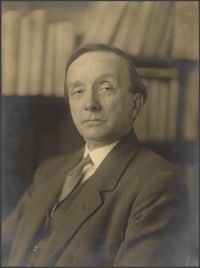 A. St. John Adcock,
For remembrance: soldier poets who have fallen in the war
(1920)
A. St. John Adcock,
For remembrance: soldier poets who have fallen in the war
(1920)
“ No militarism is here, nor in any of the poems I have read by these soldiers; no strut of the goose-step, no taste for slaughter nor lust of conquest for its own sake, nor any of the cheap, dazzling blatancies that belong to the militaristic spirit. These men were too sanely human to cherish hatred except of war and the folly or mad ambition of those who had plunged the world into it. ”
báró Miklós Jósika, 'Neath the Hoof of the Tartar; Or…
“ These foreign lords have told us very fully to what we owe their present kind visit; and they have told us, too, that our country is threatened by ruffianly, contemptible brigands and incendiaries. There is but one thing they have forgotten. I should like to know whether this horde of would-be conquerors have any courage, discipline, or knowledge of war among them. It seems to me important that they should tell us this in their own interests, for it needs no great preparation to scatter a disorderly rabble, but valiant warriors are, of course, another thing. ”
Nellie L. McClung, In Times Like These
“ It is a quiet war with no blare of trumpets to keep the soldiers on the job, no flourish of flags or clinking of swords to stimulate flagging courage. It may not be as romantic a warfare, from the standpoint of our medieval ideas of romance, as the old way of sharpening up a battle axe, and spreading our enemy to the evening breeze, but the reward of victory is not seeing our brother man dead at our feet ”
 Stefan Zweig,
Jeremiah: A Drama in Nine Scenes
Stefan Zweig,
Jeremiah: A Drama in Nine Scenes
“ What are nations? Are not you one of our nation, am not I another? Are not our wives, your wife and mine, part of this same people? Did any of us want war? I stand here armed with a spear, not knowing against whom it is to be turned. Down there in the darkness, unwitting, waits the man for whom it is destined. ”
J. A. Sargant, Joan of Arc: A Play in Five Acts
“ Or plucking wild flowers from the bank to crown thee, Than hail thee, Warwick, conqueror of France. Ha! there is blood upon thy arm!War. For shame! Turn pale—a very coward thou.Count. Not I: But nature is to blame, who doth abhor The sight of blood: but if I must, as fits A soldier's wife, enquire of war, then tell me, Not how many thousands perished, but what New honours thou hast gained; and better still, Say, how much nearer is the end of strife.War. My honours gained is not to feel disgraced. ”
 Washington Irving,
The Sketchbook of Geoffrey Crayon…
(1819)
Washington Irving,
The Sketchbook of Geoffrey Crayon…
(1819)
“ In all his encounters with these, his proper enemies, he resorts to stratagem; and when he perversely turns his hostility against his fellow-man, he at first continues the same subtle mode of warfare.The natural principle of war is to do the most harm to our enemy with the least harm to ourselves; and this of course is to be effected by stratagem. That chivalrous courage which induces us to despise the suggestions of prudence and to rush in the face of certain danger is the offspring of society and produced by education. ”
 Romain Rolland,
Above the Battle
(1916)
Romain Rolland,
Above the Battle
(1916)
“ What are all the torments of war compared to the thoughts that obsess us night and day? When I am on some hill from which my view commands the plain, this is the idea which ceaselessly tortures me: down there in the valley the war rages; men who are facing one another as enemies. And up there on the hill opposite you there is, perhaps, a man who, like you, is contemplating the woods and the blue sky and perhaps ruminating the same thoughts as you, his enemy! ”
 William Dean Howells,
A Psychological Counter-Current in Recent Fiction
William Dean Howells,
A Psychological Counter-Current in Recent Fiction
“ It can be said that these incidents of battle are imagined, like the facts of Vereschagin's pictures, but like these they are imagined rather below than above the real horror of war, and represent them inadequately. The incidents of another book, the last on my list, are of the warfare which goes on in times of peace, and which will go on as long as there are human passions, and mankind are divided into men and women, and saints and sinners. ”
Thomas More, Utopia (1901) — Chapter 8: Of Their Military Discipline (1901)
“ OF THEIR MILITARY DISCIPLINE They detest war as a very brutal thing, and which, to the reproach of human nature, is more practised by men than by any sort of beasts. They, in opposition to the sentiments of almost all other nations, think that there is nothing more inglorious than that glory that is gained by war ”
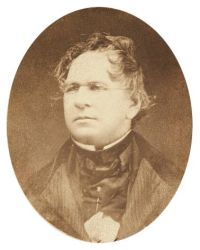 Henry Rowe Schoolcraft,
Alhalla, or the Lord of Talladega…
Henry Rowe Schoolcraft,
Alhalla, or the Lord of Talladega…
“ Or if he e’er returned, his tread Was light as ghost of warrior dead. Betrayed, encompassed, beaten, prest! Stem desperation fired each breast; They burn with wild revenge and ire, Re-light again the battle fire; Re-poise the lance—re-plume the dart, And rousing each bold warrior art, Poured on the reckless battle tide, Nor asked the boon which they denied. And long they fought and freely bled, And heaped their valleys with the dead; For plain, defile, or wild retreat, Still brought disaster and defeat, And every hallowed wood and shore, Was soiled with war-hoof, axe, or gore. ”
Adene Williams, The Girl Warriors: A Book for Girls
“ But alas! they hesitate for one short moment, and in that brief space of time the wind bangs a heavy shutter against the iron casement, and, at its fearful clang, the giant awakes and rises to his feet. He stares about him for a moment, stupefied, but there is no mistaking the fact that he is in the presence of an enemy; for their armor, their uplifted swords, their resolute mien, all proclaim their errand to be one of war. ”
 William Allen White,
The Martial Adventures of Henry and Me
William Allen White,
The Martial Adventures of Henry and Me
“ And yet the upheaval of war is just a passing emotional disturbance in the normal life of men. Even in France, even in the war zone, there is no glorifying of war; men in war, at least on our side of the line, hate war more than they hate the Germans. And with the whole heart of the civilized world—if one frankly may call the Turk and the Prussian the savages that they are—set upon maintaining this war to a victory for the allies, civilization may be said to be in the war as a make-shift. Everywhere one hears that it is a war against war. ”
Logan Marshall, Horrors and Atrocities of the Great War
“ All that made life humanly fair is hidden in the fetid clouds of war where savages (in terror and hysteria) grope for each other’s throats.The glory of war—rot! The heroism of war—rot! The scarlet and beneficent energies of war—rot! When you look at it close what you see are hulking masses of brutes with fear behind them prodding them on, or wild and splendid savages, hysterical with hate, battling to save their hearth fires and women from the oncoming horde. Reversal to barbarism. ”
Romain Rolland,
The Forerunners
(1920)
“ At bottom, behind its fearsome exterior, the war monster lacks confidence, and feels that its life is threatened. Never before have warmongers appealed, as they appeal to-day, to such a compost of arguments, mystico-scientifico-politico-murderous, to justify the existence of war. ”
 Desiderius Erasmus,
Erasmus Against War
Desiderius Erasmus,
Erasmus Against War
“ But how much more grisly a sight is it, how much more outrageous and cruel, to behold man to fight with man, arrayed with so much armour, and with so many weapons? I beseech you, who would believe that they were men, if it were not because war is a thing so much in custom that no man marvelleth at it? Their eyes glow like fire, their faces be pale, their marching forth is like men in a fury, their voice screeching and grunting, their cry and frenzied clamour; all is iron, their harness and weapons jingling and clattering, and the guns thundering. ”
 Thomas De Quincey,
Narrative and Miscellaneous Papers…
Thomas De Quincey,
Narrative and Miscellaneous Papers…
“ Splendor of arms, of banners, of equipages, of ceremonies, and the elaborate forms of intercourse with enemies through conferences, armistices, treaties of peace, &c., having tamed the savagery of war into connection with modes of intellectual grandeur, and with the endless restraints of superstition or scrupulous religion,—a permanent light of civilization began to steal over the bloody shambles of buccaneering warfare. ”
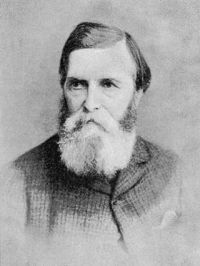 R. M. Ballantyne,
Blue Lights: Hot Work in the Soudan
R. M. Ballantyne,
Blue Lights: Hot Work in the Soudan
“ That great host of dusky warriors—some unquestionably devout, many cruel and relentless, not a few, probably, indifferent to everything except self, and all bent on the extermination of their white-skinned foes,—lay down beside their weapons, and shared in that rest which is sent alike to the just and to the unjust, through the grand impartiality, forbearance, and love of a God whom many people apparently believe to be a “respecter of persons!” ”
Thomas De Quincey,
Autobiographic Sketches
“ What was the meaning of that? What was it to which war pledged a man? It pledged him, in case of opportunity, to burn, ravage, and depopulate the houses and lands of the enemy; which enemy was these fair girls. The warrior stood committed to universal destruction. Neither sex nor age, neither the smiles of unoffending infancy nor the gray hairs of the venerable patriarch, neither the sanctity of the matron nor the loveliness of the youthful bride, would confer any privilege with the warrior, consequently not with me. ”
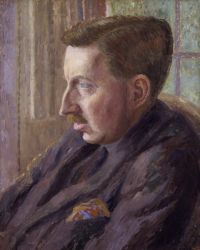 Edward Morgan Forster,
A Room with a View
(1908)
Edward Morgan Forster,
A Room with a View
(1908)
“ She gave up trying to understand herself, and the vast armies of the benighted, who follow neither the heart nor the brain, and march to their destiny by catch-words. The armies are full of pleasant and pious folk. But they have yielded to the only enemy that matters—the enemy within. ”
Ruth Hill, Robert E. Lee: A Story and a Play
“ They also are my countrymen. General, there is a good old book which says, "Love your enemies." What a cruel thing is war; to separate and destroy families and friends, and mar the purest joys and happiness God has granted us in this world; to fill our hearts with hatred instead of love for our neighbors and to devastate the fair face of the beautiful world.STARKE—But think of our men who have laid down their lives so bravely.LEE—The loss of our gallant officers and men throughout the army causes me to weep tears of [48] blood and to wish that I might never hear the sound of a gun again. ”
 William Morris,
The House of the Wolfings — CHAPTER XI
(1889)
William Morris,
The House of the Wolfings — CHAPTER XI
(1889)
“ Yet guests but ill-entreated; for they lack their shields of war, No spear in the hand they carry and with no sax are girt. Lo, these are the dreaded foemen, these once so strong to hurt; The men that all folk fled from, the swift to drive the spoil, The men that fashioned nothing but the trap to make men toil. ”
 David Low Dodge,
War Inconsistent with the Religion of Jesus Christ
David Low Dodge,
War Inconsistent with the Religion of Jesus Christ
“ Are not pride, avarice, and revenge the seeds of all kinds of carnal warfare? From these grow all the quarreling among children, the discord among families, the bickerings, law suits, and broils among neighbors, the boxing among bullies, the dueling among modern gentlemen, and wars among nations. They all originate from one and the same spirit.Now, is the mild, meek, and peaceable man, unarmed, more liable to inspire jealousy in others that he is about to insult and abuse them than the high-toned duelist who constantly carries with him deathly weapons? ”
M. A. Stobart, The Flaming Sword in Serbia and Elsewhere
“ For, according to modern militarism, war aims at annihilation of the enemy, and the enemy includes not only the combatants—these are the least offensive element—but the non-combatants, the men who represent the rival commerce, the women who represent the rival culture, and the men and women who represent codes of honour and humanity which are the beacons of the rival civilisation—at one and all of these, is aimed the blow which is delivered through the medium of the proxies in the field. ”
E. S. MacLeod, Carols of Canada, Etc., Etc
“ The breathings of unwonted woe. Alas, for the dreaming of life! Though heard not the roll of the drum, Nor witnessed the ensign of war, A merciless tyrant had come. Strife is no strife ill-divided When man fighteth frail brother-man; But war is a warfare unequal When giant force leadeth one van. ”
Edwin Lester Arnold, The Wonderful Adventures of Phra the Phoenician (1917)
“ I saw in my mind’s eye those superstitious warriors tumbling from their places, the while I alone sat gloomy and remorseful at the littered tressels, and huddling and crowding to the shadows—as they would not for a thousand Frenchmen—while that brave boy with chattering teeth and white fingers clutched upon the kingly arm did, incoherent, tell my tale, and with husky whisper say how ’twas no soldier of flesh and blood who sat there alone at the long white table, under the taper lights, self-damned by his solitude! ”
 Clarence Darrow,
A Persian Pearl, and Other Essays
Clarence Darrow,
A Persian Pearl, and Other Essays
“ He painted war as war has ever been, and as war will ever be—a horrible and ghastly scene, where men, drunk with blind frenzy which rulers say is patriotic pride, and made mad by drums and fifes and smoke and shot and shell and flowing blood, seek to maim and wound and kill, because a ruler gives the word. He paints a battle field, a field of life and death; a field of carnage and of blood; and who are these that fight like fiends and devils driven to despair? What cause is this that makes these men forget that they are men, and vie with beasts to show their cruel thirst for blood? ”
Edward Howard Griggs, The Soul of Democracy
“ Cruelty, lust, brutality, hate: these have appeared in unspeakable guise, but apparently no cowardice or weak timidity; yet the mail clad heroes of ancient wars, who met their adversaries face to face, were subjected to no such strain as the men standing in trenches waiting momentarily death or mutilation from an unseen foe. No, modern life has not lost strong fiber and is capable of supreme heroism. ”
 H. G. Wells,
The Strand Magazine
(1903)
H. G. Wells,
The Strand Magazine
(1903)
“ They despised them for making war; despised their bawling patriotisms and their emotionality profoundly; despised them, above all, for the petty cunning and the almost brutish want of imagination their method of fighting displayed. "If they must make war," these young men thought, "why in thunder don't they do it like sensible men?" ”
