Window glass

Definition and stakes

Lewis F. Day,  Windows: A Book About Stained & Painted Glass

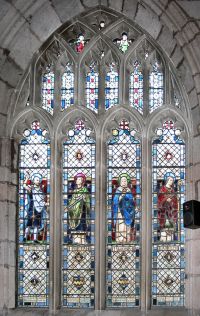
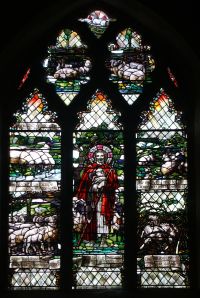
“ It was the business of a window to shut in those that worshipped from the outer world, and wrap them in mysterious and beautiful gloom. With other days, however, came other ideals. As time went on, and men emerged from the dark ages, the problem of the glazier was how more and more to lighten his glass; until at last white glass predominated, and the question was how to introduce colour into it. Meanwhile the thirteenth century glaziers resorted, where they wanted light, to the use of windows in grisaille, in absolute contrast to the rich picture-glass in the same church. ”
Source: Gutenberg

William Frederic Faber,  Stained Glass Windows: An Essay… (1900)

“ In other words, the true stained glass window—in a church building worthy of that name—is not now to give the beholder the impression that he is looking out through an opening and seeing, of something beyond, so much as the size of the opening will permit: in a word, the spectacular impression of looking into some beautiful out-door world through a hole in the wall. The beholder must be conscious still of looking at the wall itself, the translucent part of it, which confines him within the edifice as much as the stone or the brick. ”
Source: Gutenberg

Lewis F. Day,  Windows: A Book About Stained & Painted Glass

“ We find it in here and there a window only, white light shining unmitigated from windows all round. Perhaps in the window itself there is a breakage, and a stream of light pours through it, spoiling, if not its beauty, all enjoyment of it. It is not generally understood how completely the effect of glass depends upon the absence of light other than that which comes through it. Every ray of light which penetrates into a building excepting through the stained glass does injury to the coloured window; more often than not, therefore, we see it under most adverse circumstances. ”
Source: Gutenberg

Get perspective with Kwize: daily news enlightened by great literature