“ In a word, it is not that the physical and mental needs of woman are less than the physical and mental needs of man, but that many women, for some reason or other, can be got to accept a wage that will only keep them alive. If so, the answer, translated, simply runs: women's wages are less than men's because, for some reason, women accept less. ”
Women's wage
Definition and stakes
The theme of “women's wage” has been addressed by authors such as William Smart, Helen Campbell, B. L. Hutchins, Herbert Feis and Terrell McSweeny. It is often associated with terms like woman, factory, labor, worker and man.
Quotes about “women's wage”
“ Without going further into statistics, I think we may assume the fact of a great disparity between men's and women's wages, and go on to ask the reason of it.If we put the question in general terms, Why is a woman's wage less than that of a man? there are some answers that spring to the lips of everyone. First, it is said that it is a mere question of supply and demand. Second, that women are not usually the sole bread-winners in the family to which they belong. Third, that their standard of living is lower than that of men. ”
Helen Campbell, Women Wage-Earners: Their Past…
“ Further agitation, however, and more mature reflection always show that what looks like a simple social problem is a complex one."If women's wages are small, open new careers to them." As simple as this did the problem of women's wages once appear; but when new avenues of employment were rendered accessible to women, it was found, in some instances, that the wages of men were lowered. A consequence which can be seen in different industrial centres is that a man and a wife working together secure no greater wages than the man alone in industries in which women are not employed. ”
“ It is to be noted, however, as very significant of the popular ideas about wage, that the second and third answers just given account for the standard of women's wages by the wants of the worker. A woman's wage is low because she does not require a high wage, whether it be because her father partly supports her, or because her maintenance does not require so much. Now it may be said in passing that it is quite against our modern ideas to represent wage as regulated by wants. ”
Helen Campbell, Women Wage-Earners: Their Past…
“ It is plain, then, that many causes are at work to depress the wages even of skilled workers, far more than can be enumerated here. If this is true for men, how much more strongly can limitations be stated for women, as we ask, "Why do not women receive a better wage?" Many of the reasons are historical, and must be considered in their origin and growth. Taking her as worker to-day, precisely the same general causes are in operation that govern the wages of men, with the added disability of sex, always in the way of equal mobility of labor. ”
Helen Campbell, Women Wage-Earners: Their Past…
“ Could partly supported labor and children be eliminated, shop employees would get higher rates. Still there are other economic anomalies that affect women's wages. 'Wholesalers' and manufacturers shut up their factories and 'give out' everything—umbrellas, coats, hair-wigs, and shrouds—to be made,—they know not in what den, or wrung they care not from what misery ... Again, wages are depressed by over-stimulating piece-work; and its unscrupulous use by proprietors who hesitate to confess to paying women only $3 or $4 a week, yet who scale prices so that only experts can earn that sum. ”
Herbert Feis, The Settlement of Wage Disputes
“ That policy produces, on the one hand, a constant effort on the part of the employers to so modify their processes of production as to take advantage of the low range of women's wages, irrespective of the effect on men's wages and of the suitability of the occupation in question for women; and, on the other hand, a constant effort on the part of the men to keep the women out of all new employments. ”
“ Theoretically, the most obvious way of all is by reducing wages. In men's trades, where reductions of wage are jealously watched, employers think twice, however, before they try that particular reduction of cost. In many factories, again, women's wages are purely customary, and employers would not think of touching them. But in the factories where wages are customary and almost fixed, the wages are also low. If the customary wages in cotton-spinning were 16s. a week instead of 10s., I venture to think that employers, in times of keen competition, would be inclined to try a reduction. ”
Herbert Feis, The Settlement of Wage Disputes
“ The task of fixing the relation between men's wages and women's wages will be even more delicate when the introduction of women into a field of employment follows upon a modification of the processes of production involved. ”
B. L. Hutchins, Women in Modern Industry
“ Why, then, in distinctively women’s occupations should the wages paid be lower than men’s? The answer is not easy, but the key to the problem is to be found in the broad statement that the field of employment of women is much more restricted than that of men. Hence the competition of women for employment reduces their general wage level to a lower point than that of men, or, as an economist would put it, the marginal uses of female labour are inferior to those of male labour. ”
“ If women are ever to get a fair day's wage on the ground of a fair day's work, as distinguished from the wage determined by a woman's necessity, it will only be by the old remedy of combination and the protection of the average working woman against the more helpless members of her own sex. ”
J. A. Hobson, The Evolution of Modern Capitalism…
“ Comparing women's wages with men's we are now able to sum up as follows:—The smaller productivity of woman's work makes the possible maximum wage lower; the smaller wants of women make the possible minimum wage lower; the greater weakness of women as competitors, arising chiefly from excess of supply of labour, makes their [318] actual wage approximate to the lower rather than to the higher level. ”
Helen Campbell, Women Wage-Earners: Their Past…
“ Descending in the scale to untrained labor in all its forms, the woman is at times of less value than the man. The Knights of Labor, however, settled definitely that this was seldom the case, and in their constitution demanded equal pay for equal work. For both sexes machinery is more and more superseding the labor of each; and as women and children are quite capable of running much of it, this fact, of course, brings the general wage to their standard. ”
Helen Campbell, Women Wage-Earners: Their Past…
“ Running through the tables of every industry, the average is about the same,—the wage for women, even when doing the same work, hardly more than a third that for men, and the amount for either at bare subsistence point. ”
Helen Campbell, Women Wage-Earners: Their Past…
“ But I cannot feel that it is a permanent state, or that when the essential has been accomplished women will have the same need or the same desire that now rules. I believe that wages must necessarily fluctuate and tend to the mere point of subsistence when either child labor or the lowest grade of woman's labor exists, and that the only way out of the complications we face is in an alteration of ideals. ”
Sigmund Engel, The Elements of Child-protection
“ Wage-labour employs an ever-increasing number of women. The census returns of all civilised countries show that in the last decade, notwithstanding special legislation for the regulation of the work of female wage-earners, there has been a marked increase in women’s work, and that this increase is proportionally greater than that of the wage-labour of men. In countries in which capitalist production is fully established, wage-earning men constitute about 60 per cent. of the total adult male population, whereas 25 to 30 per cent. of the adult female population are wage-earning women. ”
Helen Campbell, Women Wage-Earners: Their Past…
“ It arises in part from the newness of the occasion, since in the story of labor as a whole, soon to be considered by us in detail, it is only the last fifty years that have seen women taking an active part. We have already seen that mobility of labor is one of the first essentials, and that women are far more limited in this respect than men.This brings us to the final question,—Why do men receive a larger wage than women? ”
“ If a man-worker, then, is supposed to get a high wage when he produces much, a low wage when he produces little, why should a woman's wage be determined by another principle? We cannot hunt with the individualist hounds and run with the socialist hare.The next two reasons, accordingly, put the low wages of women on quite different and more scientific ground, namely, that of the work they produce. Of these the fourth says that women's work is not so good as men's. ”
“ This definiteness of average wage seems to me most explicable on the supposition that women's wages are very near the only quite definite level that political economy has ever pointed out, the level of subsistence.There are two ways, known to theory, of determining wage. In a progressive society, where wealth is rapidly increasing, the tendency will be towards payments by results, that is to say, by value of product. ”
The History of Woman Suffrage, Volume V
“ This is a serious handicap to labor in its efforts to secure humane industrial legislation.... To these working women this matter of suffrage is an economic question—a bread-and-butter necessity. It is a fact, acknowledged by many large employers of labor and stated also by Carroll D. Wright in Government bulletins, that one of the leading reasons for the preference of women wage-earners to men is that they can be secured more cheaply. Employers are frank in acknowledging that the women work for less, that they are more reliable, more temperate, less inclined to strike and more faithful. ”
Helen Campbell, Women Wage-Earners: Their Past…
“ Twenty years ago M. Paul Leroy-Beaulieu wrote of women wage-earners:—"From the economic point of view, woman, who has next to no material force, and whose arms are advantageously replaced by the least machine, can have useful place and obtain a fair remuneration only by the development of the best qualities of her intelligence. It is the inexorable law of our civilization,—the principle and formula even of social progress,—that mechanical engines are to perform every operation of human labor which does not proceed directly from the mind. ”
Dale Carnegie, The Art of Public Speaking
“ Women now are wage earners in factories, stores and other places of toil. In hours of labor and all the physical conditions of industrial effort they must compete with men. And they must do it at lower wages than men receive—wages which, in most cases, are not enough for these women workers to live on. ”
“ But, indeed, it is a lower depth to which women's wages have fallen than the "sustenance of one human being." There may be persons that think 10s. a week is sufficient to keep a grown-up factory girl, living by herself, in healthy and decent life. It certainly is true that in many cases it has to serve till she accepts the release of marriage; but surely the marriage of the English girl, factory or otherwise, is a matter too serious to have the escape from a miserable wage added to its attractions. ”
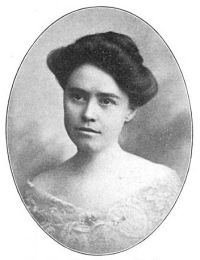 Mabel Potter Daggett,
Women Wanted
(1918)
“ The message that went up to the Government House asking equal pay for equal work is one of the most significant measures in the new woman movement. Ever since women began to be in industry at all, the wage envelope for them has been very small, as lady-like an affair as an early Victorian pocket handkerchief—and just about as practical. ”
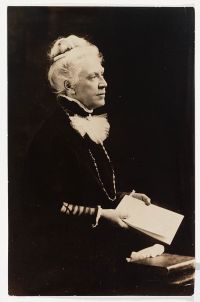 Alice Henry,
The Trade Union Woman
“ But even here, the underlying purpose is the same, the assuring, to the total number of workers whose labor has gone into the production, of a certain amount of finished marketable work, of an increased, or at the least, not a lessened share of the product of their toil. It is not to be questioned that if women are permitted to work at the same operations as men for a lesser remuneration, the man's wage must go down. ”
Lily Gair Wilkinson, Revolutionary Socialism and the Woman's Movement (1910)
“ That is to say, women do not receive a "living wage." In very many trades (e.g., French polishing and the various branches of the printing industry) men's wages are two or three times as high as women’s wages. In the tailoring and other clothing trades employers seem to find a special opportunity for exploiting female labour. Women employed in these trades receive only 7/ to 16/ weekly for work for which men get 30/ to 40/. ”
“ In the light of this statistic it cannot be economically necessary that women's remuneration for labour should remain at the subsistence level. If this was a fair wage fifty years ago, it cannot be so now. ”
Helen Campbell, Women Wage-Earners: Their Past…
“ Wherever for any reason there is immobility of labor, there is always lowering of the wage rate. The trades and general industries for which women are suited are highly localized. They focus in the cities and large towns, and women must seek them there. Great manufactories drain the surrounding country; yet even with these opportunities an analysis of the industrial statistics of the United States by General Walker showed that the women workers of the country made up but seven per cent of the entire population. ”
B. L. Hutchins, Women in Modern Industry
“ The Wage Census of 1907 shows that women’s wages are higher in the great industry than in the smaller and more old-fashioned establishment. State regulation of factory work in the first half of the nineteenth century led to enquiries into the condition of needlewomen and others, who, as the Children’s Employment Commission showed, were in worse case than factory workers. The factory industry, it was immediately recognised, was more amenable to control either by the State or by Unionism, or both, than was the home worker, or the worker in small workshops. ”
“ It is sufficiently obvious that this level of wage was never determined by sustenance, but by the competition of the "single woman" with married women and widows who will take any wage rather than see their children starve, with girls sent into the factory to add their few pence per week to the earnings of the head of the house, and with children. ”
Eugene A. Hecker, A Short History of Women's Rights
“ Much more serious is the glaring discrepancy in the wages paid to men and to women. For doing precisely the same work as a man and often doing it better, woman receives a much lower wage. The reasons are several and specious. We are told that men have families to support, that women do not have such expensive tastes as men, that they are incapable of doing as much as men, that by granting them equal wages one of the inducements to marry is removed. ”
 Anna Garlin Spencer,
The family and its members
“ Increase in Women Wage-earners.—In the first place, we must note the tendency toward rapid increase of the numbers of women listed by the census as in "gainful occupations." Without noting in this connection the conditions just before and during the Great War, conditions not at all indicative of normal increase in the numbers of working-women, we trace in the period from 1880 to 1910 a rise from 2,647,157 to 8,075,772 of the number of women in receipt of salary or wages for work outside their own homes. ”
Helen Campbell, Women Wage-Earners: Their Past…
“ No other city offers so varied a range of employment, and there is none where so large a number are found earning a wage far below the "life limit."The better-paying trades are filled with women who have had some form of training in school or home, or have passed from one occupation to another, till that for which they had most aptitude has been determined. That, however, to which all the more helpless turn at once, as the one thing about the doing of which there can be no doubt or difficulty, is the one most over-crowded, most underpaid, and with its scale of payments lessening year by year. ”
B. L. Hutchins, Women in Modern Industry
“ And in those branches in which superior efficiency is shown by the male workers, the inferiority of the wages of the female employees is altogether out of proportion to the difference in the character of the work done by the two sexes. From this cause—the payment of unfairly low wages to women simply because they are women—arises a desire on the part of grasping employers to reduce the wage-standard by engaging women in preference to men, while in many cases the conditions of female employment are onerous and oppressive to an extent which involves the greatest danger to health. ”
Related terms
Authors who wrote about “women's wage”
William SmartHelen CampbellB. L. HutchinsHerbert Feis Terrell McSweeny
 Lois FrankelJ. A. HobsonLily Gair Wilkinson
 John Stuart MillAlice HenrySue Ainslie Clark
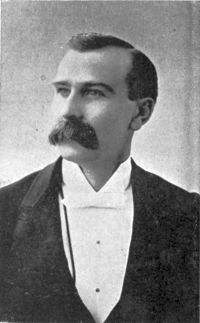 Louis Albert Banks
 Helena M. Swanwick
 Karl MarxAcademy of Political Science in the City of New YorkA. A. BrookeMabel Potter Daggett
 Wilhelm Roscher
 Helena Maria SwanwickAnna Garlin Spencer
Terrell McSweenyLois FrankelJ. A. HobsonLily Gair WilkinsonJohn Stuart MillAlice HenrySue Ainslie ClarkLouis Albert BanksHelena M. SwanwickKarl MarxAcademy of Political Science in the City of New YorkA. A. BrookeMabel Potter DaggettWilhelm RoscherHelena Maria SwanwickAnna Garlin Spencer