AI-generated from sources
Worn In, The Counterintuitive Perfection of Used Textiles
In Brief
- New textiles often initially underperform, requiring repeated use and washing to achieve optimal softness, absorbency, and comfort.
- The functional maturity of a textile results from the physical transformation of its fibers and the removal of superficial manufacturing finishes.
- Historically, domestic life valued textiles for their durability and longevity, with meticulous care and repurposing extending their utility for decades.
- Modern consumer culture, driven by trade influence and planned obsolescence, has shifted towards valuing novelty and disposability over the enduring quality of well-worn goods.
Main authors

The common but paradoxical experience of a new towel, expected to be a small luxury, often proves to be a source of minor irritation—stiff, hard, and inefficient [1]. This frustration is not a modern phenomenon but a long-recognized inconvenience. 19th-century commentators noted the discomfort caused by textiles ill-suited to their purpose, whether it was a harsh new towel or woolen nightwear that prevented rest by irritating the skin [3]. The ideal textile was often one that had been softened through use, achieving a state of functionality that its pristine counterpart lacked [6]. This simple observation challenges the deeply ingrained modern assumption that 'new' is always synonymous with 'better'.
The disconnect between initial appearance and ultimate function extends beyond the bathroom towel to a wide range of household and personal fabrics [2, 5]. The very act of caring for items, such as the meticulous washing and drying of dishes with specific linen towels, implies a familiarity and suitability achieved over time . The necessity for travelers to carry their own soap and towel speaks to the unreliability of unfamiliar, and possibly new, provisions [4]. This recurring theme highlights a fundamental tension: the aesthetic appeal of a brand-new object versus its practical, sensory performance. The journey of a textile from its manufactured state to a state of comfortable, efficient use is a process of transformation, where value is not inherent in its newness but is cultivated through wear and care.
The Imperfections of the Pristine
The initial encounter with a new household textile can often be one of practical disappointment. The common huckaback towel, for instance, was identified by writers as far back as the late 19th century as a source of needless misery when brand new, its hardness making a simple act like drying one's hands an unpleasant chore . This experience underscores a fundamental mismatch between the product as sold and the product as ideally used. While travelers were advised to carry their own towels to avoid the uncertainty and poor quality of those found on the road, the problem often began at home with textiles that required a 'breaking-in' period before they could perform their function satisfactorily . The art of domestic tasks, such as dishwashing, even relied on having the right kind of well-worn towels for different materials like silver and glass, highlighting that utility is a developed, not an inherent, quality .
This paradox of newness is also acutely felt in clothing, particularly garments worn next to the skin. Commentators on health and hygiene frequently noted that certain materials, especially wool, could cause a 'pricking sensation' or 'surface irritation' that was detrimental to rest and comfort . While valued for its warmth, wool's texture could be problematic, making it unsuitable for some as nightwear or in warmer climates . The ideal garment, it was suggested, should not only provide protection but also allow the skin to function without impediment, a quality often at odds with the initial feel of many new fabrics.
The tension between a textile's initial state and its eventual utility points toward a conflict between aesthetics and function. A brand-new towel may appear clean and perfectly formed, and a new garment crisp and untouched, but these qualities do not guarantee performance . The very process that makes a towel absorbent and soft, or a garment comfortable, is use and washing—the same process that degrades its pristine appearance. An overly rough new towel might be less effective than a moderately rough one that has been worn in, which can produce a healthy 'glow' on the skin without the harshness of a flesh-brush . Ultimately, the initial 'perfection' of a new textile is often a superficial quality that must be shed to unlock the object's true functional value.
Material Transformation and Functional Maturity
The journey of a textile from stiff novelty to supple utility is rooted in its material composition and the manufacturing processes it undergoes. A primary goal in textile finishing is to create an attractive appearance that appeals to the consumer at the point of sale [7]. These finishes, however, are often superficial and tend to disappear with wear and washing, particularly in goods of lower quality . Consequently, the enduring performance of a fabric depends not on this initial presentation but on the intrinsic quality of its fibers and the structure of its yarn and weave [9]. The art of manufacturing involves a deep understanding of these raw materials, as specific wools, for example, are required to produce particular fabrics, an expertise that predates modern industrial finishing .
Through repeated use, washing, and drying, textiles undergo a significant physical transformation. The process removes residual chemicals and finishes from manufacturing, allowing the natural fibers to soften and settle . In porous materials, this evolution enhances their functional properties, such as breathability and moisture management, which are crucial for comfort and health [11, 12, 18]. Loose, open-weave fabrics were recognized for providing warmth without trapping perspiration, a quality that improves as the material relaxes and achieves its optimal structure . This mechanical 'maturing' of the fabric is what allows it to become a truly functional object, whether as absorbent toweling or as comfortable, non-restrictive clothing .
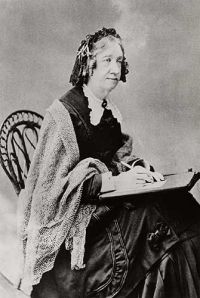
Different materials mature in distinct ways. Wool, a material frequently discussed in 19th and early 20th-century health manuals, was praised for its warmth and its ability to absorb moisture from the skin [10, 14]. However, it required frequent washing to remain clean and could be irritating if not of the right texture or worn in the right climate [17]. Observers like Catharine Esther Beecher championed flannel for undergarments, even in summer, arguing that experience had shown it to be more healthful than cotton or linen, suggesting a process of acclimatization for both the material and the wearer [13]. This ongoing dialogue about the relative merits of wool, cotton, and linen reveals a sophisticated understanding that a material's properties are not static but are expressed and optimized through its interaction with the human body and its environment .
The disconnect between mass-produced textiles and ideal functionality led some, like the designer Candace Wheeler, to seek a 'Missing Textile'—a fabric that successfully blended durability, aesthetic grace, and practical elasticity [15]. Wheeler observed that home-woven goods often possessed a superior quality, satisfying both the eye and the need for utility in a way that commercial manufactures failed to do [16]. This sentiment echoes a broader nostalgia for the endurance of homespun cloth, which, though heavier, was reputed to last for decades, unlike the lighter, less durable machine-made fabrics preferred by modern consumers [8]. The ideal textile, it seems, is one whose artfulness is not just applied as a finish but is woven into its very structure, allowing it to develop character and improve with age .
Planned Obsolescence versus Enduring Value
The 20th century witnessed a decisive shift away from the valuation of durable, improving textiles toward a culture of convenience and disposability. The introduction of paper toweling, for instance, explicitly replaced the reusable, long-lasting cloth towel with a single-use alternative [19, 20]. This innovation, praised for its convenience in wiping up grease and saving on laundry, represents a fundamental change in the relationship between the user and the object . The grimy, time-honored communal towel, a symbol of endurance and shared use, was superseded by a disposable product designed to be used once and discarded, reflecting a broader societal preference for the new over the enduring .
This cultural shift was not merely a consequence of consumer choice but was actively shaped by economic forces. As early as the late 19th century, commentators identified the role of 'Trade Influence' in accelerating fashion cycles [22]. The imperative to sell new goods incentivized producers to render existing ones obsolete, not because they were worn out, but simply because they were 'outré' [24]. Karl Kautsky, writing in 1902, argued that changes in fashion stemmed less from public taste and more from the producers' need to compel consumers to purchase new wares by making the old seem outdated [25]. This logic of planned obsolescence was also noted by Edward Bellamy, who pointed out that rapid changes were 'good for trade,' despite the economic risks for merchants caught with obsolete stock [23]. This system directly undermines the value of durable goods that improve with age, instead promoting a constant churn of novelty [21].
In stark contrast to this emerging consumer culture stood a long tradition of domestic thrift and meticulous care for household textiles. 19th-century housekeeping guides are filled with instructions on how to maintain and preserve linens, viewing them as valuable assets [27, 28, 29]. Towels, dishcloths, and dusters were to be kept scrupulously clean, not just for hygiene but to prolong their life . A clear hierarchy of use was often prescribed: items were repurposed as they aged, with old towels or linens being demoted to cleaning rags, ensuring their utility was maximized until the very end [30]. This ethos of preservation, where items were expected to be used without being needlessly ironed and cared for over a long life cycle, embodies a worldview in which materials were valued for their enduring service rather than their fleeting newness [26].
The evolution of a common textile from a stiff, manufactured object into a comfortable and effective tool reveals a significant paradox within our material culture . This transformation, driven by the physical wearing away of superficial finishes and the gradual settling of a fabric's natural fibers, demonstrates that true quality is often a characteristic acquired through time and use, not an inherent feature of newness . We have seen how this understanding was once central to domestic life, where textiles were cared for and valued for their longevity . This traditional appreciation for durable, improving goods now stands in direct opposition to a modern economic logic that champions disposability and rapid obsolescence, a system fueled by the commercial benefits of constantly changing fashions .
The simple towel that gets better with every wash serves as a potent symbol, inviting a broader reflection on our contemporary patterns of consumption . The historical preference for homespun durability over the flimsy appeal of mass-produced novelty highlights a set of values that have been largely superseded . By appreciating the journey of an object toward its functional peak, we can begin to challenge the pervasive culture of disposability that renders items obsolete long before their utility has been exhausted . This perspective, drawn from the long and intimate history of our relationship with textiles, suggests that a more sustainable and fulfilling material existence may lie not in the endless acquisition of the new, but in the careful stewardship and deep appreciation of the well-worn .