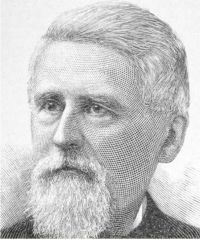
Paul Daniel Alphandéry

Biographical details

Paul Daniel Alphandéry 1911 Encyclopædia Britannica (1911)

In the eyes of the Inquisition the taint of heresy was even more indelible. A family into which a forced conversion or a mixed marriage had introduced Moorish or Jewish blood was almost entirely deprived of any chance of public office, and was bound, in order to disarm suspicion, to furnish agents or spies to the Holy Office. The Spaniards were very quick to accept the idea of the Inquisition to such an extent as to look upon heresy as a national scourge to be destroyed at all costs, and they consequently considered the Inquisition as a powerful and indispensable agent of public protection
Source: Wikisource

Paul Daniel Alphandéry 1911 Encyclopædia Britannica, Volume 1… (1911)

ALBIGENSES, the usual designation of the heretics—and more especially the Catharist heretics—of the south of France in the 12th and 13th centuries. This name appears to have been given to them at the end of the 12th century, and was used in 1181 by the chronicler Geoffroy de Vigeois. The designation is hardly exact, for the heretical centre was at Toulouse and in the neighbouring districts rather than at Albi (the ancient Albiga) . The heresy, which had penetrated into these regions probably by trade routes, came originally from eastern Europe.
Source: Wikisource

Paul Daniel Alphandéry 1911 Encyclopædia Britannica (1911)

But the Reformation never had enough supporters in Spain to occupy the attention of the Inquisition for long. After the Marranes the mystics of all kinds furnished the greatest number of victims to the terrible tribunal. Here again we should not lose sight of the tradition of the medieval Inquisition; the mysticism of the Beghards, the Brethren of the Free Spirit and the innumerable pantheist sects had been pitilessly persecuted by the inquisitors of Germany and France during the 14th and 15th centuries.
Source: Wikisource

Get perspective with Kwize: daily news enlightened by great literature