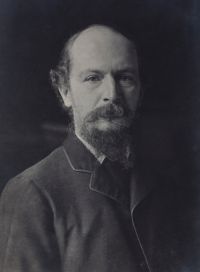
Algernon Charles Swinburne

Algernon Charles Swinburne

Summary

Portrait of Algernon Charles Swinburne Algernon Charles Swinburne Notes on the Royal Academy Exhibition… (1868)

The colour and the passion of this work are the workman's own. Never was a divine legend translated into diviner likeness. Large, deep-bosomed, superb in arm and shoulder, as should be the woman growing from flesh into flower through a godlike agony, from fairness of body to fullness of flower, large-leaved and broad of blossom, splendid and sad—yearning with all the life of her lips and breasts after the receding light and the removing love—this is the Clytie indeed whom sculptors and poets have loved for her love of the Sun their God.
Source: Wikisource

Portrait of Algernon Charles Swinburne Algernon Charles Swinburne Notes on the Royal Academy Exhibition… (1868)

Beauty may be strange, quaint, terrible, may play with pain as with pleasure, handle a horror till she leave it a delight; she forsakes not such among her servants as Webster or as Goya. No good art is unbeautiful; but much able and effective work may be, and is. Mere skill, mere thought and trouble, mere feeling or dexterity, will never on earth make a man painter or poet or artist in any kind.
Source: Wikisource

Portrait of Algernon Charles Swinburne Algernon Charles Swinburne Notes on the Royal Academy Exhibition… (1868)

They all have the immediate beauty, they all give the direct delight of natural things; they seem to have grown as a flower grows, not in any forcing-house of ingenious and laborious cunning. This indeed is in my eyes a special quality of Mr. Whistler's genius; a freshness and fulness of the loveliest life of things, with a high clear power upon them which seems to educe a picture as the sun does a blossom or a fruit.
It is well known that the painter of whom I now propose to speak has never suffered exclusion or acceptance at the hand of any academy.
Source: Wikisource

Get perspective with Kwize: daily news enlightened by great literature