Summary

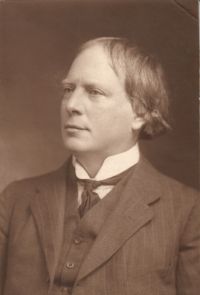
Portrait of Arthur Machen Arthur Machen The Shining Pyramid (collection… (1923)

This is the fashion in which virtue may be said to go out of a man, by which he is constituted the arch-magician of the world, having, as Adam had, dominion over every creature, having the power to take what he will and whence he will from the whole universe, and by tones, and colours, and thoughts, and words, and the shapes of things to make for himself a great and transcendental speech—the mystery language, the incantation of art.
Source: Wikisource

Portrait of Arthur Machen Arthur Machen The Shining Pyramid (collection… (1923)

Yeats has said so well, the spirit of the old ecstatic dancers, of those who saw visions and dreamed dreams, of the solitary, of the singers of strange incantation-songs, which give virtue to all the arts; it is the presence of this spirit, of this one thing needful, which makes us tolerate all the angularities, the crudities, the technical defects of many antique or primitive masterpieces. And by the way it is to be noted that man, who has so many and great privileges, has a privilege that is in a sense the strangest of all.
Source: Wikisource

Portrait of Arthur Machen Arthur Machen The Shining Pyramid (collection… (1923)

To abandon the analogy—which, like most analogies, is imperfect enough—it seems clear that every one of us is a potential Homer, Shakespeare, Wordsworth, Phidias, Botticelli, and that inasmuch as we are not any or all of these great artists we are maimed and imperfect men, or, in other words, fallen men. Smith should be a Shakespeare—he was meant to be a Shakespeare, and, since he is not a Shakespeare, he is like a plum-tree which, through various causes, has degenerated and is returning to the crude and savage asperity of the wild sloe.
Source: Wikisource

Get perspective with Kwize: daily news enlightened by great literature