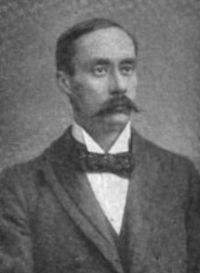
“ Sometimes Nature makes a great effort and unites genius to the sane mind and the sane body, as in a Titian, a Leonardo, a Shakespeare, a Goethe; more often she breathes genius into a fugitive and precarious shell, as in a Keats, a Francis Thompson, a Watteau, and ironically, or perhaps blessedly, gives them the phthisical temperament so that they crowd youth, adolescence, and age into a burst of hectic performances before they depart. ”
Summary
“Watteau”, is a work by C. Lewis Hind. It explores elements such as Watteau, painter and colour.
Quotes from Watteau (C. Lewis Hind)
“ Watteau finds himself, not wholly perhaps, but the formative period has passed. The artist is made; is himself, gives himself. No longer will the classicists prevail; no longer will art be cold and eclectic. The youth from Valenciennes will call Paris back to Nature, and through a temperament will show the world familiar things, will let his imagination play, taking his good where he finds it, but resolving it into something that is his own. ”
“ Watteau's art appeals to everybody, and fascinates all who study it attentively. The lovely decorative pictures tell their own story; and for those who require more than a story in a picture, there is his craftsmanship, his originality, his personality; the delight of comparing one alluring achievement with another, and the interest in noting the inferiority of his followers—Lancret, Pater, and the rest—who annexed his manner but who could not annex the flame of his genius. ”
“ The love of beauty and the simple religion of the Primitives is transferred to us. We feel it to be true that "Nothing can wash the balm from an anointed king," in looking at the portrait of Charles I., king, dandy, and gentleman, touched as it is with Van Dyck's great gift of personal vision; but Le Sueur and Le Brun say nothing, except perhaps to make us grudge the wall space their pictures occupy. ”
“ We are fond of taking credit to ourselves for the initiation of the modern school of landscape. We remember with pride the day in 1824 when the French Salon was illumined with three of Constable's pictures; we also remember the acknowledgment by French painters of the inspiration of Turner and Bonnington; but it would be interesting to follow back their inspiration; and it would not be difficult to trace Monet's division of tones and envelope of air to Watteau.Influence in art and inspiration is a ball that is tossed back and forth. ”
“ The wholesome influence of Rubens on painters has been enormous. He did not make imitators, but he inspired many great men to "get the look of their own eyes," not the look of his; robust, normal, and generous of nature, the contagion of his truth is so immediate that all who come in contact with it must look at Nature unblinkingly, and receive a fresh impulse from his bravery. Velazquez was a better painter after he had talked and worked on the hillside above the Escorial with Rubens; Van Dyck was his pupil, and Watteau is of his artistic progeny. ”
“ Instinctively language becomes flowery, and light and lovely words rise spontaneously to re-echo in another medium the music of his pictures.According to our temperament and taste we are influenced by the familiar-and-candid friend standpoint of De Caylus; by the De Goncourts' searching analysis clothed in apt and sparkling words; by M. Camille Mauclair's soul-search into the effect on Watteau's life of the disease from which he suffered, or by the calm and cultivated mind of Walter Pater with its rare and sympathetic insight, and that "tact of omission" which he extolls in Watteau. ”
“ Attic simplicity of grace is grander, but not more beautiful, not more intimately beautiful. The Greeks gave us the grand beauty of form; Watteau gives us the beauty of caprice, of frills and fripperies; but his people are adorned by garments that lend them grace; his women walking are rhythmical lines, sitting they are silhouettes of delight, their garments enhancing beauty, not hiding it. ”
“ Teniers' subjects may be said to persist to the end of his short but full artistic life, and his Fêtes Galantes, those perfect expressions of his matured art, are Teniers' subjects made his own; but the uncouth Flemish peasants become graceful dames and gallants. Teniers' boors rollick through the day and night boisterously, leaving nothing for to-morrow, unless it be a headache. ”
“ But how charming the picture is still; how gracious and debonair are the two dancing figures; how fascinating the broken colour in the woman's green-striped, rose skirt and in the man's blue butterfly dress. There are seventy-three figures in the small canvas, 1 ft. 73⁄4 in. by 2 ft. 1⁄4 in. You can almost hear the musicians playing, the fall of water from the fading fountain, the rustle of leaves, and the ripple of laughter. ”
“ Of all Watteau's pictures the nudes seem undoubtedly to have been painted from Nature and not from drawings. They are too true to life, too well observed. All his other pictures, even the greatest of his Pastorals, have the air of being imagined. His drawings were his documents, and these, like the nudes, were of course made direct from Nature. The fantasy of his pictures is founded on fact, but it is fantasy which sees only what it wishes to [Pg 43] see—the rhythmic line, the rainbow colour, the happy melancholy. ”
“ They claim Watteau as the great poet of the eighteenth century, and then proceed to give in glittering prose a penetrating and persuasive criticism, apostrophising Watteau's art as "a country refreshed by fountains, decorated with marbles and statues, and peopled by naiades, a country lovable and radiant, far from a jealous world, where baskets of flowers swing from bending trees; where fields are full of music, gardens full of roses and tangled vines ”
“ Gillot is certainly one of Watteau's earliest inspirers: his revolt against convention (even if revolt be too strong a word) influenced Watteau to the end of his life. With this happy rencontre began the serious development of Watteau's art. Life, no longer sordid, became luxurious in thought and application. Supersensitive, the artist mind of the pupil touched and extracted the taste of his master, improved upon it, and strengthened its own tendency for all that was dainty, elegant, and whimsical. Gillot's was a good influence ”
“ A mild melancholy possesses the inhabitants of this dream-world, for they are happy and yet a little sad, musing on what can never be. Through this dream-world "L'Indifférent" trips lightly, typical of Watteau, rainbow-hued, mercurial, his indifference assumed, not troubling to conceal the sad thoughtfulness that lurks in his expression. We do not believe in his snapping fingers and his jaunty air. What colour are his beautiful garments? ”
“ The year 1716 was big with significance to Watteau; he awoke in his own land—dream-land of his Pastorals. Then he began to live, and there were before him but five short years of life. He never again left this land of fantasy—except when, on his return from London, he painted "Gersaint's Sign," that model of modishness and grace, painted in eight mornings, representing Gersaint's shop where élégantes buy masterpieces from shop-keepers as elegant as themselves. ”
“ He proved their compatibility; he showed that all the world is a vision seen through a temperament.It is unjust to attribute to Watteau's influence only the frivolous school of painters which immediately followed him; they were incidents of the reaction of their time against the dull and the pedantic. They copied him, but they missed his sincerity; they lacked his genius; they were begotten of their age when dulness tired of being good and grew wanton. But [Pg 63] even his followers have more of life and warmth and beauty than his predecessors, the frigid and attenuated school of Le Brun. ”
“ Watteau's dames and gallants are touched with happy melancholy. Their light malady of heartache for unattained desires is obviously more beautiful pictorially than the headaches of hilarious boors.Your true artist has delicate antennæ and is sensitive to everything that he sees and feels; but when he retires within himself, the memory of all that he felt, of warmth or cold, [Pg 54] fine or unfine, returns to him. The influence of many men Watteau felt. I place them in the order of their influence—Teniers, Rubens, Gillot, Audran, Titian, and Veronese. ”
“ Gilles is dressed in thin, white, supple satin, lined with rose and striped with faint blue, and his white mantle is lined with blue. The dark bias of the guitar binds the group of people together, all of whom it touches or crosses. ”
“ We may teach ourselves to see little or much, our memory may be accurate or false, according to our gifts. Emerson says: "Our difference of wit appears to be only a difference of impressionability or power to appreciate faint, fainter, and infinitely faintest voices and visions." ”
“ Brown Jupiter, blonde Venus—no attenuation of the truth here—lights loaded, browns rich, with pearly reflections on the fair skin.The attribution of the delightful "Pastoral" at the Louvre, although generally accepted, has been questioned. The elegant little lady shepherdess is in rose red, a red that seems to belong only to Velazquez and to Watteau; she sits watching, not the flock of one sheep and one wondering dog, no! she is listening to the Arcadian shepherd playing his flute. Very Watteau-like is the landscape. ”
“ The worst artists are often the most solicitous of their mediums, and the laborious industry of the mediocre painter is often laborious idleness. A man who can leave behind him, after a short life, the quality and quantity of work bequeathed to the world by Watteau refutes, by that work, accusations of indolence and idleness. ”
“ The shorter the time given for the justification of the gift the stronger often is the capacity for effort, so that the sum total of the achievement of the short life often seems to exceed that of the long life.Michaelangelo lived to be very old. When this "greatest artist" died he left his work unfinished. Raphael died young, but his achievement was prodigious. ”
“ Conquest cannot in seven years change the characteristics of a people. Watteau's art is consequently distinctly Flemish, but modified by French taste; he became an artistic composite of Flemish technical sanity and French intelligence [Pg 56] and fervour. He was an exotic that shot up in the forcing-house of his exacting genius, extracting vitality from Rubens the fertiliser, inspiration from Teniers, colour from Titian and Veronese, and encouragement from Gillot and Audran. Genius is a great gift lent by Nature to the few ”
“ The feminine taste of Velazquez, Van Dyck, and Watteau was made more virile by contact with Rubens, whose taste many of us may condemn, and whose influence for good we are so apt to overlook.From Titian Watteau borrowed warmth, [Pg 55] and from Veronese coolness of colour; Gillot, the decorative painter, showed him his own inherent power; Audran, too, helped him, and the Luxembourg Gardens and Gallery aided his artistic development.No doubt the great artist might be shut in a cell, and still his genius would bring forth its work unnourished by influence or propinquity to other talents ”
“ A seated woman nurses a little black and white dog, while a child nestles up to her, peeping beneath the guitar; the [Pg 47] faces are more alert and smiling than usual, and the picture, although less pearly than "The Music Lesson," is not less beautiful in colour."Jupiter and Antiope" at the Louvre suggests Titian and Rubens filtered through Watteau. This nude studied from life, not painted from his drawings, is more laboured than his other pictures, but the loss of spontaneity in the colour is compensated by the truth and beauty of the abandon of the beautiful limbs in repose. ”
“ To them it represents the decomposition of light; the streak and dot—broken colour—is used to increase the appearance of the vibration of light, which it does in a marvellous manner. The use of broken colour was one of Watteau's characteristics, and is part of the charm and originality of his technique.Even his inconsistencies have charm. His drawings were from the life; his nudes were also from the life, so true to Nature are they, so very modern as to reflection and value, with the added Watteau grace. ”
“ De Caylus also calls Watteau "mannered," but admits that he was endowed with charm, and so on, and so on. Watteau's nudes are studied, and, what is more, achieved. Recall any one of them, "The Toilet," "Antiope," "The Judgment of Paris"—they are as documentary as his drawings. The values and reflected lights of his nude bodies are academic enough to satisfy a modern student at Julian's, the most carping and exacting of critics.De Caylus, while deploring Watteau's methods of technique, contributes the interesting information that he preferred to use his paints liquid ”
“ In 1717, as I have related, he finished after a long delay his pièce de reception for the Academy, the famous first study for the "Embarkment for Cythera." What can be said of this picture, or of the more finished replica at Potsdam, that has not already been said a score of times? It is referred to and described in the Prologue to this book as one of his significant pictures. It moves in a rhythm of life, of love, of colour ”
“ Watteau, a "little master," as some are pleased to call him, has had an influence on [Pg 52] art that persists to-day, an influence intimate and human. Certainly he made life more beautiful. Departing for Cythera with Watteau's dames and gallants means more to us of intelligence in art than acres of classic pictures of gods, temples and heroes untouched by the warmth of personality and incisiveness of observation. We are fatigued and unconvinced in the rooms at the Louvre devoted to Le Sueur's series of pictures depicting the life of St. ”
Common terms
Similar works
Dürer (Herbert Furst)Millet (Percy Moore Turner)Dürer (Herbert E. A. Furst)Rembrandt (Jozef Israëls)Van Dyck (Percy Moore Turner)Chardin (Paul G. Konody)Drawings in pen & pencil from Dürer's day to ours…Table-Talk — The same Subject continued…Drawings of Rossetti (T. Martin Wood…Littell's Living Age — Volume 169…
