Summary

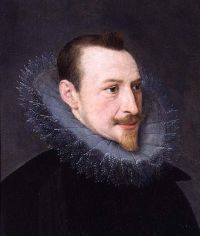
Portrait of Edmund Spenser Edmund Spenser Spenser's The Faerie Queene, Book I

As with Plato, Spenser's idea of the spiritually beautiful includes the true and the good. Sensuous beauty is seen in the forms of external nature, like the morning mist and sunshine, the rose gardens, the green elders, and the quiet streams. His ideal of perfect sensuous and spiritual beauty combined is found in womanhood. Such a one is Una, the dream of the poet's young manhood, and we recognize in her one whose soul is as fair as her face—an idealized type of a woman in real life who calls forth all our love and reverence.
Source: Gutenberg

Portrait of Edmund Spenser Edmund Spenser Spenser's The Faerie Queene, Book I

England was united in a heroic queen whom all sects, ranks, and parties idolized. The whole country exulting in its new sense of freedom and power became a fairyland of youth, springtime, and romantic achievement.
Wise and gallant courtiers, like Sidney, Leicester, and Raleigh, gathered about the queen, and formed a new chivalry devoted to deeds of adventure and exploits of mind in her honor. The spirit of the old sea-kings lived again in Drake and his bold buccaneers, who swept the proud Spaniards from the seas.
Source: Gutenberg

Portrait of Edmund Spenser Edmund Spenser Spenser's The Faerie Queene, Book I

The reader hears in its lines a stately and undulating rhythm that intoxicates the ear and carries him on with an irresistible fascination, he sees the unsubstantial forms of fairyland go sweeping by in a gorgeous and dreamlike pageantry, and he feels pulsing in its luxuriant and enchanted atmosphere the warm and beauty-loving temper of the Italian Renaissance. "Spenser is superior to his subject," says Taine, "comprehends it fully, frames it with a view to the end, in order to impress upon it the proper mark of his soul and his genius.
Source: Gutenberg

Get perspective with Kwize: daily news enlightened by great literature