Summary

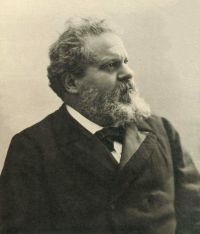
Portrait of Giosuè Carducci Giosuè Carducci Poems of Giosuè Carducci, Translated with two introductory essays

Indeed, if the soul and not the senses be addressed, we question whether beneath all the Dionysian splendours and jollity of Carducci's verses there be not discernible a gloom more real than that of Leopardi. Even for Italy the day is past when Hellenism can fill the place of Christianity; the soul craves a substance for which mere beauty of form, whether in intellect, art, or nature, is a poor and hollow substitute; and to revive not the poetry alone, but the humanity of the nation, a force is needed greater and higher than that to be got by the restoration of either dead Pan or Apollo.
Source: Gutenberg

Portrait of Giosuè Carducci Giosuè Carducci Poems of Giosuè Carducci, Translated with two introductory essays

Among the various aspirants to the title of realist, we have no more interesting examples than in our own Howells and Whitman, both being avowed prophets of this school of writing. In Whitman we see a generous nature run away with by the passion of expression. His words are heaped like sand-dunes. There is a sound of roaring waves, but the landscape is, too often, on the whole, shapeless and wearisome. One feels that there is meaning in the poet's mind, but the expression is excessive, and so without form. The delight of ultimation has become a frenzy of word-piling or word-inventing.
Source: Gutenberg

Portrait of Giosuè Carducci Giosuè Carducci Poems of Giosuè Carducci, Translated with two introductory essays

How endeared was the lake to the tender-hearted poet, and how its cool and placid shores brought solace to his bosom, rent with the passions of Rome's giddy life, Carducci tells in the song of the Sirens—
Come to us, Quintus Valerius!
Here to our grottos descend still the sunrays, but silvery, and mild as those of Cynthia.
Here the assiduous tumults that burden thy life but resemble the distant humming of bees.
We feel ourselves to be listening for the poet, and would fain with him enjoy the fresh air, the soothing calm,
While Hesperus over the waters broadens his rosy face.
Source: Gutenberg

Get perspective with Kwize: daily news enlightened by great literature