Giacomo Leopardi

Definition and stakes

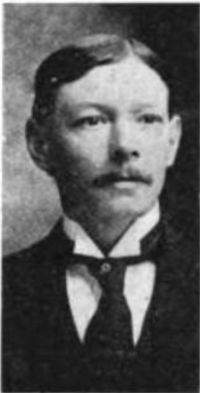
Portrait of Oscar Kuhns Oscar Kuhns,  Studies in the Poetry of Italy…

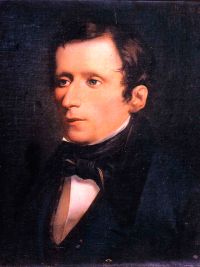
“ Greater than all of these, however, is Giacomo Leopardi (1798-1837) , who alone is worthy to be placed beside the four great Italian poets, Dante, Petrarch, Ariosto, and Tasso, the last three of whom, at least, he might under happier circumstances have equaled. The story of his life is a pathetic one. Born of a family noble but poor, with a sensitive and melancholy temperament, the circumstances of his life only added to his morbid tendency, and after a brief existence, passed in sickness, poverty, and gloom, he died. Leopardi was great as a poet, a philosopher, and scholar. ”
Source: Gutenberg

Francis Henry Cliffe,  A Manual of Italian Literature

“ We can, however, unhesitatingly do so in the case of Leopardi. The works to which he owes his immortality are, indeed, few in number and short in extent, but their perfection gives them a dignity which more voluminous productions might emulate in vain.
Giacomo Leopardi was born at Recanati, a town of the March of Ancona, on the 29th of June, 1798, the eldest son of Count Monaldo Leopardi and Adelaide, his wife, daughter of the Marquis Antici. He had three brothers, Carlo, Luigi, and Pierfrancesco, and one sister, Paolina.
”
Source: Gutenberg

Richard Garnett,  A History of Italian Literature (1901)

“ Leopardi, of the passive protest of martyrdom. In him, as by an emblem, the beauty and the anguish of the suffering country are shown forth, and on this account no less than from the superiority of his literary genius, though no active insurgent against the established order of things, he claims the first place in his hapless but glorious generation.
The tragical yet uneventful life of Giacomo Leopardi was little else than ardent cultivation of the spirit and constant struggle with the infirmities of the body.
”
Source: Wikisource

Get perspective with Kwize: daily news enlightened by great literature