Henry Yule

Henry Yule

Summary

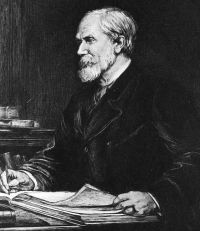
Portrait of Henry Yule Henry Yule,  Hobson-Jobson — R (1903)

“ ROOM, n.p. 'Turkey' (Rūm) ; ROOMEE, n.p. (Rūmī) ; 'an Ottoman Turk.' Properly 'a Roman.' In older Oriental books it is used for an European, and was probably the word which Marco Polo renders as 'a Latin'—represented in later times by firinghee (e.g. see quotation from Ibn Batuta under RAJA) . But Rūm, for the Roman Empire, continued to be applied to what had been part of the Roman Empire after it had fallen into the hands of the Turks, first to the Seljukian Kingdom in Anatolia, and afterwards to the Ottoman Empire seated at Constantinople. ”
Source: Wikisource

Portrait of Henry Yule Henry Yule,  Hobson-Jobson — R (1903)

“ RICE, s. The well-known cereal, Oryza sativa, L. There is a strong temptation to derive the Greek ὀρύζα, which is the source of our word through It. riso, Fr. riz, etc., from the Tamil ariśi, 'rice deprived of husk,' ascribed to a root ari, 'to separate.' It is quite possible that Southern India was the original seat of rice cultivation. Roxburgh (Flora Indica, ii. 200) says that a wild rice, known as Newaree [Skt. nīvāra, Tel. nivvāri] by the Telinga people, grows abundantly about the lakes in the Northern Circars, and he considers this to be the original plant. ”
Source: Wikisource

Portrait of Henry Yule Henry Yule,  Hobson-Jobson — R (1903)

“ ROCK-PIGEON. The bird so called by sportsmen in India is the Pterocles exustus of Temminck, belonging to the family of sand-grouse (Pteroclidae) . It occurs throughout India, except in the more wooded parts. In their swift high flight these birds look something like pigeons on the wing, whence perhaps the misnomer.
ROGUE (Elephant) , s. An elephant (generally, if not always a male) living in apparent isolation from any herd, usually a bold marauder, and a danger to travellers. Such an elephant is called in Bengal, according to Williamson, saun, i.e. sān [Hind. sānḍ, Skt. shaṇḍa]
”
Source: Wikisource

Get perspective with Kwize: daily news enlightened by great literature