Summary

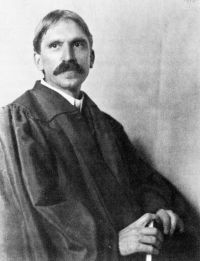
Portrait of John Dewey John Dewey Moral Principles in Education

We do not know what a power is; we do not know what development is; we do not know what harmony is. A power is a power only with reference to the use to which it is put, the function it has to serve. If we leave out the uses supplied by social life we have nothing but the old “faculty psychology” to tell what is meant by power and what the specific powers are. The principle reduces itself to enumerating a lot of faculties like perception, memory, reasoning, etc., and then stating that each one of these powers needs to be developed.
Education then becomes a gymnastic exercise.
Source: Gutenberg

Portrait of John Dewey John Dewey Moral Principles in Education

How common it is for those who assert that education is for social efficiency to assume that the school should return to the barren discipline of the traditional formal subjects, reading, writing, and the rest! This, too, regardless of the fact that it has taken a century of educational evolution to make the course of study varied and rich enough to call for those impulses and activities of social life which need training in the child.
Source: Gutenberg

Get perspective with Kwize: daily news enlightened by great literature