Summary

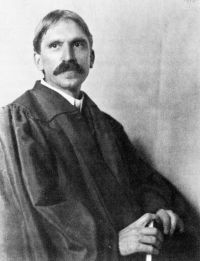
Portrait of John Dewey John Dewey Psychology and Social Practice

It is not merely incidentally, as a grateful addition to its normal task, that psychology serves us. The essential nature of the standpoint which calls it into existence, and of the abstraction which it performs, is to put in our possession the method by which values are introduced and effected in life. The statement of personality as an object, of social relations as a mechanism of stimuli and inhibitions, is precisely the statement of ends in terms of the method of their realization.
Source: Gutenberg

Portrait of John Dewey John Dewey Psychology and Social Practice

To suppose that by some influence of pure personality upon pure personality, conjoined with a knowledge of rules formulated by an educational theorist, an effective interplay of this body of physical and ideal objects with the life of the child can be effective, is, I submit, nothing but an appeal to magic, plus dependence upon servile routine. Symbols in reading and writing and number are, both in themselves and in the way in which they stand for ideas, elements in a mechanism which has to be rendered operative within the child.
Source: Gutenberg

Portrait of John Dewey John Dewey Psychology and Social Practice

Otherwise the more earnestly we insist upon our categorical imperatives, and upon their supreme right of control, the more flagrantly helpless we are as to their actual domination. The fact that conscious, as distinct from customary, morality and psychology have had a historic parallel march is just the concrete recognition of the necessary equivalence between ends consciously conceived, and interest in the means upon which the ends depend. We have the same reality stated twice over: once as value to be realized, and once as mechanism of realization.
Source: Gutenberg

Get perspective with Kwize: daily news enlightened by great literature