 Samuel Johnson,
Preface to Shakespeare
Samuel Johnson,
Preface to Shakespeare
“ Every cold empirick, when his heart is expanded by a successful experiment, swells into a theorist, and the laborious collator some unlucky moment frolicks in conjecture. ”
A theorist is an individual who develops systematic explanations or models to interpret phenomena, often contrasting with practical or empirical methods. Authors such as John Stuart Mill emphasized the tension between theory and practice, while Josiah Royce examined how conceptual frameworks influence our perception of reality.
Samuel Johnson humorously observed how empirical success can elevate practitioners to the status of theorists, and Herbert Wildon Carr underscored the relationship between knowledge and practical concerns. These viewpoints portray the theorist as both a philosopher and a bridge between abstract reasoning and concrete experience, connecting idealized ideas with their real-world consequences.
Samuel Johnson,
Preface to Shakespeare
“ Every cold empirick, when his heart is expanded by a successful experiment, swells into a theorist, and the laborious collator some unlucky moment frolicks in conjecture. ”
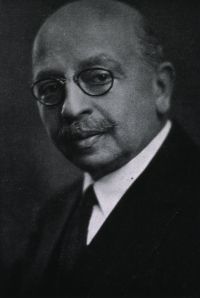 Joseph Jastrow,
Belief and Credulity
(1902)
Joseph Jastrow,
Belief and Credulity
(1902)
“ The mutual recognition of the functions of theorist and practitioner is one of the desired and not improbable consummations of modern civilization, and upon it depends in considerable measure the practical fate of right and wrong beliefs. ”
 John Stuart Mill,
Essays on some unsettled Questions of Political Economy
John Stuart Mill,
Essays on some unsettled Questions of Political Economy
“ The most universal of the forms in which this difference of method is accustomed to present itself, is the ancient feud between what is called theory, and what is called practice or experience. There are, on social and political questions, two kinds of reasoners: there is one portion who term themselves practical men, and call the others theorists ”
Herbert Wildon Carr, The Problem of Truth
“ So far we have looked at our intellectual endowment from the standpoint of ordinary common-sense experience. Let us now consider the philosophical theory based on this view, which explains the nature of knowledge by showing its purpose. The intellect not only selects, but in selecting transforms the reality. It presents us with knowledge that indeed corresponds with reality, for it is essentially a view of reality, but also in selecting it marks out divisions, and gives to reality a form that is determined by practical interest. ”
 Josiah Royce,
The World and the Individual, Second Series
(1901)
Josiah Royce,
The World and the Individual, Second Series
(1901)
“ Upon the basis of the general theory of human knowledge thus broadly sketched, we shall next pass to a study of the questions offered to our scrutiny by Nature, when viewed in its relation to Man. Here our main purpose shall be to apply our general idealistic doctrine, concerning what is meant by Reality in general, to the problem as to the sense in which Nature and Man are real. ”
M. Valentine, Theoretical Ethics
“ Our systems of science, our conclusions in philosophy, our intuitions into first truths and laws, and all the confidence with which we accept truth in all these great realms of mental life, rest back on the observations, reasonings and conclusions for whose reality and order consciousness is our most fundamental voucher. To its tests and verifications all the processes of knowing must submit. No truth is even visible except in the light in which consciousness holds all our acts and forms of intelligence. ”
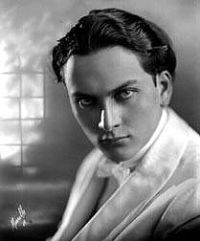 Manly Palmer Hall,
The Secret Teachings of All Ages…
(1928)
Manly Palmer Hall,
The Secret Teachings of All Ages…
(1928)
“ The six headings under which the disciplines of philosophy are commonly classified are: metaphysics, which deals with such abstract subjects as cosmology, theology, and the nature of being; logic, which deals with the laws governing rational thinking, or, as it has been called, "the doctrine of fallacies"; ethics, which is the science of morality, individual responsibility, and character--concerned chiefly with an effort to determine the nature of good; psychology, which is devoted to investigation and classification of those forms of phenomena referable to a mental origin ”
Josiah Royce,
The World and the Individual, Second Series
(1901)
“ All such conceptions can be viewed either as relatively valid, or as metaphysically final, only upon the basis to be established by a general theory of what constitutes our own type of knowledge. And for such a theory, — our whole present concern, — experience and reality alike contain only fulfilment of purpose, complete or incomplete, conditions of interest and attention, expressed or partially expressed in present consciousness, — acknowledgments of facts, and ignorance of facts, — beliefs, and truths related to beliefs. ”
John Stuart Mill,
A System of Logic, Ratiocinative and Inductive
“ Of the science, therefore, which expounds the operations of the human understanding in the pursuit of truth, one essential part is the inquiry: What are the facts which are the objects of intuition or consciousness, and what are those which we merely infer? But this inquiry has never been considered a portion of logic. ”
 Jean-Jacques Rousseau,
Emile, or On Education
(1762)
Jean-Jacques Rousseau,
Emile, or On Education
(1762)
“ The number of these ideas is the measure of our knowledge; exactness of thought depends on their clearness and precision; the art of comparing them one with another is called human reason. Thus what I call the reasoning of the senses, or the reasoning of the child, consists in the formation of simple ideas through the associated experience of several sensations; what I call the reasoning of the intellect, consists in the formation, of complex ideas through the association of several simple ideas. ”
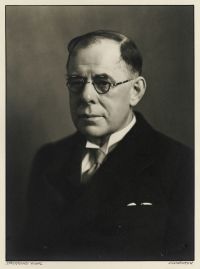 A. E. Taylor,
Elements of metaphysics
(1903)
A. E. Taylor,
Elements of metaphysics
(1903)
“ We analyse experience with a view to discovering its implications, and we analyse our various scientific and unscientific theories of the contents of the world-system for the same purpose. Also, once having determined what are the formal characteristics of an all-embracing, systematic whole of experienced fact, we criticise our various concepts and theories by reference to these characteristics as an ultimate standard of reality and truth. ”
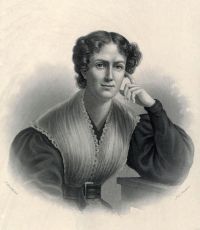 Frances Wright,
A few days in Athens
(1850)
Frances Wright,
A few days in Athens
(1850)
“ We have exhorted you to use your eyes, and your judgments, never your imagination; to abstain from theory, and rest with facts; and to understand that in the accumulation of facts, as regards the nature and properties of substances, the order of occurrences, and the consequences of actions, lies the whole science of philosophy, physical and moral. We have seen, in the course of our enquiry, that in matter itself, exist all causes and effects ”
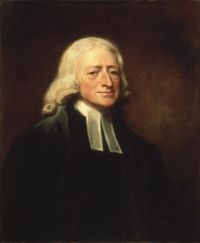 John Wesley,
The works of the Rev. John Wesley…
(1771)
John Wesley,
The works of the Rev. John Wesley…
(1771)
“ And, first, I grant the knowledge of all those truths is perfective of the understanding, which are the matter of those arts and sciences, that are built upon stable and immoveable foundations, such as divinity, metaphysics, geometry, together with those unchangeable rules and measures of reason and consequence, which lead us to all other knowledge, and are the subject of that art we term logic. ”
Josef Donat, The Freedom of Science
“ Not in the vast field of logic, of empirical psychology, in questions concerning the essence of bodies and their forces, in matters of mere history of philosophy; but in questions of views of the world and life, in metaphysics and ethics, it does. These, the highest questions, bearing on the direction and pursuit of human life, matters that most occupy the human mind, are at the same time subjects of revelation ”
 Henry Osborn Taylor,
The Mediaeval Mind (Volume 2 of 2…
Henry Osborn Taylor,
The Mediaeval Mind (Volume 2 of 2…
“ The thinker considers profoundly, seeking to penetrate the ultimate reality and relationships of things, through which a universal whole is constituted. This makes ontology, metaphysics—the science of being, of causes, and so the science of the first Cause, God. ”
 Alfred North Whitehead,
Science and the modern world
(1925)
Alfred North Whitehead,
Science and the modern world
(1925)
“ The two great preoccupations of modern philosophy now lie clearly before us. The study of mind divides into psychology, or the study of mental functionings as considered in themselves and in their mutual relations, and into epistemology, or the theory of the knowledge of a common objective world. In other words, there is the study of the cogitations, quâ passions of the mind, and their study quâ leading to an inspection (intuition) of an objective world. ”
 Theodore Parker,
Speeches, Addresses, and Occasional Sermons…
Theodore Parker,
Speeches, Addresses, and Occasional Sermons…
“ We may observe and study the constant facts of the material world, thus learn the laws they represent, and so get at a theory of the world which is founded on the facts thereof. Such a theory is true; it represents the thought of God, the infinity of God. Then for every point of theory we have a point of fact. ”
 William Whewell,
Novum organon renovatum
(1858)
William Whewell,
Novum organon renovatum
(1858)
“ Now since this, it appears, cannot be done, by rejecting the Ideas which all Facts involve, in what manner are we to conform to the obvious maxim, that the Facts which form the basis of Science must be perfectly definite and certain?The analysis of facts into Ideas and Sensations, which we have so often referred to, suggests the answer to this inquiry. We are not able, nor need we endeavour, to exclude Ideas from our Facts; but we may be able to discern, with perfect distinctness, the Ideas which we include. ”
Josiah Royce,
The World and the Individual, First Series
(1899)
“ Whoever wearies of Platonic or of Scholastic subtleties, must recognize, if he knows how to read the meaning of current science, that the notion of Possible Being, or of Being whose reality lies in its validity, or in its value as making assertions about it true, is, as I said at the last time, the favorite type of reality in the writings of a great number of the recent philosophical expositors of the meaning of natural science. ”
William James, The Philosophical Review (1892)
“ What the 'physical world' may be in itself, how 'states of mind' can exist at all, and exactly what 'taking cognizance' may imply, are inevitable further questions; but they are questions of the kind for which general philosophy, not natural science, is held responsible. ”
 Ralph Waldo Emerson,
Nature, Addresses and Lectures
(1894)
Ralph Waldo Emerson,
Nature, Addresses and Lectures
(1894)
“ They educate both the Understanding and the Reason. Every property of matter is a school for the understanding,—its solidity or resistance, its inertia, its extension, its figure, its divisibility. The understanding adds, divides, combines, measures, and finds nutriment and room for its activity in this worthy scene. Meantime, Reason transfers all these lessons into its own world of thought, by perceiving the analogy that marries Matter and Mind. ”
Anonymous, The Philosophical Review (1892)
“ This realism is complemented by a corresponding theory of knowledge, according to which reason is the gradual product of an experience more or less long, and gives a faithful representation of the order in the external world. These premises condition the adoption of the 'natural' method, which consists in always reasoning from the physical to the moral, from the inferior to the superior. ”
Carveth Read, The Origin of Man and of His Superstitions
“ For these systems or masses of experience are the substance of Logic and Methodology, which are their skeletons abstracted from them. They are the basis of all effective comparison and criticism; agreement or disagreement with them is the test of truth or error. ”
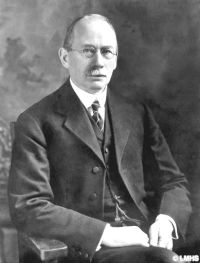 Rufus M. Jones,
Spiritual Reformers in the 16th & 17th Centuries
Rufus M. Jones,
Spiritual Reformers in the 16th & 17th Centuries
“ The great thinkers of the first rank who have undertaken to sound the significance of rational knowledge, {xxxv} and who have appreciated the meaning of the synthetic unity of the knowing mind and the world of objects that submit to its forms of thought, have recognized that there must be some deep-lying fundamental relation between the mind that knows and the world that is known, some Reality common to both outer and inner realms. ”
John Stuart Mill,
A System of Logic, Ratiocinative and Inductive
(1881)
“ Of Ethology, Or The Science Of The Formation Of Character. § 1. The laws of mind as characterized in the preceding chapter, compose the universal or abstract portion of the philosophy of human nature; and all the truths of common experience, constituting a practical knowledge of mankind, must, to the extent to which they are truths, be results or consequences of these. ”
John Stuart Mill,
A System of Logic, Ratiocinative and Inductive
“ When they themselves say that they perceive the things by an immediate act of a faculty given for that purpose by their Creator, it would be said of them by their opponents that they find an idea or conception in their own minds, and from the idea or conception, infer the existence of a corresponding objective reality. ”
William Whewell,
Novum organon renovatum
(1858)
“ It has already been stated that Knowledge requires us to possess both Facts and Ideas;—that every step in our knowledge consists in applying the Ideas and Conceptions furnished by our minds to the Facts which observation and experiment offer to us. When our Conceptions are clear and distinct, when our Facts are certain and sufficiently numerous, and when the Conceptions, being suited to the nature of the 28 Facts, are applied to them so as to produce an exact and universal accordance, we attain knowledge of a precise and comprehensive kind, which we may term Science. ”
William James, The Principles of Psychology, Volume 1…
“ As mere conceptions, the effect-theory and the cause-theory of attention are equally clear; and whoever affirms either conception to be true must do so on metaphysical or universal rather than on scientific or particular grounds. ”
William Whewell,
Novum organon renovatum
(1858)
“ We may further observe, that this arrangement of Sciences according to the Fundamental Ideas which they involve, points out the transition from those parts of human knowledge which have been included in our History and Philosophy, to other regions of speculation into which we have not entered. We have repeatedly found ourselves upon the borders of inquiries of a psychological, or moral, or theological nature. ”
Thomas Brown, Lectures on the Philosophy of the Human Mind…
“ Yet, wonderful, or even absurd, as it may seem, notwithstanding the absolute simplicity of the mind itself, and consequently of all its feelings or momentary states,—the Science of Mind is, in its most important respects, a source of analysis, or of a process which I have said to be virtually the same as analysis ”
 James Frederick Ferrier,
Lecture on Imagination, 1848
(1883)
James Frederick Ferrier,
Lecture on Imagination, 1848
(1883)
“ Whichever of the theories you may yourselves adopt it is essential to the prosecution of your philosophical studies that you should be made aware of the existence of the distinction between them. The one of these theories regards knowledge or ideas as the essence of the mind; the other of them regards the mind as something which may exist destitute of all knowledge or ideas. ”
 Bertrand Russell,
Our Knowledge of the External World as a Field for Scientific Method in Philosophy
Bertrand Russell,
Our Knowledge of the External World as a Field for Scientific Method in Philosophy
“ The belief or unconscious conviction that all propositions are of the subject-predicate form—in other words, that every fact consists in some thing having some quality—has rendered most philosophers incapable of giving any account of the world of science and daily life. ”
Thomas Brown, Lectures on the Philosophy of the Human Mind…
“ The terms, however, I must confess, though the distinction which I have now stated would be, in all cases, a very convenient one, are used very loosely, not in conversation merely, but in the writings of philosophers,—an hypothesis often meaning nothing more than a theory, to which we have not given our assent,—and a theory, an hypothesis which we have adopted, or still more, one which we have formed ourselves. ”
John Stuart Mill,
A System of Logic, Ratiocinative and Inductive
(1843)
“ The conclusions of theory can not be trusted, unless confirmed by observation; nor those of observation, unless they can be affiliated to theory, by deducing them from the laws of human nature, and from a close analysis of the circumstances of the particular situation. ”
 Alexander Philip,
Essays Towards a Theory of Knowledge
Alexander Philip,
Essays Towards a Theory of Knowledge
“ Such a view avoids the incurable difficulties and contradictions involved in the theory of the reality of extended material substance, or in any theory, indeed, which asserts the reality—as presented—of the sensible presentation. Physical Reality thus conceived is consistently thinkable as co-existent with the thing-in-itself—be it ultimately Intelligence or Volition—of which our cognitive and conative existence is a manifestation. ”
James Frederick Ferrier,
Blackwood's Magazine
(1841)
“ All that philosophers meant was—that we had perceptions of objects, and that these perceptions were not the objects themselves. Yet even this, the least exceptionable form of the theory that can be maintained, was found sufficient to subvert the foundations of all human certainty. ”
 Johann Gottlieb Fichte,
Sun-Clear Statement — Second Conversation
(1868)
Johann Gottlieb Fichte,
Sun-Clear Statement — Second Conversation
(1868)
“ Philosophy, therefore, dear reader—or, since this word might lead to disputes,—the science of knowledge first of all utterly abstracts from all that we have above characterized as higher degrees of consciousness, and limits itself with its assertion, which we shall directly state, to the primary and fundamental determinations of consciousness, altogether in the sense stated above. ”
Josiah Royce,
The World and the Individual, First Series
(1899)
“ I have defined in general the problem of the relation of the World as Idea to the World as Fact, and have stated our issue as precisely this relation between Ideas and Reality. In order to assist in clarifying our undertaking, I have also given a general definition of what an idea is, and have stated the logical contrast between the consciously internal and the apparently external meaning of any finite idea. ”
Josiah Royce,
The World and the Individual, First Series
(1899)
“ First, that even if your knowledge and its object are facts which when examined, say by a psychologist, appear to him to be causally connected, or which, when externally observed, seem to agree, still any such linkage, where it exists, is no part of the essential nature, i.e. of the mere definition, either of your object in so far as it is real, or of your knowledge in so far as it consists of mere ideas. If your knowledge is true, is sound, is valid, it is indeed such as somehow to agree with the object. ”
