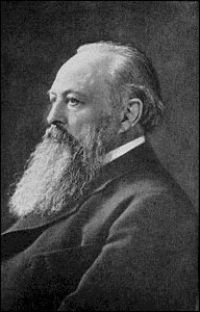
John Emerich Edward Dalberg Acton

John Emerich Edward Dalberg Acton

Summary

Portrait of John Emerich Edward Dalberg Acton John Emerich Edward Dalberg Acton Lectures on the French revolution (1910)

No conflict can be more irreconcilable than that between a constitution and an enlightened absolutism, between abrogation of old laws and multiplication of new, between representation and direct democracy, the people controlling and the people governing, kings by contract and kings by mandate.
Yet all these fractions of opinion were called Liberal: Montesquieu, because he was an intelligent Tory; Voltaire, because he attacked the clergy; Turgot, as a reformer; Rousseau, as a democrat; Diderot, as a freethinker. The one thing common to them all is the disregard for liberty.
Source: Wikisource

Portrait of John Emerich Edward Dalberg Acton John Emerich Edward Dalberg Acton Lectures on the French revolution (1910)

Privilege of the crown and privilege of Parliament are only privilege so long as they are exercised for the benefit of the people. The voice of the people is a voice that is to be heard, and not the votes and resolutions of the House of Commons. He would preserve thoroughly every privilege of the people, because it is a privilege known and written in the law of the land; and he would support it, not against the crown or the aristocratic party only, but against the representatives of the people themselves. This was not a government of balances.
Source: Wikisource

Portrait of John Emerich Edward Dalberg Acton John Emerich Edward Dalberg Acton Lectures on the French revolution (1910)

That was the transatlantic discovery in the theory of political duty, the light that came over the ocean. It represented liberty not as a comparative release from tyranny, but as a thing so divine that the existence of society must be staked to prevent even the least constructive infraction of its sovereign right. "A free people," said Dickinson, "can never be too quick in observing nor too firm in opposing the beginnings of alteration either in form or reality, respecting institutions formed for their security.
Source: Wikisource

Get perspective with Kwize: daily news enlightened by great literature