Summary

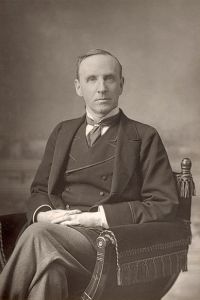
Portrait of John Morley John Morley Critical Miscellanies (Vol. 3 of 3…

What we see every day with increasing clearness is that not only the wellbeing of the many, but the chances of exceptional genius, moral or intellectual, in the gifted few, are highest in a society where the average interest, curiosity, capacity, are all highest. The moral of this for you and for me is plain. We cannot, like Beethoven or Handel, lift the soul by the magic of divine melody into the seventh heaven of ineffable vision and hope incommensurable; we cannot, like Newton, weigh the far-off stars in a balance, and measure the heavings of the eternal flood
Source: Gutenberg

Portrait of John Morley John Morley Critical Miscellanies (Vol. 3 of 3…

We are supposed to deny the possibility of a circumstance, when in truth we only deny the evidence alleged for it. We allow the excellence of reasoning from certain data to captivate our belief in the truth of the data themselves, even when they are unproved and unprovable. There is no end, in short, of the ways in which men habitually go wrong in their reasoning, tacit or expressed. The greatest boon that any benefactor could confer on the human race would be to teach men—and especially women—to quantify their propositions.
Source: Gutenberg

Portrait of John Morley John Morley Critical Miscellanies (Vol. 3 of 3…

Freeman, whose little book on the Unity of History I cannot be wrong in warmly recommending even to the busiest among you, 'that European history, from its first glimmerings to our own day, is one unbroken drama, no part of which can be rightly understood without reference to the other parts which come before and after it. We are learning that of this great drama Rome is the centre, the point to which all roads lead and from which all roads lead no less. The world of independent Greece stands on one side of it; the world of modern Europe stands on another.
Source: Gutenberg

Get perspective with Kwize: daily news enlightened by great literature