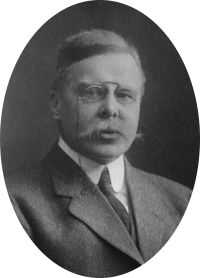
Kuno Francke

Kuno Francke

../../ (1913)

Summary

Portrait of Kuno Francke Kuno Francke ../../ (1913)

Then it was that men felt as if suddenly freed from the force and pressure of a thousand years; the artists, most of all, again breathed freely as the nightmare of Christianity seemed to spin whirling from their breasts, and they threw themselves with enthusiasm into the sea of Greek joyousness from whose foam rose to them goddesses of beauty. Painters once more limned the ambrosial joys of Olympus; sculptors carved, with the joy of yore, old heroes from the marble; poets again sang the house of Atreus and Laius; and so the age of new classic poetry began.
Source: Wikisource

Portrait of Kuno Francke Kuno Francke ../../ (1913)

Lessing was the literary Arminius who delivered our theatre from this foreign rule. He showed us the nothingness, the laughableness, the flat and faded folly of those imitations of the French theatre, which were in turn imitated from the Greek. But he became the founder of modern German literature, not only by his criticism, but by his own works of art. This man pursued with enthusiasm and sincerity art, theology, antiquity, and archaeology, the art of poetry, history—all with the same zeal and to the same purpose.
Source: Wikisource

Portrait of Kuno Francke Kuno Francke ../../ (1913)

The plots and structures of most of her stories deserve unstinted praise, and delight lovers of artistically organized and well-proportioned novels. And over all her books there plays that symbolistic spirit of neo-romanticism which spreads a veil of beauty even over the ugliness of life.
It is impossible to sum up Ricarda Huch's life and message to our generation in a few sentences. All her books from first to last command our respect. She is not afraid of life as so many old and new romanticists are, nor is she ignorant of it.
Source: Wikisource

Get perspective with Kwize: daily news enlightened by great literature