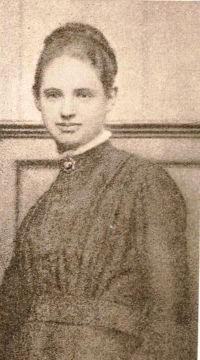
Mary E. Coleridge

Mary E. Coleridge

Summary

Portrait of Mary E. Coleridge Mary E. Coleridge,  Holman Hunt

“ Millais’ “Lorenzo and Isabella,” in his friends’ judgment the most wonderful picture ever painted by a man under twenty, was the immediate fruit of this resolve.
Nature had gifted Rossetti with a hopeful temperament which was of no small service to Hunt in the dark days of discouragement that followed. When the latter was tempted to mourn over the waste of his young years in the city, the former pointed out to him that he had learnt to know men, and the ways of men, instead of mere bookish things that were “of very little use in life.”
”
Source: Gutenberg

Portrait of Mary E. Coleridge Mary E. Coleridge,  Holman Hunt

“ Millais, delighted, proposed that they should keep it a secret—and instantly confided it to Ford Madox Brown. The outer world was more concerned with the fact that the sun could be made to shine upon canvas than with the way in which it was brought about. The one inevitable condition of the truth of a revival is always, by one method or by another, a return to Nature. ”
Source: Gutenberg

Portrait of Mary E. Coleridge Mary E. Coleridge,  Holman Hunt

“ Steadily, through evil report and good report, the painter went his way. He did not hold—as Millais came to hold in after years—that it was the business of the artist to find out what most people wanted, and to paint that. He did not hold—as Rossetti held—that it was the business of the artist to impose his will on a select band of followers, trained by himself to believe that the age of Dante was the Golden Age, and that colour should be based on the principles of illumination. He held that an artist was accountable to God. ”
Source: Gutenberg

Get perspective with Kwize: daily news enlightened by great literature