Summary

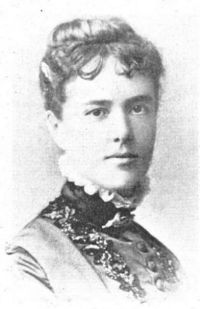
Portrait of Mary Mills Patrick Mary Mills Patrick Sextus Empiricus and Greek Scepticism

There is no criterion of truth in Scepticism. We cannot prove that the phenomena represent objects, or find out what the relation of phenomena to objects is. There is no criterion to tell us which one is true of all the different representations of the same object, and of all the varieties of sensation that arise through the many phases of relativity of the conditions which control the character of the phenomena.
Every effort to find the truth can deal only with phenomena, and absolute reality can never be known.
Source: Gutenberg

Portrait of Mary Mills Patrick Mary Mills Patrick Sextus Empiricus and Greek Scepticism

It was reserved for the greatest of modern philosophers to reveal to the world that causality is a condition, and a necessary condition, of thought. When Aenesidemus proved by his seventh Trope that causality is subjective, he regarded it as fatal to the doctrine; yet this conclusion was a marked step in advance in critical philosophy, although Aenesidemus could not himself see it in all its bearings. The great difference between Aenesidemus and Kant is the difference between the materialist and the believer in subjective reality.
Source: Gutenberg

Portrait of Mary Mills Patrick Mary Mills Patrick Sextus Empiricus and Greek Scepticism

According to Diogenes, "We cannot know," said Pyrrho, "what things are in themselves, either by sensation or by judgment, and, as we cannot distinguish the true from the false, therefore we should live impassively, and without an opinion." The term ἐποχή, so characteristic of Pyrrhonism, goes back, according to Diogenes, to the time of Pyrrho. [1] Nothing is, in itself, one thing more than another, but all experience is related to phenomena, and no knowledge is possible through the senses.
Source: Gutenberg

Get perspective with Kwize: daily news enlightened by great literature