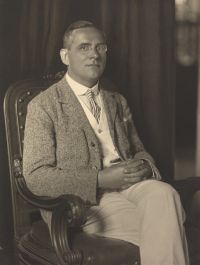
Moritz Schlick

Moritz Schlick

Summary

Portrait of Moritz Schlick Moritz Schlick The Future of Philosophy (1938)

Socrates, one might say, despised science. He did not believe in all the speculations about astronomy and about the structure of the universe in which the early philosophers indulged. He believed one could never gain any certain knowledge about these matters and he restricted his investigations to the nature of human character. He was not a man of science, he had no faith in it, and yet we all acknowledge him to be one of the greatest philosophers who ever lived. It is not Socrates, however, who created the antagonism that we find to exist later on between science and philosophy.
Source: Wikisource

Portrait of Moritz Schlick Moritz Schlick The Future of Philosophy (1938)

But he will not be able to rejoice at the sight that philosophy presents to him with exactly the same feelings as the historian. He will not be able to enjoy the thoughts of ancient and modern times without being disturbed by feelings of an entirely different nature.
The philosopher cannot be satisfied to ask, as the historian would ask of all the systems of thought - are they beautiful, are they brilliant, are they historically important?
Source: Wikisource

Portrait of Moritz Schlick Moritz Schlick The Future of Philosophy (1938)

They will each approach the study of the history of philosophy with different feelings. The historian will be excited to the greatest enthusiasm by the great works of the thinkers of all times, by the spectacle of the immense mental energy and imagination, zeal and unselfishness which they have devoted to their creations, and the historian will derive the highest enjoyment from all of these achievements. The philosopher, of course, when he studies the history of philosophy will also be delighted, and he cannot help being inspired by the wonderful display of genius throughout all the ages.
Source: Wikisource

Get perspective with Kwize: daily news enlightened by great literature