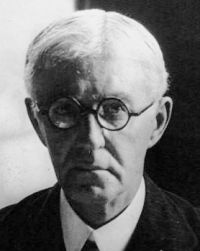
Peter Chalmers Mitchell

Peter Chalmers Mitchell

Summary

Portrait of Peter Chalmers Mitchell Peter Chalmers Mitchell 1922 Encyclopædia Britannica (1922)

He was an idealist, believing that truth and justice could bring ordered peace to chaotic Europe; a realist, conscious of the stubborn obstinacy that would yield only to force and of the ignorance that misled the accepted leaders of men. Steed provided the knowledge and lofty enthusiasm which shaped the policy of Crewe House, Stuart the conciliatory tact which made concerted action possible, Lord Northcliffe the swift judgment between contending views, the experienced instinct for what was practical, and the driving force to make the practical actual.
Source: Wikisource

Portrait of Peter Chalmers Mitchell Peter Chalmers Mitchell 1922 Encyclopædia Britannica (1922)

The objective of a propaganda is to promote the interests of those who contrive it, rather than to benefit those to whom it is addressed; in advertisement to sell an article; in publicity to state a case; in politics to forward a policy; in war to bring victory. This differentiates it from the diffusion of useful knowledge; the evangel of a mission
Source: Wikisource

Portrait of Peter Chalmers Mitchell Peter Chalmers Mitchell 1922 Encyclopædia Britannica (1922)

If a quick sale or a decisive victory is possible, opportunism may be more useful than exactitude. If a permanent market is to be opened or a protracted campaign is expected, caution is required in suppression or in misstatement. Although truth may thus be irrelevant to the success of a propaganda, it does not follow that those engaged in it are consciously unethical. Doubtless, in every effort to control opinion, there are persons either indifferent to justification, or who justify the means by the end.
Source: Wikisource

Get perspective with Kwize: daily news enlightened by great literature