Summary

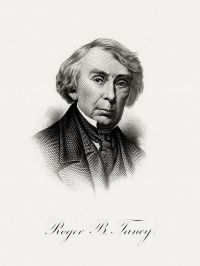
Portrait of Roger B. Taney Roger B. Taney Thurlow v. Massachusetts — Opinion of the Court

A tax in any shape upon imports is a tax on the consumer, by enhancing the price of the commodity. And if a State is permitted to levy it in any form, it will put it in the power of a maritime importing State to raise a revenue for the support of its own government from citizens of other States, as certainly and effectually as if the tax was laid openly and without disguise as a duty on imports. Such a power in a State would defeat one of the principal objects of forming and adopting the constitution.
Source: Wikisource

Portrait of Roger B. Taney Roger B. Taney Thurlow v. Massachusetts — Opinion of the Court

The police power, which is exclusively in the States, is alone competent to the correction of these great evils, and all measures of restraint or prohibition necessary to effect the purpose are within the scope of that authority. There is no conflict of power, or of legislation, as between the States and the United States; each is acting within its sphere, and for the public good, and if a loss of revenue should accrue to the United States from a diminished consumption of ardent spirits, she will be the gainer a thousandfold in the health, wealth, and happiness of the people.
Source: Wikisource

Portrait of Roger B. Taney Roger B. Taney Thurlow v. Massachusetts — Opinion of the Court

But what are the police powers of a State? They are nothing more or less than the powers of government inherent in every sovereignty to the extent of its dominions. And whether a State passes a quarantine law, or a law to punish offences, or to establish courts of justice, or requiring certain instruments to be recorded, or to regulate commerce within its own limits, in every case it exercises the same powers; that is to say, the power of sovereignty, the power to govern men and things within the limits of its dominion.
Source: Wikisource

Get perspective with Kwize: daily news enlightened by great literature